How Automated Waste Management Cuts Collection Costs
Why is automated waste management getting so much attention in cost planning?
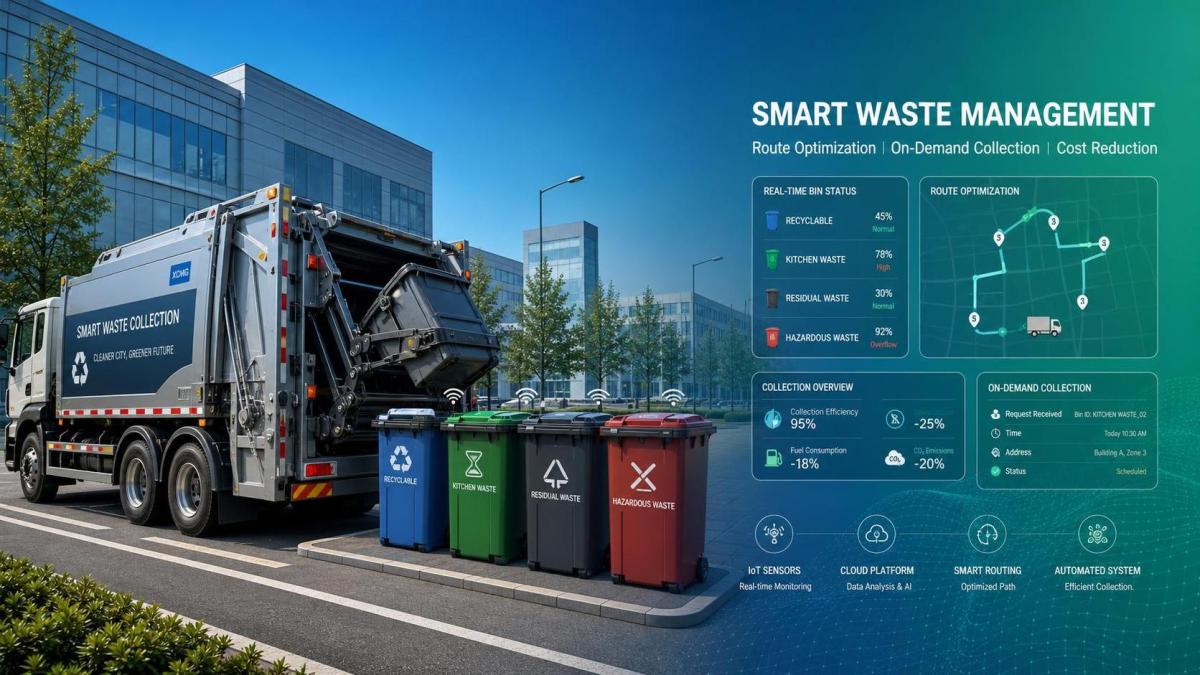
Automated waste management is now discussed less as a technology upgrade and more as a budget control tool.
That shift matters because waste collection costs rarely rise from one source alone.
Fuel, overtime, missed pickups, vehicle wear, contamination, and complaint handling all compound over time.
In practical terms, automated waste management connects collection vehicles, bins, routing software, sensors, and reporting dashboards.
The goal is simple: collect only when needed, send crews on better routes, and reduce avoidable service events.
For urban systems, this fits a broader infrastructure pattern.
Smart buildings, rail logistics, fleet equipment, and city governance are all moving toward data-led operations.
Waste management follows the same logic.
GIUT often frames this transition as part of the digital twin of the physical world.
That idea is useful here because collection systems become measurable, comparable, and easier to forecast.
Instead of reacting to complaints or fixed schedules, operators can work from live demand signals.
For cost oversight, that creates one major benefit: spending becomes less variable and easier to justify.
Where do collection costs actually fall when automation is introduced?
The savings are usually operational before they become strategic.
A common mistake is to look only at headcount reduction.
In reality, automated waste management often creates value through smaller, repeated improvements across the workflow.
The most visible cost areas include:
- Lower fuel consumption through route optimization and fewer unnecessary trips.
- Reduced labor hours from automated lifts, faster loading, and fewer return visits.
- Less vehicle wear because routes are shorter and stops are better sequenced.
- Fewer overflow incidents, which reduces emergency dispatch and public complaint handling.
- Better asset use, since bins, trucks, and service crews can be scheduled around actual fill patterns.
More importantly, automated waste management improves cost predictability.
That is often more valuable than headline savings.
When collection routes are dynamic and service data is archived, budget assumptions can be built on evidence rather than averages.
This is especially relevant in mixed urban zones where residential, commercial, transit, and construction activity change quickly.
Need a faster screening method?
The table below shows where automated waste management typically changes the cost structure.
Is automated waste management suitable for every collection environment?
Not always, and that is where many cost models go wrong.
The strongest results usually appear in dense service areas, variable waste volumes, or environments with high route complexity.
Examples include downtown districts, mixed-use developments, transport hubs, industrial parks, campuses, and fast-growing suburban zones.
These locations generate irregular fill levels and frequent service exceptions.
Automation works well because it replaces assumptions with signals.
By contrast, very stable low-density routes may produce smaller savings.
If bins are consistently serviced on time and route variation is limited, the return may depend more on safety, reporting, or emissions targets.
A grounded assessment usually starts with four questions:
- How often are trucks visiting half-empty containers?
- How often do overflow events create extra trips?
- How much route time is lost to congestion, waiting, or poor sequencing?
- How difficult is it to explain current collection costs with usable data?
If those answers point to variability, automated waste management deserves serious evaluation.
If not, a phased deployment may be the better approach.
What should be compared before choosing a system?
Price alone is a weak selection method.
Two automated waste management systems can look similar on paper and deliver very different financial outcomes.
The difference usually comes from fit, data quality, integration, and implementation discipline.
In real procurement reviews, the following checks tend to matter most:
- Sensor reliability in harsh outdoor conditions, not just laboratory specifications.
- Compatibility with existing vehicles, containers, and routing platforms.
- Reporting depth, including route history, exception logs, and asset-level performance.
- Cybersecurity and data ownership terms for long-term operational control.
- Support for phased rollout across districts, contractors, or fleet types.
It also helps to compare how each vendor defines savings.
Some proposals count theoretical reductions without proving baseline inefficiency.
A better approach is to request a model tied to current route density, trip frequency, overflow rate, and labor structure.
That aligns well with GIUT's engineering-led view of infrastructure intelligence.
Claims should be traceable to operating conditions, not generic smart city language.
Where do projects lose money even when the technology is sound?
The most common failure is buying automation without redesigning the operating model around it.
If crews still follow fixed routes, sensors become a reporting layer rather than a savings engine.
Another issue is weak baseline data.
Without clear records for route time, overflow frequency, labor hours, and vehicle maintenance, savings are hard to prove.
That creates friction later, even when the system performs well.
There are also implementation risks that deserve early attention:
- Overbuying features that do not match service complexity.
- Ignoring training needs for dispatch, fleet, and field teams.
- Underestimating battery replacement, connectivity, or calibration requirements.
- Running pilots too briefly to capture seasonal waste patterns.
Automated waste management performs best when the business case includes process change, not only hardware and software costs.
That means setting new routing rules, alert thresholds, maintenance routines, and reporting responsibilities from the beginning.
How should ROI and payback be judged without overpromising?
The cleanest ROI model starts with avoidable costs, not optimistic transformation claims.
Focus first on what can be measured within twelve to twenty-four months.
That often includes miles reduced, overtime avoided, emergency pickups prevented, and maintenance events deferred.
Then add the softer but still relevant effects.
These may include lower complaint handling effort, better contractor accountability, and stronger compliance reporting.
A practical evaluation sequence looks like this:
- Establish a route and service baseline for at least one full operating cycle.
- Identify the routes with the highest variability or most service exceptions.
- Pilot automated waste management in those zones first.
- Track savings against actual dispatch, fuel, labor, and maintenance records.
- Scale only after performance stays consistent across normal and peak conditions.
This staged method avoids a common budgeting problem.
It prevents system-wide assumptions from being based on a narrow or unusually favorable pilot.
It also supports stronger governance, which is increasingly important in smart city infrastructure programs.
Automated waste management is most credible when it is evaluated like any other critical urban asset investment.
What is the sensible next step before making a funding decision?
Start by mapping current costs at route level rather than looking only at annual totals.
That usually reveals where automated waste management can create the fastest operational payback.
Next, separate fixed needs from optional features.
For many operations, route intelligence, fill-level monitoring, and exception reporting matter more than a long feature list.
It is also worth defining success before any pilot begins.
That means agreeing on cost metrics, service thresholds, and the evidence required for expansion.
The broader lesson is straightforward.
Automated waste management cuts collection costs when it turns waste operations into a managed data system, not just a mechanized one.
For cities, contractors, and infrastructure programs under pressure to control spending, that distinction is where the real value sits.
From here, the most useful move is to build a short comparison framework.
Include baseline cost data, route variability, integration needs, maintenance assumptions, and pilot success criteria.
That will give automated waste management a fair test and a far better chance of delivering durable savings.
Get weekly intelligence in your inbox.
No noise. No sponsored content. Pure intelligence.
News Recommendations
 Sep 19, 2026How an electronics application guide helps prevent component mismatchHow an electronics application guide helps prevent component mismatch
 Sep 18, 2026When a resource allocation platform improves project deliveryWhen a resource allocation platform improves project delivery
 Sep 17, 2026What to compare when evaluating mineral processing equipment manufacturersWhat to compare when evaluating mineral processing equipment manufacturers
 Sep 16, 2026How mineral separation optimization can reduce concentrate lossesHow mineral separation optimization can reduce concentrate losses
 Sep 15, 2026How to assess lifecycle costs in urban tech procurementHow to assess lifecycle costs in urban tech procurement
 Sep 14, 2026Heavy industry technology trends reshaping capital investment prioritiesHeavy industry technology trends reshaping capital investment priorities
 Sep 14, 2026Why Infrastructure Equipment Buyers Are Shifting from Catalog-Based to Capability-Based Supplier SelectionWhy Infrastructure Equipment Buyers Are Shifting from Catalog-Based to Capability-Based Supplier Selection
 Sep 14, 2026Process Automation Project Execution: How to Align Supplier Capabilities with PLC Integration, Cybersecurity & Commissioning MilestonesProcess Automation Project Execution: How to Align Supplier Capabilities with PLC Integration, Cybersecurity & Commissioning Milestones
 Sep 14, 2026Are intelligent traffic systems worth the investment for small cities?Are intelligent traffic systems worth the investment for small cities?
 Sep 14, 2026How do intelligent traffic systems handle sensor failures?How do intelligent traffic systems handle sensor failures?
 Sep 14, 2026What should I check before accepting a smart building system?What should I check before accepting a smart building system?
 Sep 14, 2026Is a smart building system worth the maintenance cost?Is a smart building system worth the maintenance cost?
 Sep 14, 2026What data is needed for reliable resource allocation planning?What data is needed for reliable resource allocation planning?
 Sep 14, 2026How can resource allocation software reduce equipment idle time?How can resource allocation software reduce equipment idle time?
 Sep 14, 2026How should smart devices be maintained in harsh outdoor conditions?How should smart devices be maintained in harsh outdoor conditions?
 Sep 14, 2026Do smart devices improve worker safety on construction sites?Do smart devices improve worker safety on construction sites?
 Sep 14, 2026What environmental risks must be assessed before deep-sea mining?What environmental risks must be assessed before deep-sea mining?
 Sep 14, 2026Is deep-sea mining equipment commercially viable in 2026?Is deep-sea mining equipment commercially viable in 2026?
 Sep 14, 2026What Inspection Checks Should Procurement Teams Perform Before Ordering Dredging Equipment in 2026?What Inspection Checks Should Procurement Teams Perform Before Ordering Dredging Equipment in 2026?
 Sep 13, 2026How to verify an industrial product information source before specifying equipmentHow to verify an industrial product information source before specifying equipment
 Sep 12, 2026Which intelligent traffic systems hardware fits an urban intersection?Which intelligent traffic systems hardware fits an urban intersection?
 Sep 11, 2026How pump capacity affects response coverage for municipal fire fighting vehiclesHow pump capacity affects response coverage for municipal fire fighting vehicles
 Sep 10, 2026What to verify before choosing a heavy industry equipment supplierWhat to verify before choosing a heavy industry equipment supplier
 Sep 09, 2026When do adaptive urban traffic control systems reduce corridor delays?When do adaptive urban traffic control systems reduce corridor delays?
 Sep 08, 2026When logistics technology solutions in North America reduce delivery delaysWhen logistics technology solutions in North America reduce delivery delays
 Sep 07, 2026How reliable are wireless mining safety systems in underground mines?How reliable are wireless mining safety systems in underground mines?
 Sep 07, 2026How to assess a smart lighting technology platform for interoperabilityHow to assess a smart lighting technology platform for interoperability