Industrial Cranes Price Breakdown: What Changes Total Project Cost
Industrial Cranes Price Breakdown: What Changes Total Project Cost
Industrial cranes price is never just the number on a supplier quote. It reflects equipment scope, engineering choices, project risk, and long-term operating strategy.
That matters because the purchase price often represents only one part of the total project cost. Installation, power systems, testing, and future maintenance can shift the budget fast.
For capital planning, a better question is not only, “What is the industrial cranes price?” It is, “What drives cost, and which options improve return over time?”
In practice, the most reliable budgets connect crane specifications to workflow, duty cycle, site conditions, and compliance obligations before the RFQ stage.
Base Equipment Cost Starts With Crane Type
The first driver of industrial cranes price is crane type. Overhead cranes, gantry cranes, jib cranes, and workstation cranes all follow different cost structures.
An overhead bridge crane usually costs more than a jib crane because it covers more area, needs runway support, and handles broader production demands.
A gantry crane may reduce building modification costs, but it can raise rail, wheel, and outdoor protection expenses. The lowest equipment quote is not always the lowest project cost.
This is why early option filtering matters. Matching the crane type to the real handling path often eliminates unnecessary steel, controls, and civil work.
- Overhead cranes suit fixed indoor lifting routes and high utilization.
- Gantry cranes fit yards, open bays, and sites with limited building support.
- Jib cranes work well for local stations and repetitive point lifting.
- Workstation cranes support lighter loads with lower structural demand.
Capacity, Span, and Lift Height Raise the Price Curve
When buyers compare industrial cranes price, rated capacity is usually the first visible number. It is important, but it works together with span and lift height.
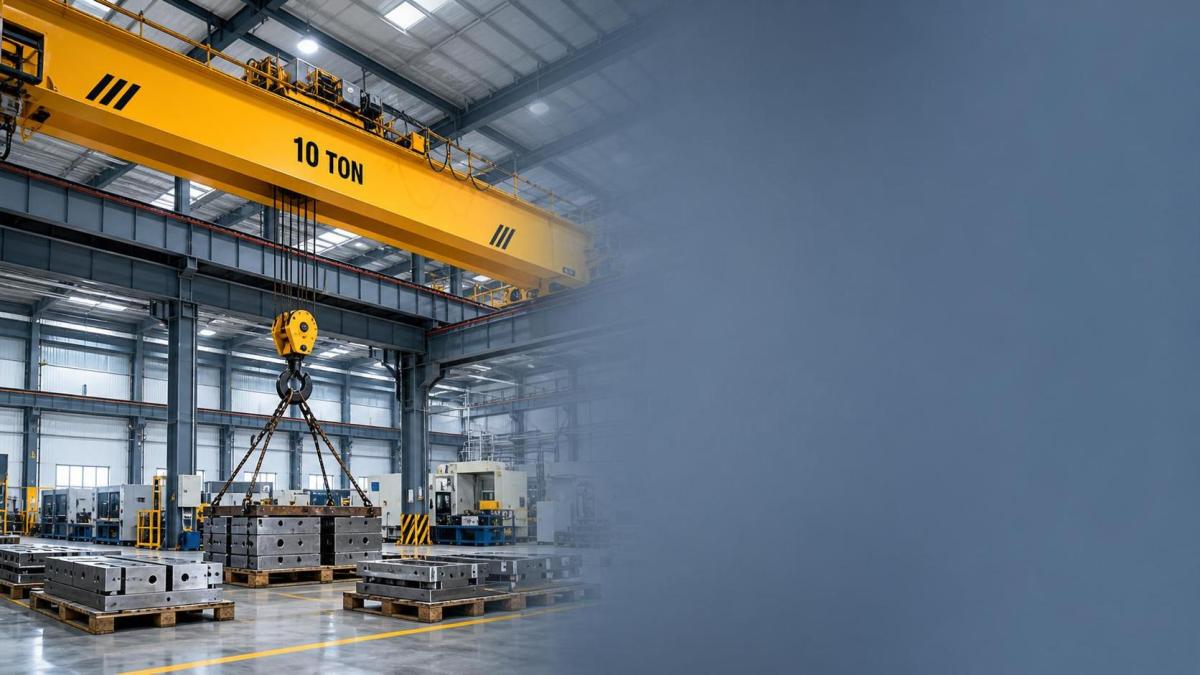
A 10-ton crane with a short span may be straightforward. The same capacity across a wider bay can require more steel, stronger end trucks, and different wheel loads.
Lift height also changes hoist selection, drum size, rope length, and hook approach. Those details affect not only price, but also productivity inside the operating envelope.
From a budgeting view, specification inflation is a common problem. Extra capacity added “just in case” can produce oversized support systems with no real payback.
Duty Class Often Has a Bigger ROI Impact Than Buyers Expect
A major industrial cranes price factor is duty class. This defines how frequently the crane works, how heavy the average lifts are, and how demanding the service pattern becomes.
A crane used occasionally for maintenance is priced differently from one running every shift in fabrication, steel handling, or process manufacturing.
Higher duty classes usually require stronger motors, better brakes, upgraded gearboxes, and more durable electrification systems. That raises upfront cost, but it may sharply reduce downtime later.
This is one of the clearest areas where under-specification creates hidden lifecycle costs. Frequent repairs can erase any savings from a low initial industrial cranes price.
- Light duty lowers purchase cost, but limits future flexibility.
- Moderate duty fits many warehouses and standard manufacturing lines.
- Heavy duty supports continuous production and high-value throughput.
Site Conditions and Building Constraints Change the Real Budget
Many budgets miss the biggest issue: the crane is only part of the system. Building geometry, runway alignment, floor capacity, and access restrictions can reshape total spending.
If an existing structure cannot carry new wheel loads, reinforcement may cost more than the crane itself. That is a classic source of budget drift.
Low headroom conditions may require compact hoists or special configurations. Outdoor sites can add wind resistance, corrosion protection, drainage planning, and enclosure needs.
In actual procurement, an early site survey usually delivers the fastest cost clarity. It turns unknowns into engineering assumptions that suppliers can price accurately.
Controls, Automation, and Safety Features Add Value and Cost
Another reason industrial cranes price varies widely is controls scope. Basic pendant systems are cheaper than radio remote controls, variable frequency drives, or semi-automated positioning packages.
Safety features also influence pricing. Load indicators, anti-collision systems, overload protection, sway control, and zone monitoring all raise the equipment package.
Still, these upgrades should be judged by workflow value. Faster placement accuracy, fewer incidents, and lower operator fatigue can improve throughput enough to justify the added cost.
The practical move is to separate “must-have compliance items” from “productivity options.” That makes approvals more disciplined and keeps scope decisions transparent.
Installation, Commissioning, and Compliance Are Often Underestimated
A low industrial cranes price on paper can still produce a high delivered cost. Freight, rigging, erection labor, testing, and commissioning often sit outside headline quotes.
Permits, shutdown coordination, and after-hours installation windows can also add cost. This becomes more visible in brownfield plants where access is limited and production interruptions are expensive.
Compliance requirements matter as well. Local codes, inspection rules, operator training, and certification documents should be scoped early, not added after contract signing.
A useful review step is checking which party owns each item. Gaps between supplier scope and site scope are where surprise costs usually appear.
Maintenance, Energy Use, and Downtime Shape Lifecycle Cost
The best industrial cranes price is not always the cheapest bid. Lifecycle cost often matters more, especially when the crane supports revenue-critical movement or plant uptime.
Energy-efficient drives, easier service access, standardized spare parts, and stronger warranty terms can improve long-term economics. Those factors deserve a line in every evaluation sheet.
Downtime risk should be priced realistically. A crane failure in a high-output line can trigger lost production, emergency repair premiums, and safety exposure.
More buyers now compare industrial cranes price with total cost of ownership over five to ten years. That creates a stronger basis for capex approval.
How to Compare Quotes Without Missing Hidden Cost
A clean comparison requires more than three supplier numbers on a spreadsheet. The right method is to normalize scope before comparing industrial cranes price.
- Confirm crane type, capacity, span, lift height, and duty class.
- Separate equipment price from installation and structural work.
- List all controls, safety options, and compliance deliverables.
- Review maintenance terms, spare parts, and warranty support.
- Estimate downtime cost if reliability differs across bids.
This approach changes the conversation from quote chasing to cost control. It also helps justify why one proposal may have a higher industrial cranes price but a lower project risk.
A disciplined procurement process usually starts with one clear document: a specification sheet that aligns operations, engineering, and budget assumptions.
Final Takeaway for Smarter Capital Planning
Industrial cranes price changes with far more than load rating. Crane type, duty class, building constraints, controls, installation scope, and lifecycle risk all shape the real investment.
The strongest buying decisions treat the crane as an operating asset, not just a line-item purchase. That shift usually leads to fewer surprises and stronger long-term returns.
Before the next quotation round, define the handling task, confirm site conditions, and map full ownership cost. That is how industrial cranes price becomes a planning tool instead of a budget trap.
Get weekly intelligence in your inbox.
No noise. No sponsored content. Pure intelligence.
News Recommendations
 Sep 19, 2026How an electronics application guide helps prevent component mismatchHow an electronics application guide helps prevent component mismatch
 Sep 18, 2026When a resource allocation platform improves project deliveryWhen a resource allocation platform improves project delivery
 Sep 17, 2026What to compare when evaluating mineral processing equipment manufacturersWhat to compare when evaluating mineral processing equipment manufacturers
 Sep 16, 2026How mineral separation optimization can reduce concentrate lossesHow mineral separation optimization can reduce concentrate losses
 Sep 15, 2026How to assess lifecycle costs in urban tech procurementHow to assess lifecycle costs in urban tech procurement
 Sep 14, 2026Heavy industry technology trends reshaping capital investment prioritiesHeavy industry technology trends reshaping capital investment priorities
 Sep 14, 2026Why Infrastructure Equipment Buyers Are Shifting from Catalog-Based to Capability-Based Supplier SelectionWhy Infrastructure Equipment Buyers Are Shifting from Catalog-Based to Capability-Based Supplier Selection
 Sep 14, 2026Process Automation Project Execution: How to Align Supplier Capabilities with PLC Integration, Cybersecurity & Commissioning MilestonesProcess Automation Project Execution: How to Align Supplier Capabilities with PLC Integration, Cybersecurity & Commissioning Milestones
 Sep 14, 2026Are intelligent traffic systems worth the investment for small cities?Are intelligent traffic systems worth the investment for small cities?
 Sep 14, 2026How do intelligent traffic systems handle sensor failures?How do intelligent traffic systems handle sensor failures?
 Sep 14, 2026What should I check before accepting a smart building system?What should I check before accepting a smart building system?
 Sep 14, 2026Is a smart building system worth the maintenance cost?Is a smart building system worth the maintenance cost?
 Sep 14, 2026What data is needed for reliable resource allocation planning?What data is needed for reliable resource allocation planning?
 Sep 14, 2026How can resource allocation software reduce equipment idle time?How can resource allocation software reduce equipment idle time?
 Sep 14, 2026How should smart devices be maintained in harsh outdoor conditions?How should smart devices be maintained in harsh outdoor conditions?
 Sep 14, 2026Do smart devices improve worker safety on construction sites?Do smart devices improve worker safety on construction sites?
 Sep 14, 2026What environmental risks must be assessed before deep-sea mining?What environmental risks must be assessed before deep-sea mining?
 Sep 14, 2026Is deep-sea mining equipment commercially viable in 2026?Is deep-sea mining equipment commercially viable in 2026?
 Sep 14, 2026What Inspection Checks Should Procurement Teams Perform Before Ordering Dredging Equipment in 2026?What Inspection Checks Should Procurement Teams Perform Before Ordering Dredging Equipment in 2026?
 Sep 13, 2026How to verify an industrial product information source before specifying equipmentHow to verify an industrial product information source before specifying equipment
 Sep 12, 2026Which intelligent traffic systems hardware fits an urban intersection?Which intelligent traffic systems hardware fits an urban intersection?
 Sep 11, 2026How pump capacity affects response coverage for municipal fire fighting vehiclesHow pump capacity affects response coverage for municipal fire fighting vehicles
 Sep 10, 2026What to verify before choosing a heavy industry equipment supplierWhat to verify before choosing a heavy industry equipment supplier
 Sep 09, 2026When do adaptive urban traffic control systems reduce corridor delays?When do adaptive urban traffic control systems reduce corridor delays?
 Sep 08, 2026When logistics technology solutions in North America reduce delivery delaysWhen logistics technology solutions in North America reduce delivery delays
 Sep 07, 2026How reliable are wireless mining safety systems in underground mines?How reliable are wireless mining safety systems in underground mines?
 Sep 07, 2026How to assess a smart lighting technology platform for interoperabilityHow to assess a smart lighting technology platform for interoperability