Modular Construction Systems: Key Factors for Faster Project Delivery
Modular Construction Systems: Key Factors for Faster Project Delivery
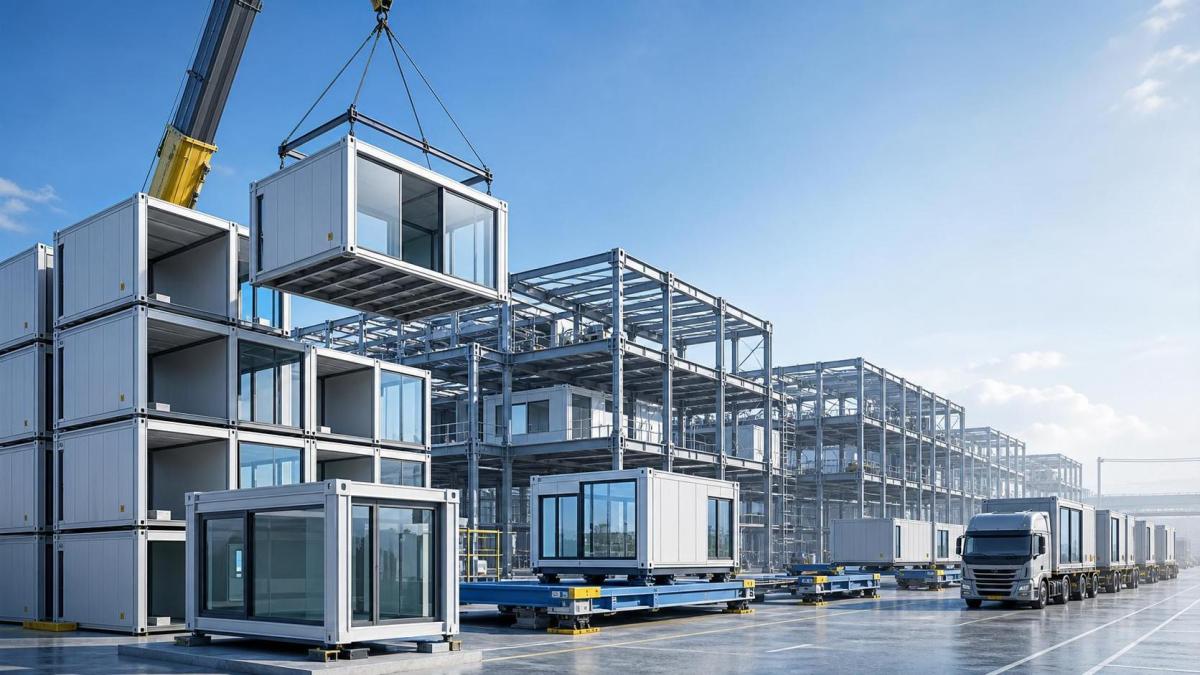
For project managers under pressure to shorten timelines without compromising quality, modular construction systems offer a practical path to faster delivery.
By moving major building activities off-site, teams can reduce weather delays, improve sequencing, and tighten production control.
Still, not every modular strategy delivers the same result.
The real speed gain depends on system choice, project fit, supplier readiness, logistics, and design discipline.
In practice, modular construction systems work best when delivery planning starts early and decisions stay aligned across design, procurement, and site execution.
That is why selection should go beyond the usual promise of “build faster.”
A better question is simpler: which modular construction systems can accelerate this project, under these conditions, with acceptable risk?
Why Modular Construction Systems Can Shorten Delivery Time
The schedule advantage comes from parallel work.
While foundations and utilities progress on-site, modules or prefabricated assemblies can be produced in a controlled factory environment.
This overlap compresses the critical path.
It also reduces rework because factory processes usually follow tighter tolerances, repeatable workflows, and structured quality checks.
From recent market shifts, the stronger signal is not just speed.
Teams are using modular construction systems to improve predictability when labor shortages, material volatility, and urban access constraints disrupt traditional methods.
That also means modular construction systems should be evaluated as a delivery model, not only as a product choice.
Start With Project Suitability, Not Supplier Marketing
The first decision point is project fit.
Some buildings benefit immediately from modular construction systems, while others face geometry, transport, or coordination limits.
Projects with repeated room layouts often see the strongest returns.
Examples include student housing, hotels, worker accommodation, healthcare wards, schools, and mid-rise residential schemes.
Complex landmark structures can still use prefabrication, but usually through hybrid systems rather than full volumetric modular delivery.
A practical screening checklist should cover:
- Level of design repetition across floors and unit types
- Site access for cranes, trucks, and temporary staging
- Transport route limits on height, width, and weight
- Required completion date and tolerance for redesign time
- Local code acceptance for modular construction systems
- Availability of nearby manufacturing capacity
If these conditions align, schedule compression becomes much more realistic.
Choose the Right System Type for the Delivery Goal
Not all modular construction systems are the same.
Selection should match the main project constraint, whether that is time, labor, quality consistency, or site disruption.
Volumetric Modules
These arrive as near-finished room-sized units.
They offer the biggest on-site time reduction, but they demand disciplined design freeze dates and reliable logistics.
Panelized Systems
Wall, floor, and roof panels are prefabricated and assembled on-site.
These systems are more flexible for transportation and fit projects with tighter site constraints.
Hybrid Modular Solutions
Hybrid modular construction systems combine factory-built elements with conventional structural frames.
This approach often balances speed with design freedom.
In selection reviews, one useful question is where the actual schedule bottleneck sits.
If internal fit-out is the main drag, volumetric may win.
If envelope speed matters more, panelized systems may be the better answer.
Evaluate Manufacturing Capability as Closely as Design
A strong concept can still fail if the manufacturing partner cannot execute at the required pace.
This is one of the most common selection mistakes.
When comparing modular construction systems, review the factory as part of the delivery chain.
Look at real throughput, not brochure capacity.
- Current production load and committed backlog
- Quality control checkpoints and defect response time
- Engineering coordination between factory and design consultants
- Procurement resilience for steel, MEP, finishes, and fixtures
- Ability to scale output during peak delivery periods
This matters even more for fast-track projects.
If factory output slips by two weeks, site crews, cranes, and follow-on trades may all idle at once.
That can erase the speed advantage of modular construction systems very quickly.
Design Freeze and Coordination Are Critical Speed Factors
Traditional projects can absorb late changes more easily.
Modular construction systems usually cannot.
Once manufacturing starts, design revisions become expensive and slow.
That is why early coordination is not a nice extra. It is the basis of schedule certainty.
MEP integration deserves special attention.
Modules concentrate services into tight zones, so unresolved clashes can multiply during production and installation.
In actual delivery work, the teams that move fastest usually lock down these items early:
- Module dimensions and structural interfaces
- MEP routing, access panels, and connection points
- Fire, acoustic, and waterproofing details
- Tolerance strategy between factory and site works
- Approval sequence for shop drawings and mock-ups
If these remain open too long, faster delivery becomes unlikely.
Do Not Underestimate Transport and Site Installation
Many modular construction systems look efficient on paper but struggle during transport and lifting.
This is especially true in dense urban corridors, remote sites, or regions with permit bottlenecks.
A fast factory is not enough.
The logistics plan must support the installation rhythm.
Key review points include route surveys, escort requirements, crane capacity, laydown space, weather windows, and connection crew readiness.
More importantly, the delivery sequence should match the site assembly sequence.
Poor sequencing creates double handling, congestion, and avoidable downtime.
For decision-makers, this is where modular construction systems stop being a design topic and become an operations topic.
Compare Total Delivery Risk, Not Just Unit Cost
Some teams reject modular construction systems because the factory unit price looks higher than conventional alternatives.
That comparison is often incomplete.
A better evaluation includes schedule value, reduced site overhead, fewer defects, lower waste, and less exposure to labor disruptions.
At the same time, modular construction systems introduce distinct risks.
These can include single-source dependence, transport damage, approval delays, and limited late-stage flexibility.
This broader view leads to better decisions.
A Practical Selection Framework for Faster Delivery
To evaluate modular construction systems effectively, use a simple step-by-step framework.
- Define the schedule target and identify the real bottleneck.
- Screen project suitability based on repetition, access, and transport conditions.
- Compare system types against the required level of off-site completion.
- Audit supplier capacity, engineering support, and quality maturity.
- Test the logistics and installation sequence before final award.
- Lock design decisions early and set firm change-control rules.
- Model total delivery risk, not only purchase price.
This approach keeps the discussion grounded in execution reality.
It also helps teams separate useful modular construction systems from options that only appear fast at tender stage.
Final Takeaway
Modular construction systems can deliver real schedule gains, but only when the project, supplier, design process, and logistics model work together.
The strongest choices usually come from early evaluation, disciplined coordination, and a clear view of delivery risk.
For teams making a selection decision, the next move is straightforward.
Map your critical path, test which modular construction systems remove the biggest delay points, and validate that promise against factory and site conditions before commitment.
That is usually where faster project delivery becomes a measurable result, not just a marketing claim.
Get weekly intelligence in your inbox.
No noise. No sponsored content. Pure intelligence.
News Recommendations
 Sep 19, 2026How an electronics application guide helps prevent component mismatchHow an electronics application guide helps prevent component mismatch
 Sep 18, 2026When a resource allocation platform improves project deliveryWhen a resource allocation platform improves project delivery
 Sep 17, 2026What to compare when evaluating mineral processing equipment manufacturersWhat to compare when evaluating mineral processing equipment manufacturers
 Sep 16, 2026How mineral separation optimization can reduce concentrate lossesHow mineral separation optimization can reduce concentrate losses
 Sep 15, 2026How to assess lifecycle costs in urban tech procurementHow to assess lifecycle costs in urban tech procurement
 Sep 14, 2026Heavy industry technology trends reshaping capital investment prioritiesHeavy industry technology trends reshaping capital investment priorities
 Sep 14, 2026Why Infrastructure Equipment Buyers Are Shifting from Catalog-Based to Capability-Based Supplier SelectionWhy Infrastructure Equipment Buyers Are Shifting from Catalog-Based to Capability-Based Supplier Selection
 Sep 14, 2026Process Automation Project Execution: How to Align Supplier Capabilities with PLC Integration, Cybersecurity & Commissioning MilestonesProcess Automation Project Execution: How to Align Supplier Capabilities with PLC Integration, Cybersecurity & Commissioning Milestones
 Sep 14, 2026Are intelligent traffic systems worth the investment for small cities?Are intelligent traffic systems worth the investment for small cities?
 Sep 14, 2026How do intelligent traffic systems handle sensor failures?How do intelligent traffic systems handle sensor failures?
 Sep 14, 2026What should I check before accepting a smart building system?What should I check before accepting a smart building system?
 Sep 14, 2026Is a smart building system worth the maintenance cost?Is a smart building system worth the maintenance cost?
 Sep 14, 2026What data is needed for reliable resource allocation planning?What data is needed for reliable resource allocation planning?
 Sep 14, 2026How can resource allocation software reduce equipment idle time?How can resource allocation software reduce equipment idle time?
 Sep 14, 2026How should smart devices be maintained in harsh outdoor conditions?How should smart devices be maintained in harsh outdoor conditions?
 Sep 14, 2026Do smart devices improve worker safety on construction sites?Do smart devices improve worker safety on construction sites?
 Sep 14, 2026What environmental risks must be assessed before deep-sea mining?What environmental risks must be assessed before deep-sea mining?
 Sep 14, 2026Is deep-sea mining equipment commercially viable in 2026?Is deep-sea mining equipment commercially viable in 2026?
 Sep 14, 2026What Inspection Checks Should Procurement Teams Perform Before Ordering Dredging Equipment in 2026?What Inspection Checks Should Procurement Teams Perform Before Ordering Dredging Equipment in 2026?
 Sep 13, 2026How to verify an industrial product information source before specifying equipmentHow to verify an industrial product information source before specifying equipment
 Sep 12, 2026Which intelligent traffic systems hardware fits an urban intersection?Which intelligent traffic systems hardware fits an urban intersection?
 Sep 11, 2026How pump capacity affects response coverage for municipal fire fighting vehiclesHow pump capacity affects response coverage for municipal fire fighting vehicles
 Sep 10, 2026What to verify before choosing a heavy industry equipment supplierWhat to verify before choosing a heavy industry equipment supplier
 Sep 09, 2026When do adaptive urban traffic control systems reduce corridor delays?When do adaptive urban traffic control systems reduce corridor delays?
 Sep 08, 2026When logistics technology solutions in North America reduce delivery delaysWhen logistics technology solutions in North America reduce delivery delays
 Sep 07, 2026How reliable are wireless mining safety systems in underground mines?How reliable are wireless mining safety systems in underground mines?
 Sep 07, 2026How to assess a smart lighting technology platform for interoperabilityHow to assess a smart lighting technology platform for interoperability