Traffic Control
How do intelligent traffic systems handle sensor failures?
Posted by:Smart City Architect
Publication Date:Sep 17, 2026
Views:
Intelligent traffic systems do not rely on sensor continuity to maintain operational integrity—instead, they treat sensor failure as a design boundary condition, not an exception. In practice, urban traffic control centers in cities like Seoul, Singapore, and Hamburg report that 3–7% of roadside sensors experience partial or full degradation during any given month due to environmental stress, power fluctuations, physical damage, or firmware drift. Yet traffic flow stability remains above 98.2% across those deployments—not because failures are rare, but because resilience is embedded at three architectural layers: sensing, processing, and control.
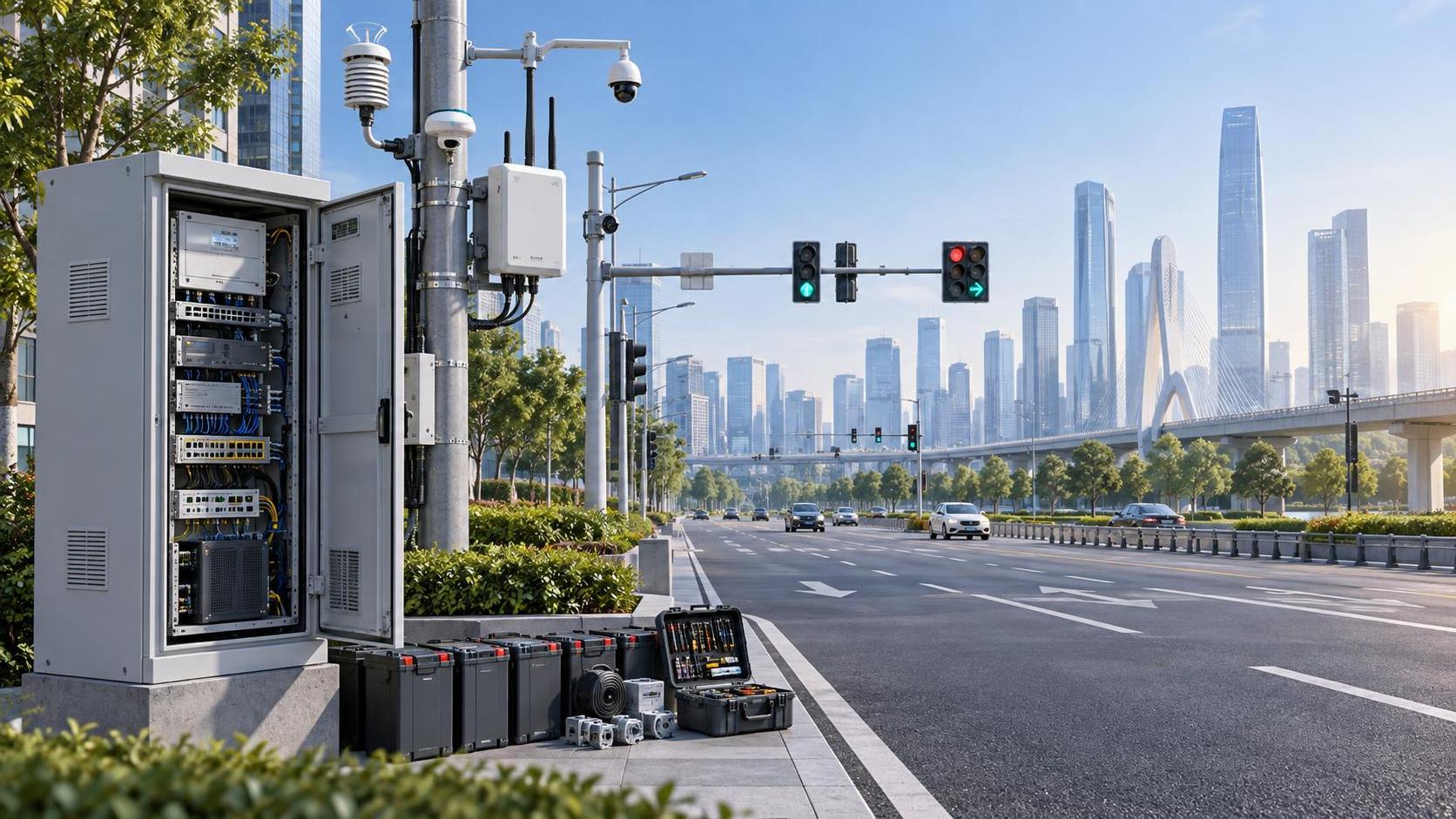
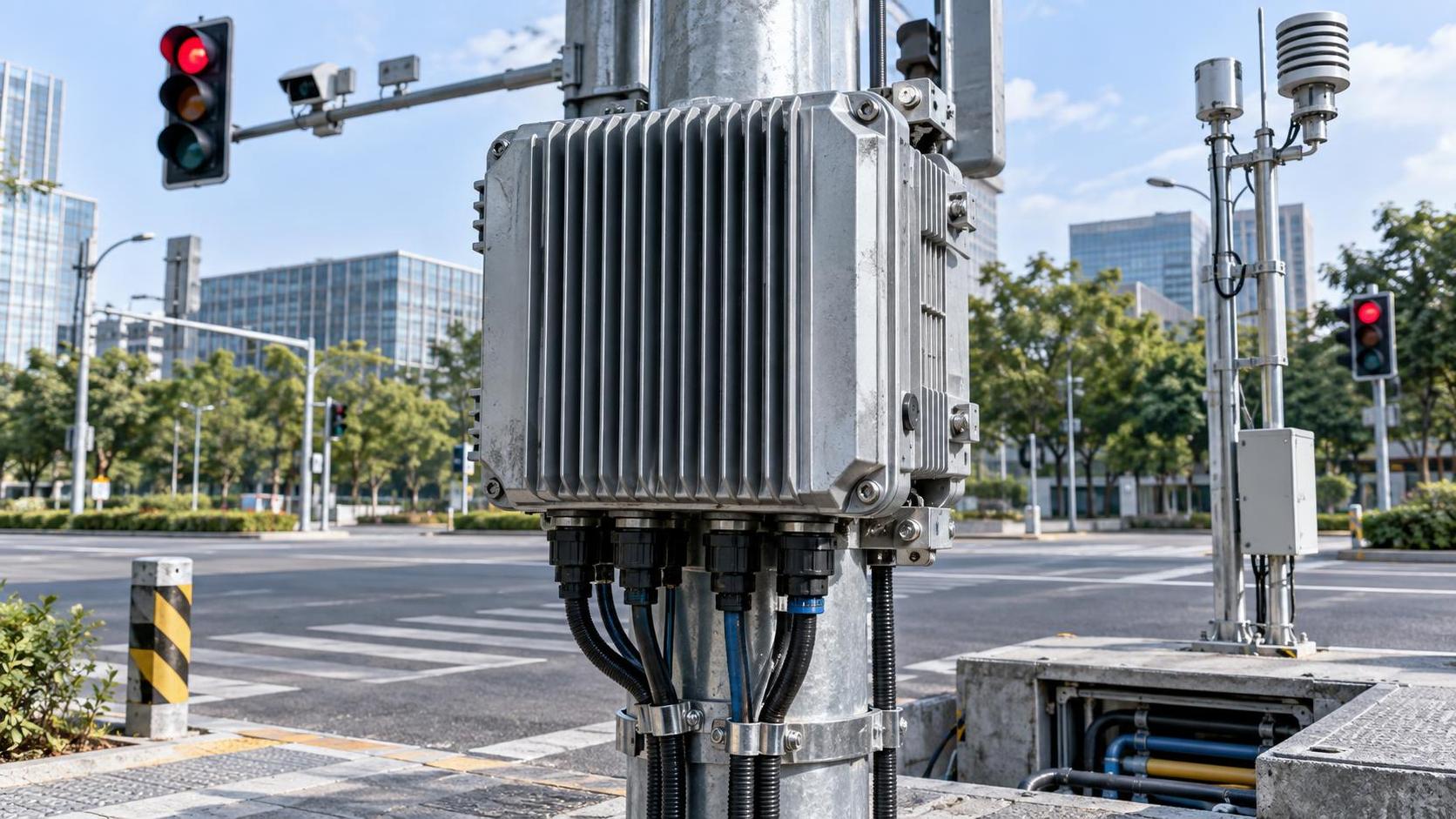
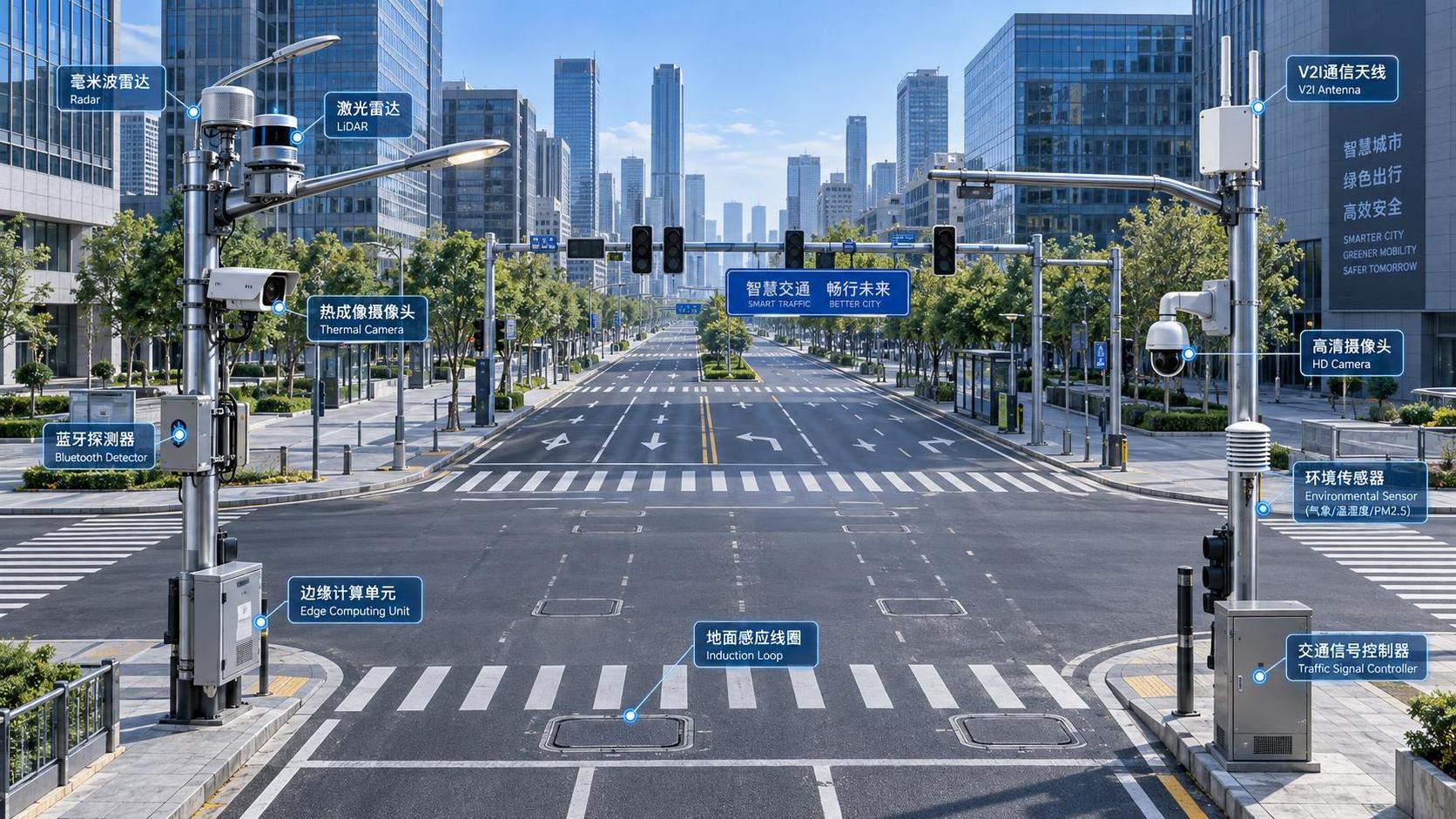
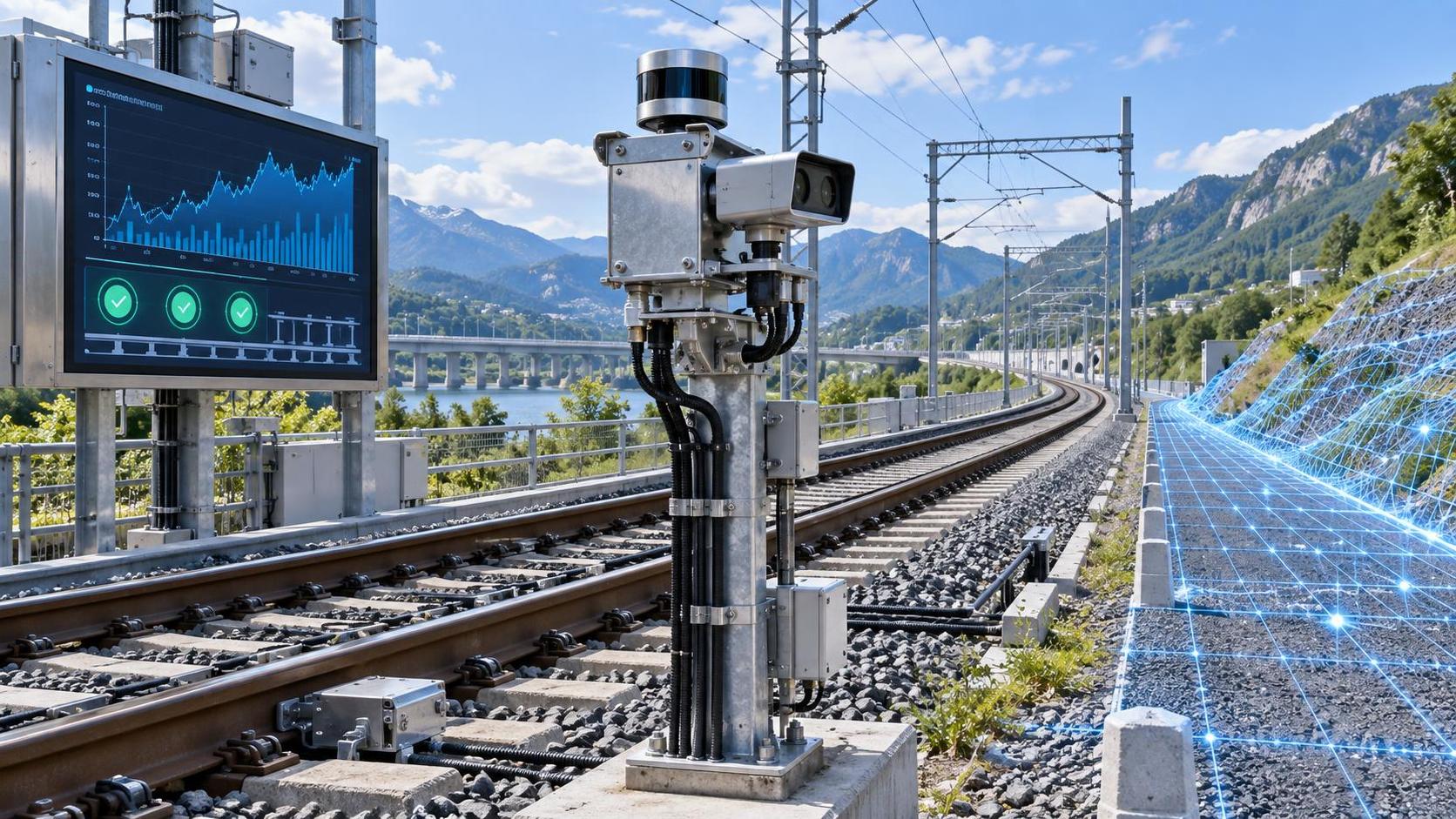
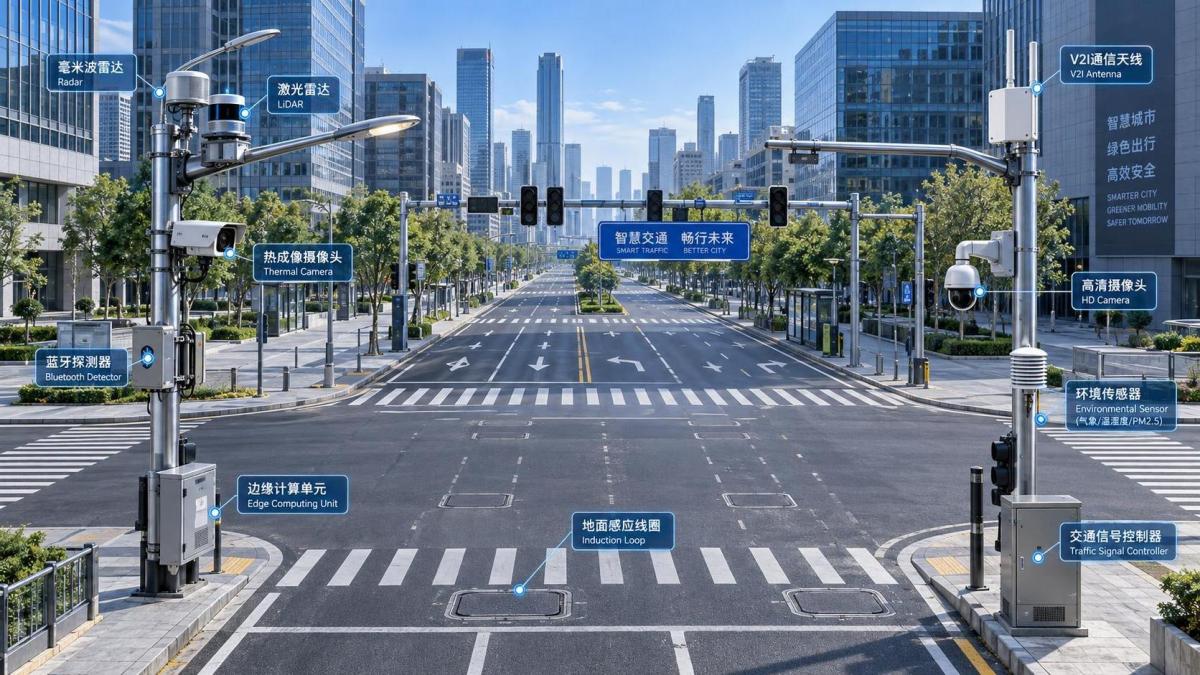
At the sensing layer, redundancy is neither optional nor uniform. A single intersection may host up to nine distinct data sources: inductive loops (embedded), radar units (mounted on poles), thermal cameras (for low-visibility conditions), LiDAR edge nodes, Bluetooth/WiFi MAC address sniffers, floating car data from municipal fleet telematics, anonymized mobile probe signals, V2I beacon messages from connected buses, and even acoustic anomaly detectors trained to identify emergency vehicle sirens. Crucially, these are not deployed in parallel for duplication—they serve complementary roles with divergent failure modes. Inductive loops fail silently under pavement settlement but remain immune to fog; thermal cameras degrade in direct sunlight but outperform RGB systems in smoke or heavy rain; Bluetooth sniffers collapse when smartphone battery-saving modes suppress background scanning, yet remain unaffected by occlusion or lighting. The system does not “switch to backup”—it continuously weights inputs based on real-time confidence scoring derived from cross-modal consistency checks.
Edge-based AI diagnostics form the second layer. Modern traffic edge gateways no longer simply forward raw sensor streams to central servers. Instead, they run lightweight neural inference models that detect anomalies before transmission—such as sudden zero-value spikes in radar Doppler returns, inconsistent frame-rate drops across synchronized camera feeds, or statistically improbable dwell-time distributions in Bluetooth detection logs. When such patterns exceed calibrated thresholds, the gateway triggers localized diagnostic routines: reinitializing sensor firmware, cycling power relays, verifying time-synchronization drift against GNSS pulses, or comparing local GPS-derived vehicle trajectories against loop-triggered entry/exit timestamps. These diagnostics occur within 120–450 ms—fast enough to prevent erroneous signal phase extensions but slow enough to avoid false positives from transient noise. Critically, the diagnostic logic is not static: it adapts using federated learning updates pushed weekly from centralized analytics platforms, incorporating failure signatures observed across hundreds of intersections without exposing raw data.
The third layer—control-level fallback—is where architectural intent becomes visible to operators. When sensor confidence falls below defined thresholds, the system does not default to fixed-time cycles or pre-programmed “fail-safe” plans. Rather, it activates context-aware fallback protocols anchored in digital twin infrastructure. Each intersection maintains a live, physics-informed digital twin that includes lane geometry, vehicle kinematic constraints, historical turning movement counts, peak-hour queue propagation models, and even pedestrian crossing behavior calibrated from long-term video analytics. When primary sensors go offline, the twin shifts from *observational* to *predictive* mode: it synthesizes residual inputs (e.g., aggregated mobile probe speeds on adjacent corridors, bus arrival times at nearby stops, upstream congestion indices) to estimate current demand distribution. Signal timing then adjusts using model-predictive control (MPC), solving constrained optimization problems every 8–15 seconds—not to maximize throughput, but to minimize queue spillover risk and maintain minimum green time for emergency egress routes.
This approach explains why some deployments tolerate extended sensor outages without service degradation while others falter after minutes. It is not about the number of sensors, but whether the system architecture treats sensing as a distributed, heterogeneous, and diagnosable subsystem—or as a monolithic input pipe. Systems built around centralized cloud-only processing often lack edge diagnostics and cannot sustain MPC without continuous high-fidelity inputs. Those relying solely on historical averages or rule-based fallbacks fail when traffic patterns deviate—such as during unscheduled events, weather-induced behavioral shifts, or construction-related detours. The most resilient deployments integrate all three layers: diverse physical sensing, adaptive edge intelligence, and twin-driven control logic—all operating under explicit uncertainty budgets.
 Real-world limitations remain tightly bound to implementation discipline. First, digital twin fidelity degrades rapidly outside calibration boundaries: a twin trained on weekday commuter flows performs poorly during weekend festival traffic unless updated with short-term behavioral priors. Second, edge diagnostics require precise, vendor-agnostic time synchronization—sub-10 ms accuracy across heterogeneous devices—which many legacy pole-mounted cabinets still cannot achieve without hardware upgrades. Third, fallback protocols depend on accurate, up-to-date geometric and regulatory metadata: if the digital twin does not reflect a recently added protected bike lane or a temporary right-turn restriction, MPC-generated signal plans may inadvertently violate safety rules or induce phantom congestion.
These constraints shape procurement and integration decisions more than technical specifications alone. A municipality evaluating intelligent traffic systems should prioritize verifiable evidence of edge diagnostic latency—not just sensor count or resolution—and request demonstration of fallback behavior under controlled sensor degradation scenarios, not just uptime metrics. Suppliers claiming “self-healing” capabilities must disclose whether healing occurs at the device level (e.g., automatic firmware rollback), network level (e.g., redundant backhaul path switching), or control level (e.g., twin-based MPC reconfiguration)—as each addresses fundamentally different failure classes. Similarly, interoperability certifications (e.g., NTCIP 1202 v03, ETSI EN 302 663) matter less than documented performance under cross-vendor sensor substitution: can the system maintain sub-2% phase deviation when swapping a proprietary radar unit for an open-standard alternative?
Finally, sensor failure handling reveals deeper architectural trade-offs rarely discussed in RFPs. Systems optimized for minimal latency often sacrifice diagnostic depth—running only lightweight statistical filters rather than full neural anomaly detection. Those emphasizing predictive control may over-rely on historical baselines, increasing vulnerability to structural traffic shifts. And deployments prioritizing cybersecurity hardening sometimes disable critical diagnostic telemetry channels, unintentionally blinding edge nodes to emerging failure patterns. There is no universal optimum—only context-appropriate balances between observability, adaptability, determinism, and security.
In summary, intelligent traffic systems handle sensor failures not through redundancy alone, but through layered, adaptive response mechanisms that shift responsibility from passive detection to active interpretation. Resilience emerges from how sensing diversity, edge intelligence, and twin-driven control interact—not from any single component. For decision-makers, the critical question is not whether a system has backup sensors, but whether its architecture acknowledges uncertainty as a first-class variable—and encodes responses to it in ways that preserve both safety margins and operational flexibility.
Real-world limitations remain tightly bound to implementation discipline. First, digital twin fidelity degrades rapidly outside calibration boundaries: a twin trained on weekday commuter flows performs poorly during weekend festival traffic unless updated with short-term behavioral priors. Second, edge diagnostics require precise, vendor-agnostic time synchronization—sub-10 ms accuracy across heterogeneous devices—which many legacy pole-mounted cabinets still cannot achieve without hardware upgrades. Third, fallback protocols depend on accurate, up-to-date geometric and regulatory metadata: if the digital twin does not reflect a recently added protected bike lane or a temporary right-turn restriction, MPC-generated signal plans may inadvertently violate safety rules or induce phantom congestion.
These constraints shape procurement and integration decisions more than technical specifications alone. A municipality evaluating intelligent traffic systems should prioritize verifiable evidence of edge diagnostic latency—not just sensor count or resolution—and request demonstration of fallback behavior under controlled sensor degradation scenarios, not just uptime metrics. Suppliers claiming “self-healing” capabilities must disclose whether healing occurs at the device level (e.g., automatic firmware rollback), network level (e.g., redundant backhaul path switching), or control level (e.g., twin-based MPC reconfiguration)—as each addresses fundamentally different failure classes. Similarly, interoperability certifications (e.g., NTCIP 1202 v03, ETSI EN 302 663) matter less than documented performance under cross-vendor sensor substitution: can the system maintain sub-2% phase deviation when swapping a proprietary radar unit for an open-standard alternative?
Finally, sensor failure handling reveals deeper architectural trade-offs rarely discussed in RFPs. Systems optimized for minimal latency often sacrifice diagnostic depth—running only lightweight statistical filters rather than full neural anomaly detection. Those emphasizing predictive control may over-rely on historical baselines, increasing vulnerability to structural traffic shifts. And deployments prioritizing cybersecurity hardening sometimes disable critical diagnostic telemetry channels, unintentionally blinding edge nodes to emerging failure patterns. There is no universal optimum—only context-appropriate balances between observability, adaptability, determinism, and security.
In summary, intelligent traffic systems handle sensor failures not through redundancy alone, but through layered, adaptive response mechanisms that shift responsibility from passive detection to active interpretation. Resilience emerges from how sensing diversity, edge intelligence, and twin-driven control interact—not from any single component. For decision-makers, the critical question is not whether a system has backup sensors, but whether its architecture acknowledges uncertainty as a first-class variable—and encodes responses to it in ways that preserve both safety margins and operational flexibility.
Get weekly intelligence in your inbox.
No noise. No sponsored content. Pure intelligence.
News Recommendations
 Sep 19, 2026How an electronics application guide helps prevent component mismatchHow an electronics application guide helps prevent component mismatch
 Sep 18, 2026When a resource allocation platform improves project deliveryWhen a resource allocation platform improves project delivery
 Sep 17, 2026What to compare when evaluating mineral processing equipment manufacturersWhat to compare when evaluating mineral processing equipment manufacturers
 Sep 16, 2026How mineral separation optimization can reduce concentrate lossesHow mineral separation optimization can reduce concentrate losses
 Sep 15, 2026How to assess lifecycle costs in urban tech procurementHow to assess lifecycle costs in urban tech procurement
 Sep 14, 2026Heavy industry technology trends reshaping capital investment prioritiesHeavy industry technology trends reshaping capital investment priorities
 Sep 14, 2026Why Infrastructure Equipment Buyers Are Shifting from Catalog-Based to Capability-Based Supplier SelectionWhy Infrastructure Equipment Buyers Are Shifting from Catalog-Based to Capability-Based Supplier Selection
 Sep 14, 2026Process Automation Project Execution: How to Align Supplier Capabilities with PLC Integration, Cybersecurity & Commissioning MilestonesProcess Automation Project Execution: How to Align Supplier Capabilities with PLC Integration, Cybersecurity & Commissioning Milestones
 Sep 14, 2026Are intelligent traffic systems worth the investment for small cities?Are intelligent traffic systems worth the investment for small cities?
 Sep 14, 2026How do intelligent traffic systems handle sensor failures?How do intelligent traffic systems handle sensor failures?
 Sep 14, 2026What should I check before accepting a smart building system?What should I check before accepting a smart building system?
 Sep 14, 2026Is a smart building system worth the maintenance cost?Is a smart building system worth the maintenance cost?
 Sep 14, 2026What data is needed for reliable resource allocation planning?What data is needed for reliable resource allocation planning?
 Sep 14, 2026How can resource allocation software reduce equipment idle time?How can resource allocation software reduce equipment idle time?
 Sep 14, 2026How should smart devices be maintained in harsh outdoor conditions?How should smart devices be maintained in harsh outdoor conditions?
 Sep 14, 2026Do smart devices improve worker safety on construction sites?Do smart devices improve worker safety on construction sites?
 Sep 14, 2026What environmental risks must be assessed before deep-sea mining?What environmental risks must be assessed before deep-sea mining?
 Sep 14, 2026Is deep-sea mining equipment commercially viable in 2026?Is deep-sea mining equipment commercially viable in 2026?
 Sep 14, 2026What Inspection Checks Should Procurement Teams Perform Before Ordering Dredging Equipment in 2026?What Inspection Checks Should Procurement Teams Perform Before Ordering Dredging Equipment in 2026?
 Sep 13, 2026How to verify an industrial product information source before specifying equipmentHow to verify an industrial product information source before specifying equipment
 Sep 12, 2026Which intelligent traffic systems hardware fits an urban intersection?Which intelligent traffic systems hardware fits an urban intersection?
 Sep 11, 2026How pump capacity affects response coverage for municipal fire fighting vehiclesHow pump capacity affects response coverage for municipal fire fighting vehicles
 Sep 10, 2026What to verify before choosing a heavy industry equipment supplierWhat to verify before choosing a heavy industry equipment supplier
 Sep 09, 2026When do adaptive urban traffic control systems reduce corridor delays?When do adaptive urban traffic control systems reduce corridor delays?
 Sep 08, 2026When logistics technology solutions in North America reduce delivery delaysWhen logistics technology solutions in North America reduce delivery delays
 Sep 07, 2026How reliable are wireless mining safety systems in underground mines?How reliable are wireless mining safety systems in underground mines?
 Sep 07, 2026How to assess a smart lighting technology platform for interoperabilityHow to assess a smart lighting technology platform for interoperability