How mineral separation optimization can reduce concentrate losses
Concentrate losses are rarely caused by one visibly “bad” unit operation. They usually arise from a chain of small mismatches: ore variability not reflected in the control strategy, liberation targets set too coarsely or too finely, reagent conditions drifting from the ore response, classification inefficiency, unstable froth transport, or weak reconciliation between sampled streams and the metallurgical balance.
The practical objective of mineral separation optimization is not simply to maximize recovery at any cost. It is to preserve valuable mineral mass while meeting concentrate-grade, impurity, moisture, throughput, and downstream treatment constraints. A circuit can show acceptable overall recovery while still losing significant value through low-grade concentrate, unaccounted fines, misclassified middlings, or valuable particles reporting to tailings during short periods of instability. The relevant question is therefore: where is the valuable mineral leaving the intended recovery path, and is that loss technically recoverable without creating a larger penalty elsewhere?
Define concentrate loss before changing the circuit
“Concentrate loss” is often used too broadly. For technical evaluation, it should be separated into distinct loss mechanisms because each requires different evidence and corrective action.
- True recovery loss: payable metal or mineral reports to final tailings, scavenger tailings, discarded slimes, oversize rejects, or another low-value stream.
- Concentrate quality loss: valuable material is recovered, but excessive gangue or penalty elements reduce grade, increase transport and treatment cost, or make the product less marketable.
- Physical handling loss: concentrate is lost through thickener overflow, filtration inefficiency, spillage, dust, drainage, stockpile segregation, or shipment-accounting differences.
- Accounting loss: sampling, assay, moisture, density, or flow-measurement errors create an apparent loss that may not represent a process problem.
This distinction matters because a higher flotation recovery does not automatically improve net concentrate value. Recovering marginal particles may lower grade, increase impurity content, overload cleaning capacity, or make filtration more difficult. Conversely, a small loss of liberated valuable mineral to tailings can be economically material even when plant-wide recovery appears stable.
A reliable assessment starts with a reconciled mass and metal balance. For a simplified two-product circuit:
Feed metal = concentrate metal + tailings metal + unaccounted metal
The “unaccounted” term should not be treated as a nuisance value. A persistent imbalance can indicate poor sampling location, non-representative slurry sampling, biased moisture measurement, unstable flow measurement, delayed laboratory turnaround, or an incorrect stream definition. Optimizing a circuit against an unreliable balance can shift operating conditions without solving the actual loss.
Ore characterization determines whether the target is realistic
Mineral separation is constrained by mineralogy before it is constrained by control logic. The same head grade can behave very differently if valuable minerals occur as liberated grains, locked composites, surface-altered particles, ultra-fine slimes, or inclusions within gangue. Feed chemistry may also change flotation response even when the main mineral assemblage appears similar.
Useful characterization is not limited to periodic head assays. It needs to explain the material entering the critical separation stage. The most decision-relevant variables commonly include:
- valuable-mineral liberation by size fraction;
- association of valuable minerals with gangue and penalty minerals;
- particle-size distribution at cyclone overflow, flotation feed, and concentrate streams;
- hardness and competence variation affecting grinding and classification;
- clay, talc, carbonaceous matter, soluble salts, oxidation products, or other surface-active constituents;
- mineralogical differences between high-loss and normal-loss operating periods.
Without this information, a low-recovery event may be incorrectly attributed to reagent dosage or cell performance when the actual cause is inadequate liberation, a sudden increase in fines, or a shift in mineral surface condition. The reverse is also possible: operators may respond to a liberation problem by driving the mill harder, creating excess slimes that worsen selectivity and increase entrainment losses.
Optimization therefore begins with identifying the recovery-limiting particle population. If losses are dominated by coarse locked particles, the response may involve grinding, classification, or staged regrinding. If valuable mineral is sufficiently liberated but remains in tailings, the priority shifts toward flotation kinetics, hydrodynamics, reagent interaction, residence time, or bubble-particle attachment. If the loss is concentrated in ultra-fine fractions, conventional cell settings alone may not be enough; desliming, fine-particle recovery methods, water-quality control, or different flotation hardware may require evaluation.
Grinding and classification can create or prevent downstream loss
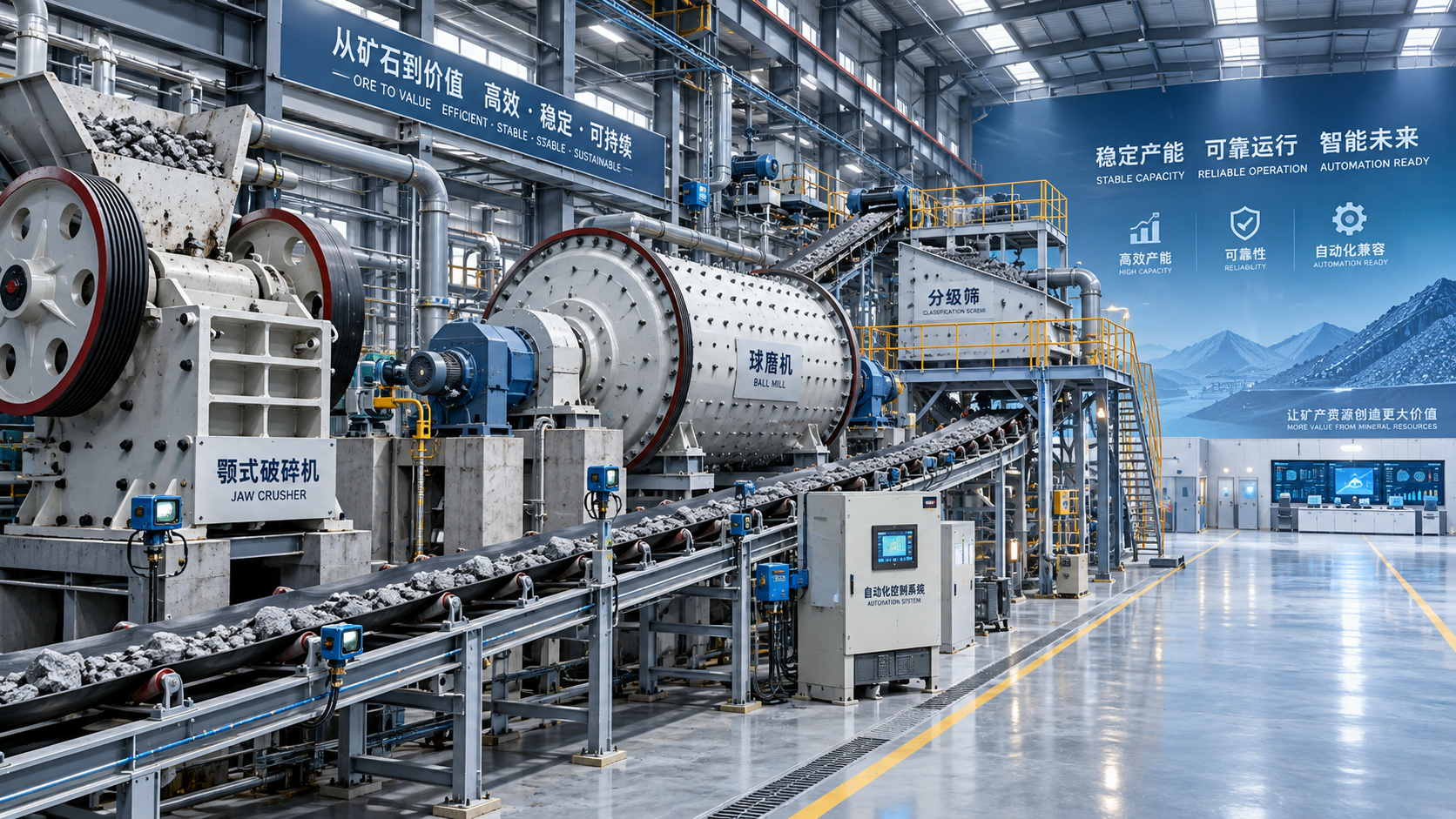
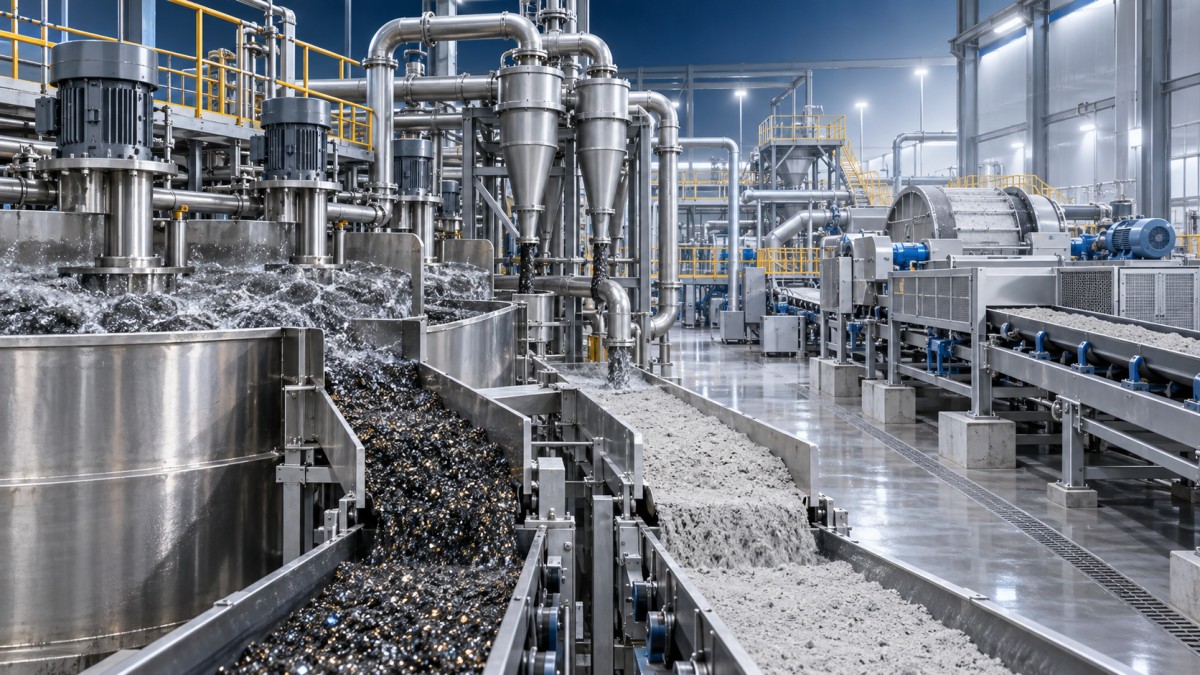
Grinding is often described as a trade-off between liberation and energy use, but its separation impact is more specific. The circuit must produce particles that are liberated enough to separate while avoiding unnecessary generation of ultra-fines. Overgrinding can lower selectivity by increasing surface area, reagent consumption, slime coating, and mechanical entrainment. Undergrinding leaves composite particles that may either report to tailings with valuable mineral locked inside or contaminate the concentrate with gangue.
The appropriate target is not a universal P80. It is the size distribution that delivers acceptable liberation and downstream separation performance for the ore type being treated. This requires looking beyond the average grind size. A circuit can meet an average P80 target while retaining too much coarse valuable material in one fraction or producing an excessive fine tail in another.
Classification efficiency is central to this problem. Hydrocyclone performance can be affected by feed density, pressure, vortex finder condition, apex wear, roping, feed-size changes, and circulating-load variation. Coarse particles bypassing to overflow can lower flotation recovery; excessive fines circulating in the mill can increase overgrinding. Neither issue is always obvious from a single particle-size measurement.
Evaluation should compare particle-size distributions, mineral liberation, and assays across cyclone feed, overflow, underflow, rougher feed, and relevant tailings streams. A size-by-assay balance is particularly valuable because it identifies where the metal is concentrated. If a disproportionate share of tailings metal sits in a coarse fraction, grinding and classification deserve priority. If it is mainly in the finest fraction, further grinding is unlikely to be the solution.
Flotation losses should be separated into kinetics, entrainment, and selectivity problems
Flotation optimization becomes more effective when loss mechanisms are distinguished rather than treated as a generic recovery shortfall.
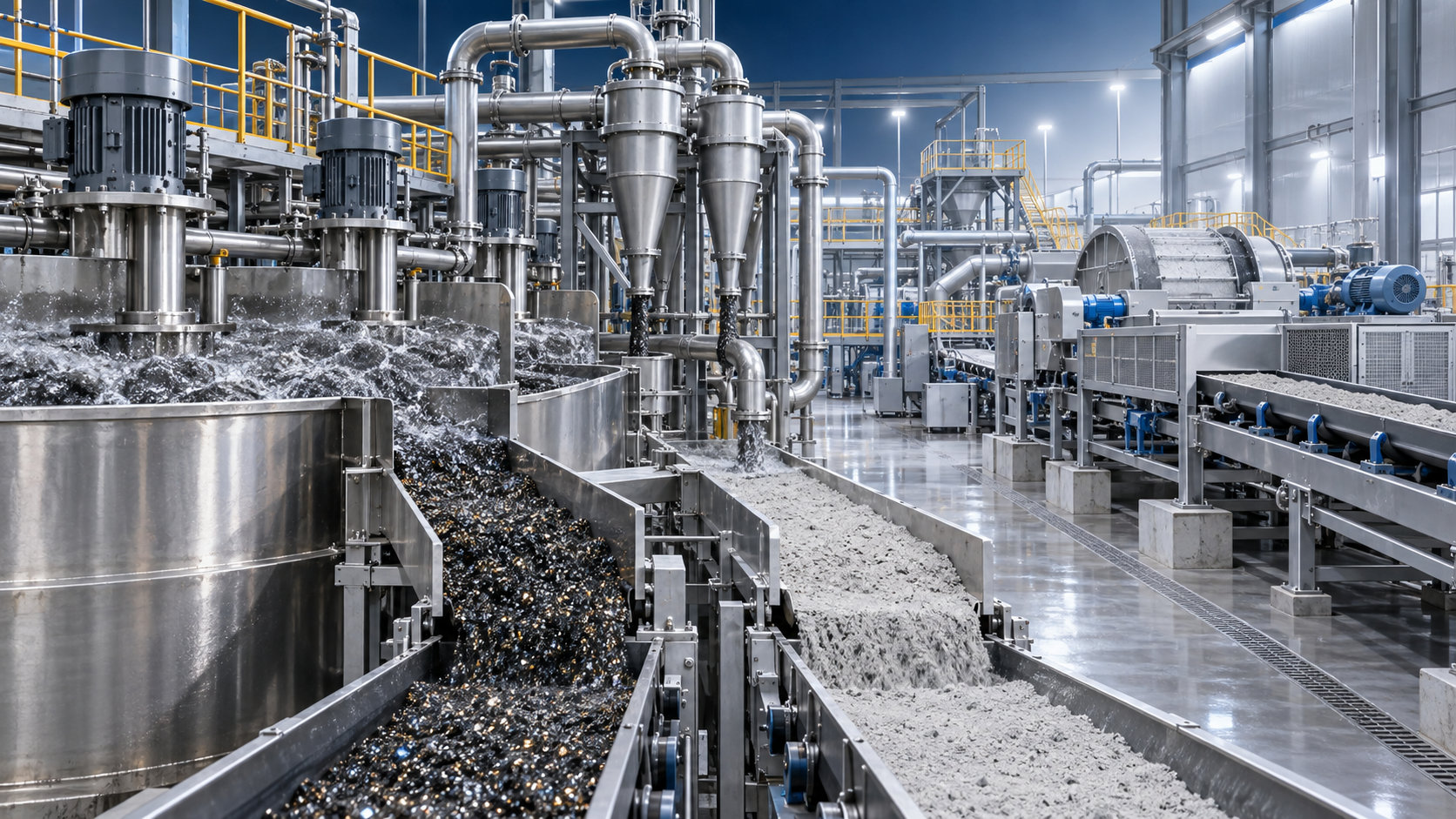
Kinetic loss occurs when floatable valuable particles do not have sufficient probability of collision, attachment, and transport to froth during available residence time. Causes can include insufficient collector activity, inadequate air dispersion, poor slurry chemistry, particle size outside the responsive range, low residence time, or weak mixing.
Entrainment-related loss is usually discussed as gangue reporting to concentrate, but it can also affect value recovery indirectly. Excess water recovery may carry fine gangue and penalty minerals into concentrate, forcing a reduction in froth recovery or more aggressive cleaning. The resulting correction can then reject fine valuable mineral. Froth washing, air rate, froth depth, water balance, and feed desliming need to be considered together.
Selectivity loss occurs when gangue, sulfides, clays, or penalty minerals respond similarly to the target mineral under prevailing chemistry. In this case, increasing collector dosage or air rate can improve apparent recovery while degrading concentrate quality. The better solution may be pH adjustment, depressant selection, oxidation control, water-quality management, staged reagent addition, cleaner configuration, or regrinding of middlings.
Froth appearance can provide useful operational context, but it is not a sufficient control variable. A stable-looking froth may be carrying poorly liberated gangue, while a less persistent froth may still deliver better grade and recovery. The technical basis for change should come from timed samples, metallurgical balances, flotation kinetics, and mineralogical examination of concentrate and tailings—not visual interpretation alone.
Reagent optimization requires ore-response logic
Reagent programs are frequently adjusted through dosage changes, yet dosage is only one component of chemical control. The response depends on reagent addition point, conditioning time, sequence, pH, oxidation-reduction conditions where relevant, water chemistry, temperature, dissolved ions, and the surface state of the minerals.
A collector can be chemically appropriate but operationally ineffective if it is added after the main conditioning opportunity. A depressant may improve concentrate grade while suppressing fine or partially oxidized target mineral. Lime may control pyrite flotation in one ore domain but alter collector response or promote scaling in another. These are not reasons to avoid reagent adjustment; they are reasons to test changes against a defined ore type and a measured recovery-grade relationship.
Short controlled trials should include representative feed characterization, stable baseline conditions, sufficient sampling frequency, and a pre-defined acceptance criterion. A trial that reports only concentrate grade or only instantaneous recovery cannot establish whether the overall circuit has improved.
Control stability often has more value than an aggressive setpoint
Many valuable losses occur during transitions rather than during steady operation: mill feed changes, sump level excursions, pump-speed adjustments, density swings, reagent interruptions, thickener upsets, or shifts between ore sources. Average daily values can conceal these events. A plant may meet its monthly recovery target while experiencing repeated periods in which high-grade material is sent to tailings.
Mineral separation optimization should therefore focus on variability as well as average performance. Critical process variables typically include feed grade, particle size, pulp density, cyclone pressure, flotation feed rate, pH, dissolved oxygen where relevant, air rate, froth depth, reagent flow, cell level, and concentrate mass pull. Their value lies in showing relationships, not merely recording compliance with a nominal setpoint.
Online analyzers, particle-size instruments, machine-vision systems, and advanced process control can improve response time, but only if their measurements are representative and their recommendations respect process constraints. A biased analyzer can create a false optimization signal. A control system that maximizes recovery without a grade constraint can overload the cleaning circuit. A model built on historical data may fail when the ore blend moves outside the data range used for calibration.
A technically sound control strategy defines protected boundaries: maximum impurity level, acceptable concentrate grade range, froth and cell-level operating limits, equipment capacity, and a recovery target tied to ore domain. It should also include a fallback operating mode when sensors fail, data quality deteriorates, or feed conditions change abruptly.
Cleaning, regrinding, and middlings need value-based evaluation
Cleaner circuits are where the conflict between recovery and concentrate quality becomes most visible. Rejecting a middlings stream may protect final grade but discard composite particles containing payable mineral. Recycling all middlings may improve recovery but increase circulating load, reduce residence time, and accumulate difficult gangue.
The right decision depends on the composition and liberation of the middlings, not just their assay. A high-assay middlings stream may contain well-liberated valuable mineral that requires improved flotation conditions. It may instead consist of locked composites that need regrinding before cleaning. In some cases, regrinding can expose valuable mineral; in others, it generates fines that worsen downstream selectivity. The distinction can only be resolved through size-by-size mineralogical analysis and testing under realistic circuit conditions.
When assessing regrind or additional cleaning capacity, the relevant comparison is not simply incremental recovery. It includes the effect on final grade, penalty elements, reagent consumption, energy demand, water use, residence time, filtration behavior, and the stability of the whole circuit. A technically attractive recovery gain may have limited value if it converts a saleable concentrate into a product with unfavorable treatment or transport characteristics.
Dewatering and concentrate handling are part of recovery control
Recovery is sometimes treated as complete once material reaches the final concentrate thickener. That assumption can conceal physical loss and quality deterioration. Fine valuable particles can leave with thickener overflow if flocculation, feed dilution, bed level, overflow clarity, or feedwell performance is poorly controlled. Filtration can introduce losses through wet cake handling, filtrate solids, poor cake discharge, or moisture levels that affect shipment weight and transport economics.
Concentrate moisture must be managed with appropriate measurement discipline because it affects dry-metric-ton calculations and commercial settlement. Sampling plans should reflect the actual material form: slurry, filter cake, stockpile, belt stream, or loaded shipment. A laboratory assay may be analytically accurate yet commercially misleading if the physical sample is not representative of the lot.
Where concentrates contain sulfides or other reactive minerals, storage time, oxidation, drainage, dust management, and blending practice can also affect product consistency. These are not downstream administrative issues; they influence whether metallurgical recovery becomes recoverable commercial value.
Use a loss map rather than isolated improvement projects
The most useful technical deliverable is a loss map that links each material stream to its value content, measurement confidence, controllable variables, and likely root causes. It should identify not only the largest loss stream but also the uncertainty around that estimate. A tailings stream with modest apparent loss but poor sampling confidence may deserve investigation before capital is assigned to a new separation stage.
A practical loss map connects five questions:
- Which stream contains the lost valuable mineral?
- In what size and liberation form does it occur?
- Is the loss stable, ore-dependent, or associated with operational excursions?
- Which process variables can realistically change its destination?
- What grade, impurity, throughput, and dewatering consequences follow from recovery improvement?
This approach prevents a common error: selecting technology because it addresses a familiar unit operation rather than because it addresses the demonstrated loss mechanism. Better sensors, larger cells, finer grinding, additional cleaners, or new reagents can all be justified in specific conditions. None should be treated as a default answer to concentrate loss.
Effective mineral separation optimization is ultimately a discipline of evidence. It combines representative sampling, reconciled accounting, ore-domain knowledge, size-and-liberation analysis, controlled changes, and operating limits that protect concentrate quality. When those elements are aligned, recovery improvement becomes more than a headline percentage: it becomes a defensible reduction in valuable mineral leaving the intended concentrate stream.
Get weekly intelligence in your inbox.
No noise. No sponsored content. Pure intelligence.
News Recommendations
 Sep 19, 2026How an electronics application guide helps prevent component mismatchHow an electronics application guide helps prevent component mismatch
 Sep 18, 2026When a resource allocation platform improves project deliveryWhen a resource allocation platform improves project delivery
 Sep 17, 2026What to compare when evaluating mineral processing equipment manufacturersWhat to compare when evaluating mineral processing equipment manufacturers
 Sep 16, 2026How mineral separation optimization can reduce concentrate lossesHow mineral separation optimization can reduce concentrate losses
 Sep 15, 2026How to assess lifecycle costs in urban tech procurementHow to assess lifecycle costs in urban tech procurement
 Sep 14, 2026Heavy industry technology trends reshaping capital investment prioritiesHeavy industry technology trends reshaping capital investment priorities
 Sep 14, 2026Why Infrastructure Equipment Buyers Are Shifting from Catalog-Based to Capability-Based Supplier SelectionWhy Infrastructure Equipment Buyers Are Shifting from Catalog-Based to Capability-Based Supplier Selection
 Sep 14, 2026Process Automation Project Execution: How to Align Supplier Capabilities with PLC Integration, Cybersecurity & Commissioning MilestonesProcess Automation Project Execution: How to Align Supplier Capabilities with PLC Integration, Cybersecurity & Commissioning Milestones
 Sep 14, 2026Are intelligent traffic systems worth the investment for small cities?Are intelligent traffic systems worth the investment for small cities?
 Sep 14, 2026How do intelligent traffic systems handle sensor failures?How do intelligent traffic systems handle sensor failures?
 Sep 14, 2026What should I check before accepting a smart building system?What should I check before accepting a smart building system?
 Sep 14, 2026Is a smart building system worth the maintenance cost?Is a smart building system worth the maintenance cost?
 Sep 14, 2026What data is needed for reliable resource allocation planning?What data is needed for reliable resource allocation planning?
 Sep 14, 2026How can resource allocation software reduce equipment idle time?How can resource allocation software reduce equipment idle time?
 Sep 14, 2026How should smart devices be maintained in harsh outdoor conditions?How should smart devices be maintained in harsh outdoor conditions?
 Sep 14, 2026Do smart devices improve worker safety on construction sites?Do smart devices improve worker safety on construction sites?
 Sep 14, 2026What environmental risks must be assessed before deep-sea mining?What environmental risks must be assessed before deep-sea mining?
 Sep 14, 2026Is deep-sea mining equipment commercially viable in 2026?Is deep-sea mining equipment commercially viable in 2026?
 Sep 14, 2026What Inspection Checks Should Procurement Teams Perform Before Ordering Dredging Equipment in 2026?What Inspection Checks Should Procurement Teams Perform Before Ordering Dredging Equipment in 2026?
 Sep 13, 2026How to verify an industrial product information source before specifying equipmentHow to verify an industrial product information source before specifying equipment
 Sep 12, 2026Which intelligent traffic systems hardware fits an urban intersection?Which intelligent traffic systems hardware fits an urban intersection?
 Sep 11, 2026How pump capacity affects response coverage for municipal fire fighting vehiclesHow pump capacity affects response coverage for municipal fire fighting vehicles
 Sep 10, 2026What to verify before choosing a heavy industry equipment supplierWhat to verify before choosing a heavy industry equipment supplier
 Sep 09, 2026When do adaptive urban traffic control systems reduce corridor delays?When do adaptive urban traffic control systems reduce corridor delays?
 Sep 08, 2026When logistics technology solutions in North America reduce delivery delaysWhen logistics technology solutions in North America reduce delivery delays
 Sep 07, 2026How reliable are wireless mining safety systems in underground mines?How reliable are wireless mining safety systems in underground mines?
 Sep 07, 2026How to assess a smart lighting technology platform for interoperabilityHow to assess a smart lighting technology platform for interoperability