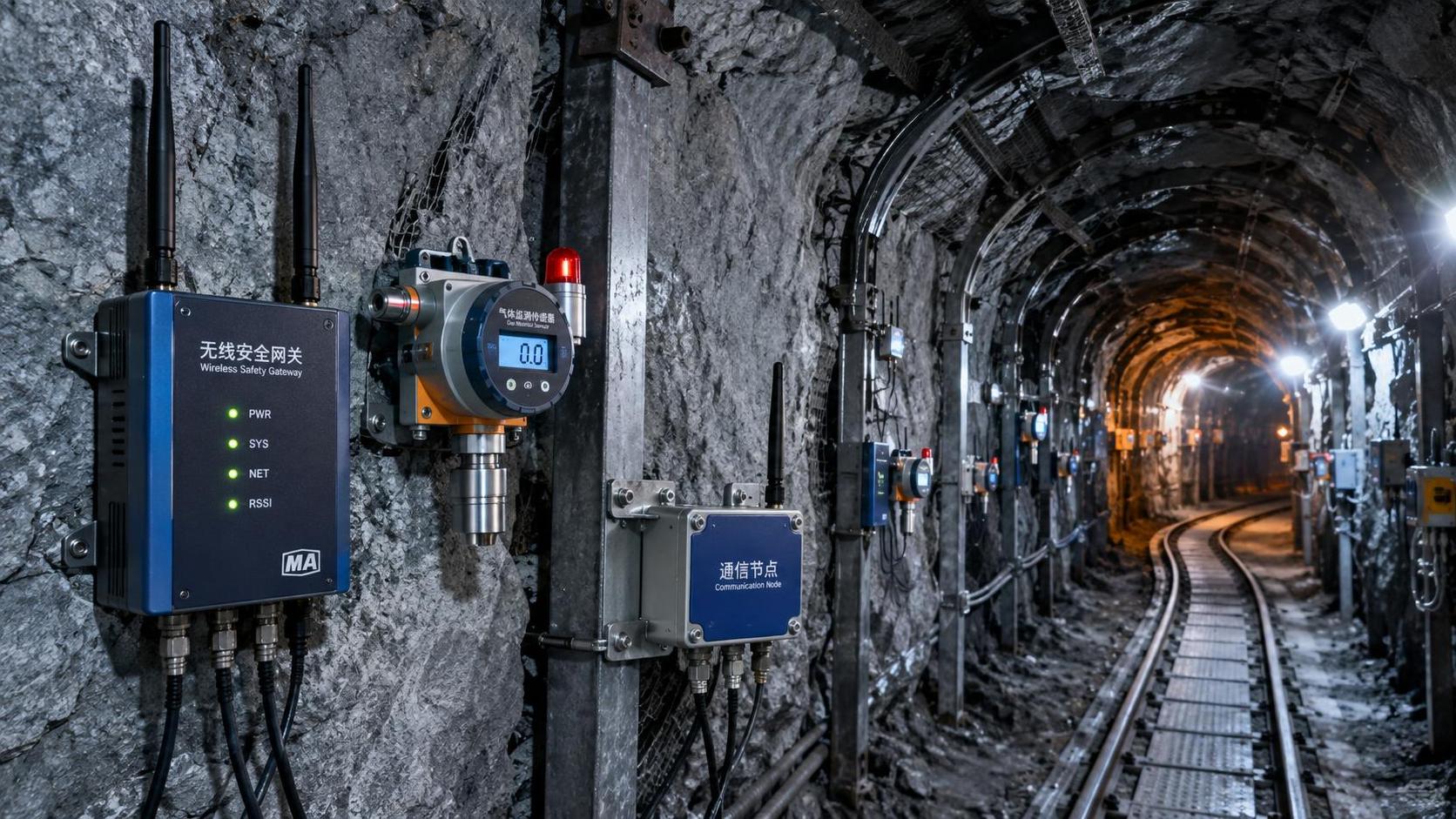
Evaluating mineral processing equipment manufacturers requires more than comparing purchase prices or product specifications. Technical assessors must examine process performance, reliability, automation compatibility, energy efficiency, safety, lifecycle service, and relevant application experience.
For technical evaluation teams, the central question is simple: can this manufacturer deliver stable, measurable plant performance under your actual ore conditions?
A capable supplier does not merely sell crushers, mills, screens, separators, or filters. It understands how equipment choices influence recovery, throughput, operating cost, availability, and downstream processing stability.
The strongest evaluation process compares manufacturers against a defined operating case, including ore variability, planned capacity, product requirements, utilities, site constraints, and maintenance capability.
This approach prevents a common error: selecting equipment with attractive nameplate capacity but insufficient performance margin for hard, abrasive, wet, clay-rich, or variable feed materials.
Start With Process Fit, Not the Equipment Catalogue
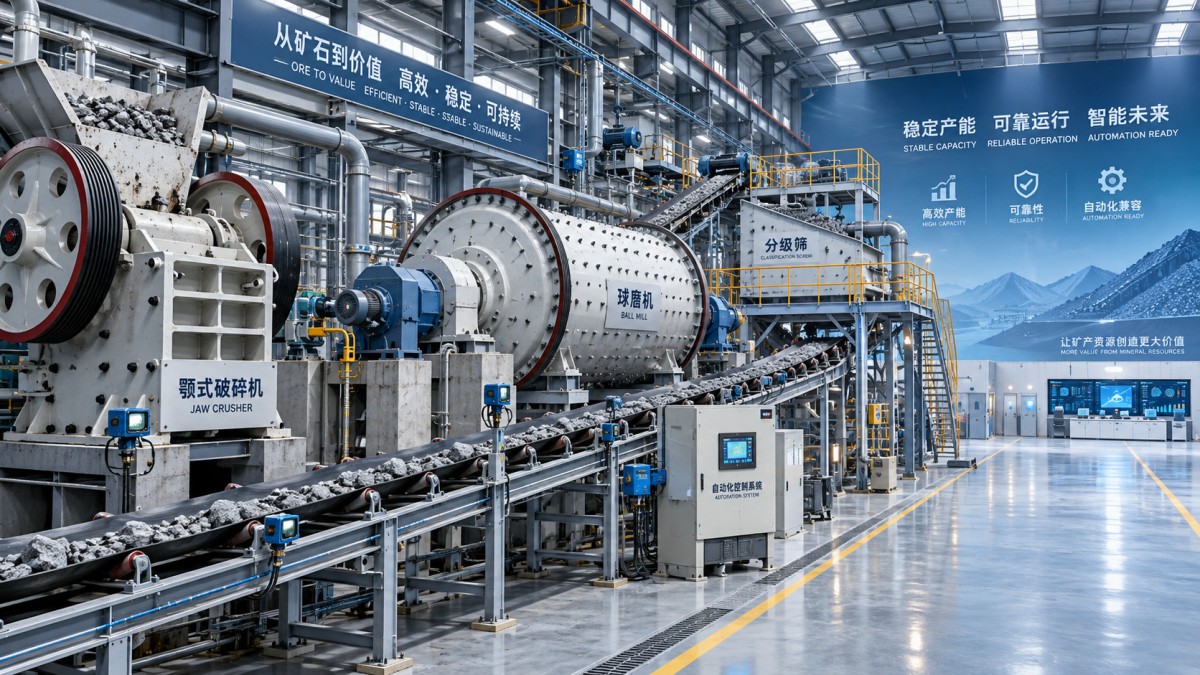
Process fit should be the first comparison criterion because every subsequent decision depends on whether the supplier understands the required flowsheet and material behavior.
Ask each manufacturer to explain how its equipment performs with your ore type, mineralogy, particle-size distribution, moisture content, hardness, abrasiveness, and clay or fines content.
A supplier experienced in copper sulfide ore may not automatically be suitable for lithium spodumene, iron ore, phosphate, gold-bearing refractory ore, industrial minerals, or mineral sands.
Technical assessors should request a process basis document that identifies feed assumptions, target product specifications, expected recovery, circulating loads, water balance, and design operating ranges.
Compare whether performance guarantees are tied to representative testwork. Bench-scale tests, pilot campaigns, bulk samples, and accredited laboratory data offer progressively stronger confidence than generic references.
Where ore variability is significant, ask how the design handles extremes rather than average conditions. This includes competency variation, moisture spikes, grade changes, and unexpected fine material generation.
The most useful proposals state where uncertainty remains. A manufacturer that clearly defines assumptions, limitations, and required validation steps is usually more credible than one making universal claims.
Compare Throughput, Recovery, and Product Quality Together
Equipment capacity should never be assessed in isolation. A high throughput number has limited value if recovery declines, product quality becomes inconsistent, or downstream bottlenecks increase.
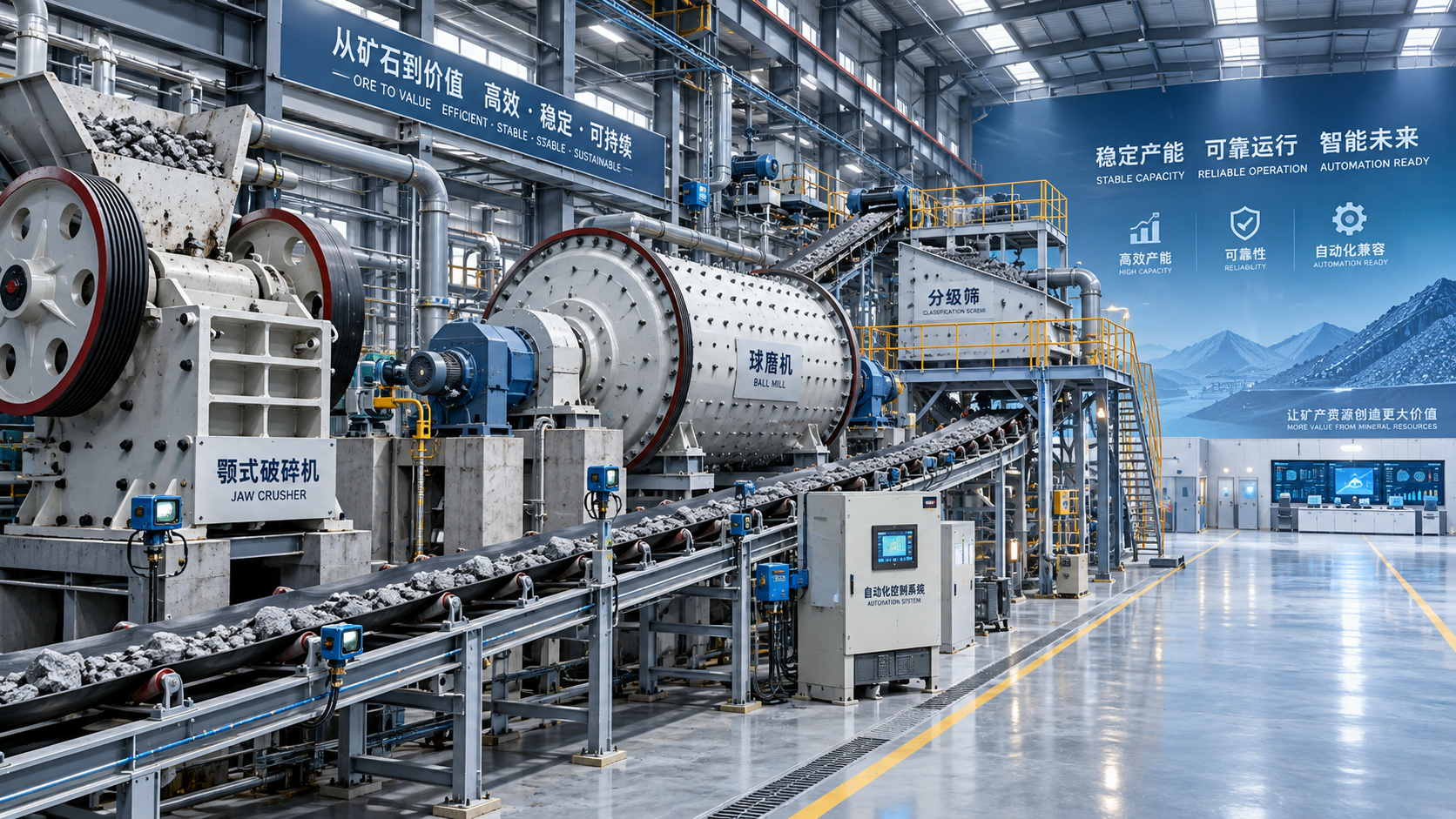
For comminution equipment, compare throughput across the expected feed-size range, ore hardness distribution, liner condition, and target product size instead of relying on one nominal figure.
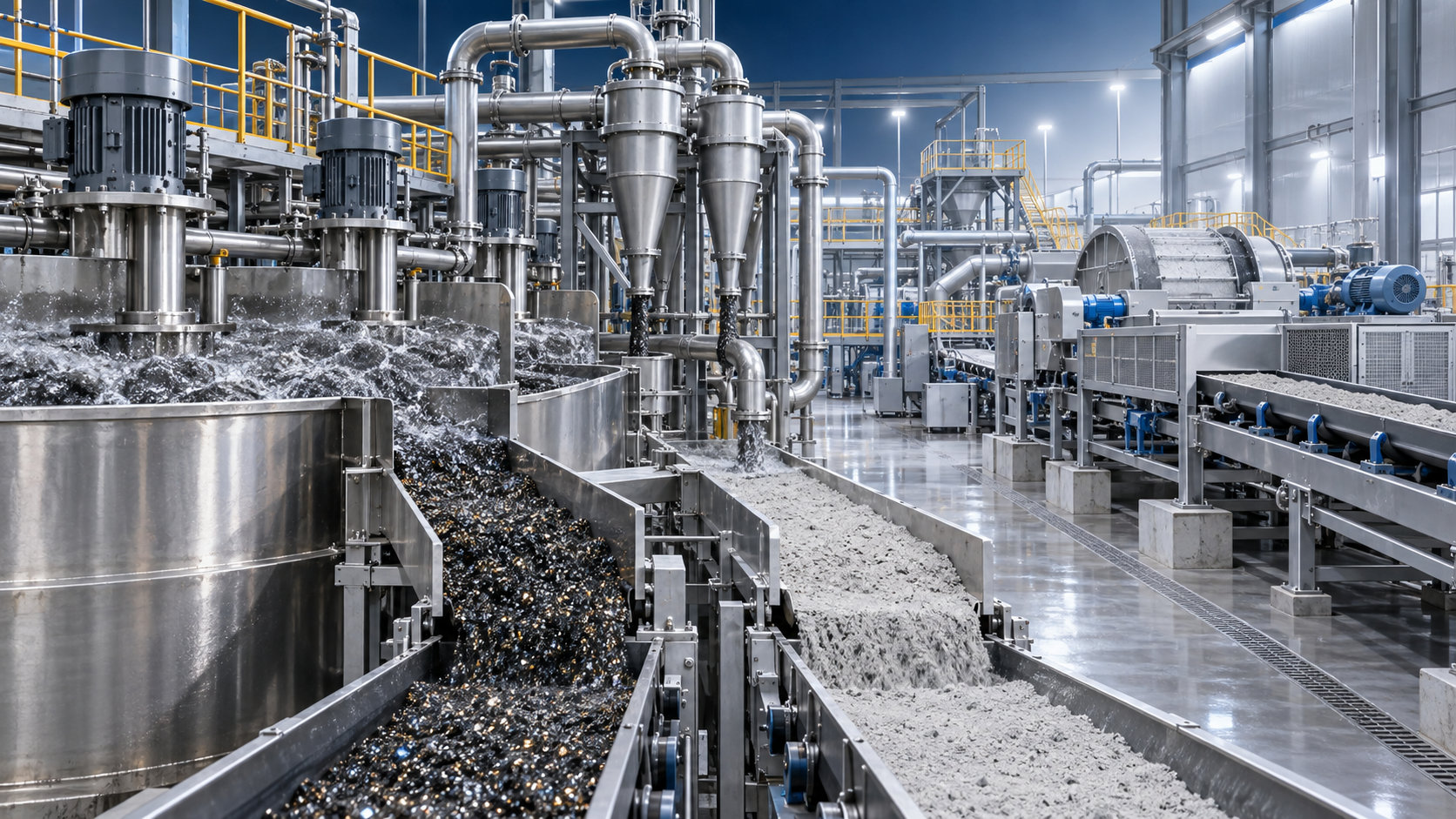
For separation equipment, examine recovery-grade curves, entrainment behavior, reagent consumption, cut-point control, concentrate moisture, impurity removal, and sensitivity to feed changes.
Manufacturers should provide performance information at normal, maximum, and constrained operating conditions. This makes it easier to identify whether proposed margins are technically meaningful or only commercial.
Check how the supplier defines availability, utilization, mechanical capacity, and process capacity. These terms are often used inconsistently and can produce misleading comparisons between proposals.
A practical comparison matrix links each equipment item to an outcome: tonnes processed, recovery percentage, concentrate grade, moisture level, tailings characteristics, and specific energy consumption.
Evaluate the interaction between units as well. A superior flotation cell cannot compensate for poor grinding classification, while an oversized dewatering package can create unnecessary capital expense.
Examine Mechanical Reliability and Wear Management
Mineral processing plants operate in abrasive, corrosive, dusty, and high-load environments. Reliability therefore depends on materials selection, structural design, component access, and maintenance practicality.
Compare the manufacturer’s approach to wear liners, impellers, pump casings, hydrocyclone components, crusher chamber parts, mill liners, screen media, and slurry-contact surfaces.
Ask for expected wear life ranges based on applications comparable to yours. Suppliers should distinguish between laboratory assumptions, typical field results, and site-specific guarantees.
Component life alone is not enough. Technical assessors should calculate the impact of replacement frequency, labor requirements, lifting needs, downtime windows, and production losses during interventions.
Inspect whether critical parts can be replaced safely in place. Equipment requiring extensive disassembly, special access platforms, or rare lifting tools can increase lifecycle costs substantially.
Review bearing arrangements, lubrication systems, sealing methods, drive trains, gearbox selection, vibration limits, and alignment requirements. These details often determine long-term equipment availability.
For slurry systems, assess sealing options, gland-water demand, flush-water quality requirements, leakage controls, and compatibility with solids concentration and particle-size distribution.
Assess Energy, Water, and Consumables on a Lifecycle Basis
Purchase price is visible immediately, but energy, water, grinding media, reagents, liners, screen panels, and spare parts can dominate total ownership cost over the plant life.
Request specific energy data in units relevant to the duty, such as kilowatt-hours per tonne. Confirm the stated figure includes realistic feed conditions and operating load factors.
Compare installed power with actual expected draw. An efficient design may lower operating expenditure, but insufficient installed power can restrict throughput when ore hardness rises.
Water consumption deserves equal scrutiny, particularly for dry regions, high-recovery water circuits, or sites facing discharge constraints. Compare normal demand, peak demand, and water-quality requirements.
For grinding and classification circuits, consider the full energy consequence of the proposed configuration. Finer targets, recirculating loads, pump duty, and classification efficiency are connected variables.
Ask manufacturers to identify consumables explicitly and quantify annual usage assumptions. A lower equipment price can be offset by expensive proprietary wear parts or unusually frequent replacement schedules.
Include carbon implications where projects use internal emissions targets, renewable-power plans, or sustainability reporting. Energy intensity and water recovery increasingly influence permitting, financing, and stakeholder expectations.
Test Automation, Controls, and Digital Compatibility
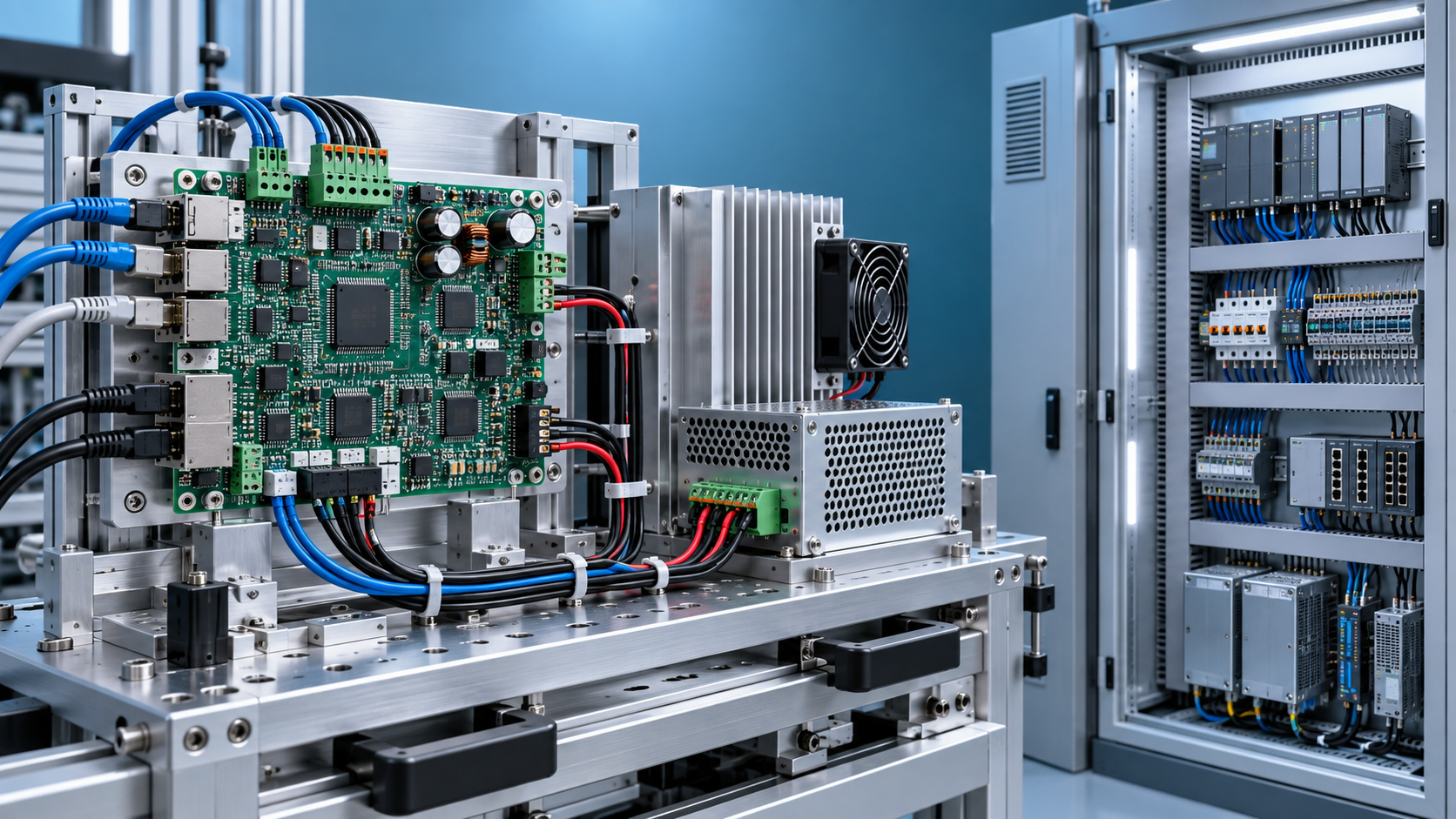
Modern mineral processing equipment must operate within a larger control environment. Technical assessors should compare integration capability, instrumentation quality, data accessibility, and cybersecurity responsibilities.
Confirm compatibility with the site’s existing or planned distributed control system, programmable logic controllers, historians, condition-monitoring platforms, and plant optimization applications.
Important questions include who owns operating data, which protocols are supported, whether alarms are configurable, and how the supplier manages remote access and software updates.
Compare the standard instrument package carefully. Flowmeters, density meters, pressure sensors, vibration monitoring, online particle sizing, power measurement, and level control affect operational visibility.
Automation claims should be supported by defined control philosophies. Ask how the equipment responds to feed surges, choking, low slurry density, high vibration, loss of water, or abnormal pressure.
Predictive maintenance functions can add value when they generate actionable recommendations. Raw sensor data without alarm logic, diagnostic support, or maintenance workflows rarely delivers the promised benefit.
Assess whether the equipment can be manually operated during network interruptions. Operational resilience matters at remote mines where communications infrastructure may be constrained or intermittently unavailable.
Verify Safety, Compliance, and Site Suitability
Safety design should be evaluated as an operating requirement rather than a compliance checklist. Equipment must enable safe inspection, cleaning, isolation, adjustment, and maintenance throughout its service life.
Review guarding, emergency stops, lockout points, access platforms, handrails, lighting interfaces, confined-space risks, lifting provisions, and safe access to routine service locations.
Ask whether the proposed design complies with applicable local regulations, electrical standards, pressure-equipment requirements, machinery directives, and site-specific engineering specifications.
For hazardous or dusty environments, confirm requirements for explosion protection, dust collection, ventilation, fire suppression, electrical enclosure ratings, and heat management under local climatic conditions.
Site suitability also includes altitude, ambient temperature, rainfall, seismic conditions, corrosion exposure, transport limits, available crane capacity, and foundation or structural constraints.
Evaluate the quality of the supplier’s documentation. General arrangement drawings, loads, utility requirements, process and instrumentation diagrams, and maintenance manuals should be complete before final selection.
Compare Service Capability, Spares, and Commissioning Support
Even well-designed equipment loses value when commissioning support is weak or replacement parts are unavailable. Service capability must be compared using evidence rather than regional sales coverage claims.
Ask where technicians, repair facilities, and critical spare inventories are located. Determine realistic response times for emergencies, planned shutdowns, troubleshooting, and major component refurbishment.
Review the recommended commissioning scope. Strong mineral processing equipment manufacturers provide installation guidance, pre-startup checks, operator training, performance testing, and structured handover documentation.
Clarify responsibilities at process commissioning. Problems may originate in feed preparation, piping, instrumentation, civil works, controls, or upstream equipment, so accountability boundaries must be visible.
Compare spare-parts recommendations by criticality and lead time. The first two years of operation often reveal whether the manufacturer’s suggested inventory is practical or commercially optimized.
Assess whether parts are proprietary, interchangeable, locally manufacturable, or subject to sole-source restrictions. This affects long-term supply risk, negotiating leverage, and maintenance planning flexibility.
Service contracts should define deliverables clearly, including inspection frequency, condition reports, response commitments, software support, training refreshers, and performance-review procedures.
Use Reference Checks to Separate Claims From Proven Performance
Reference projects are among the most valuable comparison tools, provided they are genuinely comparable. Request examples matching your ore type, duty, throughput, geography, and operating philosophy.
Do not limit reference checks to recent installations. Long-running plants reveal more about wear performance, support quality, availability trends, upgrade requirements, and actual operating costs.
When speaking with reference sites, ask what failed, what required redesign, which parts wore faster than expected, and how the supplier handled difficult commissioning issues.
Plant visits can reveal conditions not visible in brochures: housekeeping, access quality, operator workload, noise, leakage, spare-parts storage, instrumentation reliability, and maintenance practices.
Compare the manufacturer’s engineering depth during technical clarification. Timely, specific responses to difficult questions indicate whether the supplier has relevant application expertise and internal decision-making authority.
Be cautious when a proposal relies heavily on theoretical models without testwork, pilot evidence, or comparable references. Models are useful, but they cannot eliminate material-specific process risk.
Build a Weighted Evaluation That Reflects Project Risk
A structured scoring model helps teams compare mineral processing equipment manufacturers consistently. However, the weighting should reflect the project’s actual risk profile rather than a generic procurement template.
For a brownfield expansion, integration, footprint, outage duration, and controls compatibility may carry higher weight. For a greenfield project, process guarantees and commissioning capability may dominate.
Typical technical categories include process performance, reliability, maintainability, energy use, automation, safety, service support, delivery confidence, documentation quality, and commercial lifecycle value.
Assign clear evidence requirements for every score. For example, high ratings may require proven references, validated testwork, detailed calculations, documented guarantees, and confirmed local service capacity.
Separate mandatory requirements from scored preferences. A supplier should not compensate for an unacceptable safety deficiency or incompatible controls architecture simply by offering a lower price.
Include total cost of ownership in the final decision, incorporating capital cost, installation, power, water, consumables, maintenance labor, spares, downtime exposure, and expected production performance.
The final recommendation should record assumptions, unresolved risks, and mitigation actions. This gives project leaders a defensible decision trail and supports later commissioning accountability.
Conclusion: Select Evidence, Not Promises
The best manufacturer is rarely the one with the lowest initial quotation or the broadest catalogue. It is the supplier whose equipment, engineering, and support model fit the operating reality.
Technical assessors should prioritize evidence that links equipment design to expected recovery, throughput, availability, energy demand, maintainability, and safe operation under representative ore conditions.
By comparing process fit, lifecycle performance, controls integration, service capacity, and proven field results, evaluation teams can reduce risk and select equipment that delivers enduring operational value.
For mining and infrastructure decision-makers, disciplined comparison creates a clearer basis for investment: select manufacturers that can demonstrate performance across the full life of the processing plant.