How to Compare a Heavy Equipment Manufacturer in 2026
Choosing the right heavy equipment manufacturer in 2026 requires more than comparing price lists. For procurement teams, the real difference lies in product reliability, lifecycle cost, technology integration, after-sales support, and global supply stability. This guide helps you evaluate manufacturers with a sharper, data-driven approach so you can reduce risk, improve project efficiency, and make confident sourcing decisions in a fast-changing market.
What procurement teams really need to compare in 2026
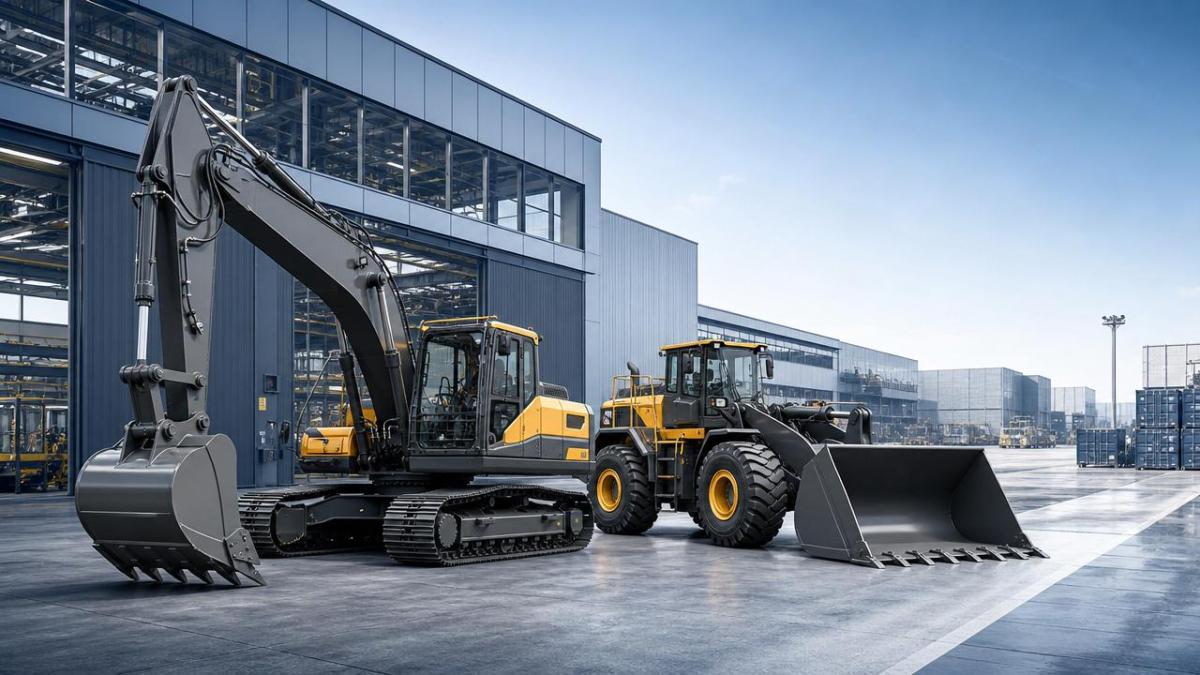
The core search intent behind comparing a heavy equipment manufacturer is practical vendor evaluation. Buyers are not looking for brand storytelling alone.
They want a clear method to shortlist suppliers, reduce procurement risk, and justify decisions with measurable criteria that stand up to internal review.
In 2026, the best manufacturer is rarely the one with the lowest upfront quote. It is the one that delivers stable uptime.
It also needs to support parts availability, digital diagnostics, operator safety, and predictable ownership cost across the equipment lifecycle.
For procurement professionals, the comparison process should focus less on brochures and more on field performance, service capability, and supplier resilience.
Start with total cost of ownership, not unit price
A low purchase price can hide expensive problems later. Fuel consumption, wear parts, downtime, training needs, repair lead times, and resale value all matter.
That is why comparing a heavy equipment manufacturer should begin with total cost of ownership, often called TCO, rather than only acquisition cost.
Ask each manufacturer for expected maintenance intervals, average component life, consumables cost, and recommended preventive service schedules under your workload conditions.
Request data for similar climates, duty cycles, and project types. A machine used in mining behaves differently from one used in urban construction.
Procurement teams should also compare warranty coverage in detail. A longer warranty means little if exclusions are broad and critical components are not included.
When possible, build a five-year cost model. Include financing, insurance, operator training, software subscription fees, planned maintenance, and likely downtime scenarios.
This approach creates a more realistic basis for comparing manufacturers and often changes which supplier appears most competitive.
How reliable is the equipment under real operating conditions?
Reliability is one of the biggest concerns for procurement buyers because downtime directly affects project schedules, labor productivity, and client satisfaction.
Instead of accepting general claims, ask for documented mean time between failures, fleet uptime figures, and major component replacement history.
Reliable manufacturers usually provide service records, case studies, and references from customers operating in conditions similar to your own.
Look beyond the base machine. Engines, hydraulic systems, transmissions, electronic control units, and telematics modules should all be evaluated separately.
If a manufacturer depends heavily on third-party subsystems, understand who supports them and how quickly failures can be diagnosed and resolved.
Ask whether spare parts are standardized across product lines. Standardization often lowers maintenance complexity and improves workshop efficiency.
A strong heavy equipment manufacturer will also have clear root-cause analysis procedures and documented quality improvement loops from field feedback.
Can the manufacturer support your fleet after delivery?
After-sales support is often the decisive factor in long-term procurement success. Even excellent equipment becomes a liability if service response is weak.
Compare the manufacturer’s dealer network, local service partners, technician coverage, mobile repair capability, and parts warehouse distribution.
Procurement teams should ask practical questions. How fast can a field technician arrive? What is the average fill rate for critical spare parts?
Does the supplier offer remote diagnostics, maintenance planning, and operator troubleshooting support? Are service contracts available with defined response times?
It is also important to verify training support. Good manufacturers provide structured onboarding for operators, mechanics, and fleet managers.
This reduces misuse, improves safety, and helps protect equipment value. In many cases, poor operation causes more cost than poor design.
If your projects span multiple countries, global service consistency becomes even more important than machine specifications alone.
Digital capability is now a procurement issue, not just an engineering feature
In 2026, digital integration has become a major differentiator when comparing a heavy equipment manufacturer, especially for larger fleets.
Telematics, predictive maintenance, geofencing, fuel monitoring, idle tracking, and fault code analytics can significantly improve asset utilization.
Buyers should evaluate whether the manufacturer’s software integrates with existing fleet management, ERP, maintenance, or jobsite coordination systems.
Ask whether data ownership remains with the customer, how information is exported, and whether reporting can support procurement and compliance audits.
Cybersecurity also matters. Connected machines create operational benefits, but they also add exposure if authentication, updates, and network protection are weak.
Manufacturers that invest in secure cloud platforms, over-the-air updates, and transparent data governance are often better positioned for long-term enterprise use.
For procurement teams, digital maturity is not a bonus feature anymore. It affects maintenance decisions, budget forecasting, and executive reporting.
Supply chain stability matters more than ever
Recent years have shown that a good product means little if production delays and parts shortages disrupt delivery schedules.
That is why procurement teams should compare the manufacturing footprint, sourcing strategy, and inventory resilience of each supplier.
Ask where major components are produced, whether single-source dependencies exist, and how the company manages logistics disruptions or geopolitical risk.
A heavy equipment manufacturer with diversified plants, regional parts hubs, and transparent lead-time communication is generally a safer procurement choice.
You should also review historical delivery performance. Did the supplier meet promised dates during periods of volatility, or were delays common?
For critical fleets, consider whether the manufacturer can reserve strategic parts, support framework agreements, or offer stocking plans for your operation.
Stable supply does not only protect schedules. It also reduces emergency purchasing, rental replacement costs, and internal stakeholder pressure.
How to evaluate manufacturer quality and compliance credibility
Procurement decisions in heavy industry must stand up to financial, legal, safety, and operational scrutiny. Certifications alone are not enough.
Review factory quality systems, testing procedures, traceability practices, and compliance records across emissions, safety, and relevant regional standards.
Ask whether final inspection data, factory acceptance testing, and component traceability can be shared during the sourcing process.
For certain applications, especially infrastructure and public projects, compliance documentation can be as important as machine performance.
You should also verify sustainability reporting if your organization tracks carbon goals or supplier responsibility criteria.
Manufacturers with credible environmental and governance systems are often better prepared for long-term contracts, public tenders, and multinational procurement standards.
Do not overlook product update discipline. A manufacturer that regularly improves safety systems and software support usually signals stronger engineering governance.
Brand reputation is useful, but customer evidence is better
Well-known brands often provide confidence, but procurement should avoid relying only on market visibility or trade show presence.
The better approach is to gather direct customer evidence from buyers with similar machine classes, usage intensity, and service expectations.
Ask for references from companies in your region or sector. Probe for specifics such as downtime frequency, support quality, and warranty claim handling.
If possible, arrange site visits or live demonstrations. Real operating conditions reveal much more than marketing materials or static specification sheets.
Online reputation also matters, but it should be filtered carefully. Individual complaints are less meaningful than patterns across multiple independent sources.
A trustworthy heavy equipment manufacturer should be willing to provide transparent proof points and not just general assurance.
A practical scorecard for comparing a heavy equipment manufacturer
To make comparisons objective, procurement teams should use a weighted scorecard instead of informal discussion or lowest-bid logic.
Typical categories include acquisition cost, total cost of ownership, reliability, service coverage, delivery lead time, digital capability, compliance, and financial stability.
You can assign weights based on project criticality. For example, mining or infrastructure fleets may prioritize uptime and parts support over purchase price.
Urban contractors may place greater value on emissions compliance, compact design, telematics, and local technician response.
It is also helpful to include risk indicators such as country exposure, supplier concentration, and dependency on proprietary software ecosystems.
Once each manufacturer is scored, create a procurement summary that explains trade-offs clearly for finance, operations, and executive stakeholders.
This turns vendor selection from a subjective preference into a defendable business decision backed by evidence.
Questions every buyer should ask before final selection
Before awarding a contract, procurement teams should pressure-test the supplier with detailed operational and commercial questions.
Ask what percentage of parts orders are fulfilled within forty-eight hours, what the standard warranty exclusions are, and how software updates are handled.
Clarify whether remote diagnostics are included, whether operator training is on-site, and whether response times are contractually guaranteed.
You should also ask how the manufacturer handles component recalls, discontinued models, and engineering changes affecting parts compatibility.
For multinational fleets, confirm where data is stored, which languages are supported, and whether service quality is consistent across regions.
Strong answers to these questions often reveal more about supplier maturity than catalog specifications ever could.
Final takeaway for procurement teams in 2026
If you need to compare a heavy equipment manufacturer in 2026, begin with the realities that affect fleet performance after purchase.
Focus on uptime, service depth, total lifecycle cost, digital integration, compliance strength, and supply chain resilience before comparing list prices.
The right manufacturer is the one that reduces operational uncertainty while supporting long-term productivity and asset value.
For procurement teams, that means using evidence, references, service metrics, and structured scoring instead of relying on brand perception alone.
In a market shaped by automation, sustainability demands, and global supply volatility, better comparison methods lead to better buying outcomes.
When your evaluation framework reflects real project risk, choosing the right heavy equipment manufacturer becomes faster, clearer, and more defensible.
Get weekly intelligence in your inbox.
No noise. No sponsored content. Pure intelligence.
News Recommendations
 Sep 19, 2026How an electronics application guide helps prevent component mismatchHow an electronics application guide helps prevent component mismatch
 Sep 18, 2026When a resource allocation platform improves project deliveryWhen a resource allocation platform improves project delivery
 Sep 17, 2026What to compare when evaluating mineral processing equipment manufacturersWhat to compare when evaluating mineral processing equipment manufacturers
 Sep 16, 2026How mineral separation optimization can reduce concentrate lossesHow mineral separation optimization can reduce concentrate losses
 Sep 15, 2026How to assess lifecycle costs in urban tech procurementHow to assess lifecycle costs in urban tech procurement
 Sep 14, 2026Heavy industry technology trends reshaping capital investment prioritiesHeavy industry technology trends reshaping capital investment priorities
 Sep 14, 2026Global Industrial Equipment Procurement: How Top OEMs Qualify Suppliers for Mining & Infrastructure ProjectsGlobal Industrial Equipment Procurement: How Top OEMs Qualify Suppliers for Mining & Infrastructure Projects
 Sep 14, 2026Industrial & Mining Equipment Procurement: Balancing Local Sourcing, Lead Time, and Certification RequirementsIndustrial & Mining Equipment Procurement: Balancing Local Sourcing, Lead Time, and Certification Requirements
 Sep 14, 2026Infrastructure & Equipment Upgrades: What Procurement Teams Must Verify Before Signing Off on New ContractsInfrastructure & Equipment Upgrades: What Procurement Teams Must Verify Before Signing Off on New Contracts
 Sep 14, 2026Why Infrastructure Equipment Buyers Are Shifting from Catalog-Based to Capability-Based Supplier SelectionWhy Infrastructure Equipment Buyers Are Shifting from Catalog-Based to Capability-Based Supplier Selection
 Sep 14, 2026Process Automation Project Execution: How to Align Supplier Capabilities with PLC Integration, Cybersecurity & Commissioning MilestonesProcess Automation Project Execution: How to Align Supplier Capabilities with PLC Integration, Cybersecurity & Commissioning Milestones
 Sep 14, 2026Are intelligent traffic systems worth the investment for small cities?Are intelligent traffic systems worth the investment for small cities?
 Sep 14, 2026How do intelligent traffic systems handle sensor failures?How do intelligent traffic systems handle sensor failures?
 Sep 14, 2026What should I check before accepting a smart building system?What should I check before accepting a smart building system?
 Sep 14, 2026Is a smart building system worth the maintenance cost?Is a smart building system worth the maintenance cost?
 Sep 14, 2026What data is needed for reliable resource allocation planning?What data is needed for reliable resource allocation planning?
 Sep 14, 2026How can resource allocation software reduce equipment idle time?How can resource allocation software reduce equipment idle time?
 Sep 14, 2026How should smart devices be maintained in harsh outdoor conditions?How should smart devices be maintained in harsh outdoor conditions?
 Sep 14, 2026Do smart devices improve worker safety on construction sites?Do smart devices improve worker safety on construction sites?
 Sep 14, 2026What environmental risks must be assessed before deep-sea mining?What environmental risks must be assessed before deep-sea mining?
 Sep 14, 2026Is deep-sea mining equipment commercially viable in 2026?Is deep-sea mining equipment commercially viable in 2026?
 Sep 14, 2026What Inspection Checks Should Procurement Teams Perform Before Ordering Dredging Equipment in 2026?What Inspection Checks Should Procurement Teams Perform Before Ordering Dredging Equipment in 2026?
 Sep 13, 2026How to verify an industrial product information source before specifying equipmentHow to verify an industrial product information source before specifying equipment
 Sep 12, 2026Which intelligent traffic systems hardware fits an urban intersection?Which intelligent traffic systems hardware fits an urban intersection?
 Sep 11, 2026How pump capacity affects response coverage for municipal fire fighting vehiclesHow pump capacity affects response coverage for municipal fire fighting vehicles
 Sep 10, 2026What to verify before choosing a heavy industry equipment supplierWhat to verify before choosing a heavy industry equipment supplier
 Sep 09, 2026When do adaptive urban traffic control systems reduce corridor delays?When do adaptive urban traffic control systems reduce corridor delays?