Fire Trucks Manufacturer Selection: Key Safety Checks
Choosing a fire trucks manufacturer is no longer a routine procurement step. It is a safety decision shaped by urban density, climate risk, digital fleets, and stricter accountability.
Every weld, pump curve, brake response, circuit, and certificate can affect rescue speed. Reliable vehicles must perform under heat, smoke, water load, vibration, and panic conditions.
As emergency infrastructure becomes smarter, the fire trucks manufacturer must prove more than production capacity. Safety evidence, traceability, and lifecycle reliability now define supplier value.
Safety Expectations Are Rising Across Emergency Vehicle Fleets
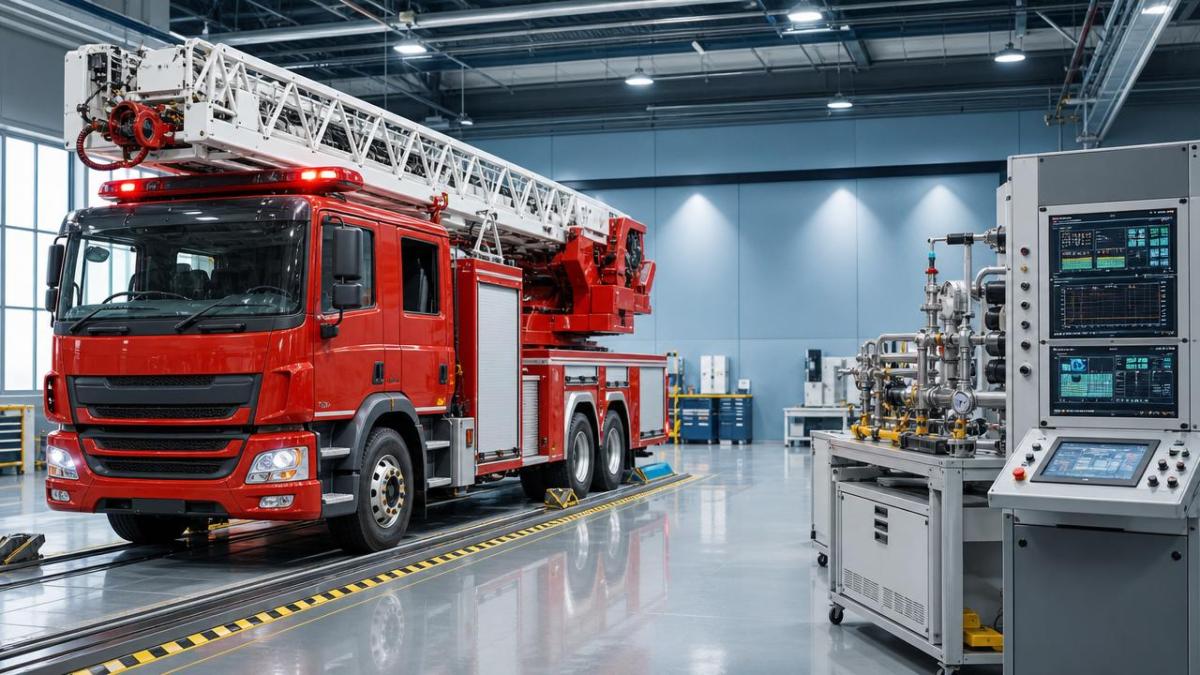
Cities are expanding vertically, industrial parks are storing complex materials, and extreme weather is disrupting roads. These shifts change how fire apparatus must be evaluated.
A fire trucks manufacturer now faces closer review of structural strength, vehicle stability, water delivery, foam systems, thermal protection, and onboard electronics.
The old question was whether a truck could meet specifications. The new question is whether it can sustain performance during unpredictable missions.
This shift also reflects the growth of connected public infrastructure. Fire trucks increasingly interact with dispatch software, smart traffic systems, and digital maintenance platforms.
For GIUT’s infrastructure perspective, special purpose vehicles are not isolated machines. They are mobile safety nodes in the urban technology network.
The Main Signals Behind Stricter Fire Truck Safety Selection
The selection of a fire trucks manufacturer is becoming more evidence-based. Several visible market signals explain this movement.
These signals push the fire trucks manufacturer from a vehicle seller toward a safety assurance partner.
The strongest suppliers respond with transparent engineering data, repeatable testing, and clear after-sales responsibility.
Why Safety Checks Now Start Before Price Negotiation
Cost remains important, but hidden safety weaknesses can create larger losses later. Downtime, failed inspections, and accident exposure can exceed purchase savings.
A credible fire trucks manufacturer should welcome early technical audits. Resistance to documentation review is a warning sign.
Several forces are pushing safety checks earlier in the decision process:
- Emergency response expectations are rising in dense and high-risk districts.
- Fire apparatus combines chassis engineering, hydraulics, electrics, controls, and rescue ergonomics.
- Insurance and regulatory reviews increasingly require documented proof.
- Fleet digitalization exposes recurring faults faster than traditional reporting.
- Long vehicle life cycles make early specification errors expensive.
This trend favors suppliers with disciplined quality systems. It also rewards a fire trucks manufacturer that can explain engineering choices clearly.
Structural Integrity Is the First Line of Operational Trust
Structural safety begins with the chassis, subframe, body mounting, tank support, compartment layout, and ladder or boom integration.
A fire trucks manufacturer should provide welding procedures, material grades, load calculations, fatigue considerations, and corrosion protection methods.
Inspection should include frame alignment, fastener locking methods, water tank baffling, equipment mounting, and access platform strength.
Key structural checks
- Confirm chassis rating against full operational load, not empty vehicle mass.
- Review center of gravity calculations for loaded and partially loaded conditions.
- Check tank mounting and baffling to reduce surge during braking.
- Inspect weld consistency, non-destructive testing records, and repair procedures.
- Verify anti-slip surfaces, handrails, steps, and compartment door retention.
When a fire trucks manufacturer treats structure as a safety system, the result is more predictable road and scene performance.
Pump, Water, and Foam Systems Reveal Real Engineering Discipline
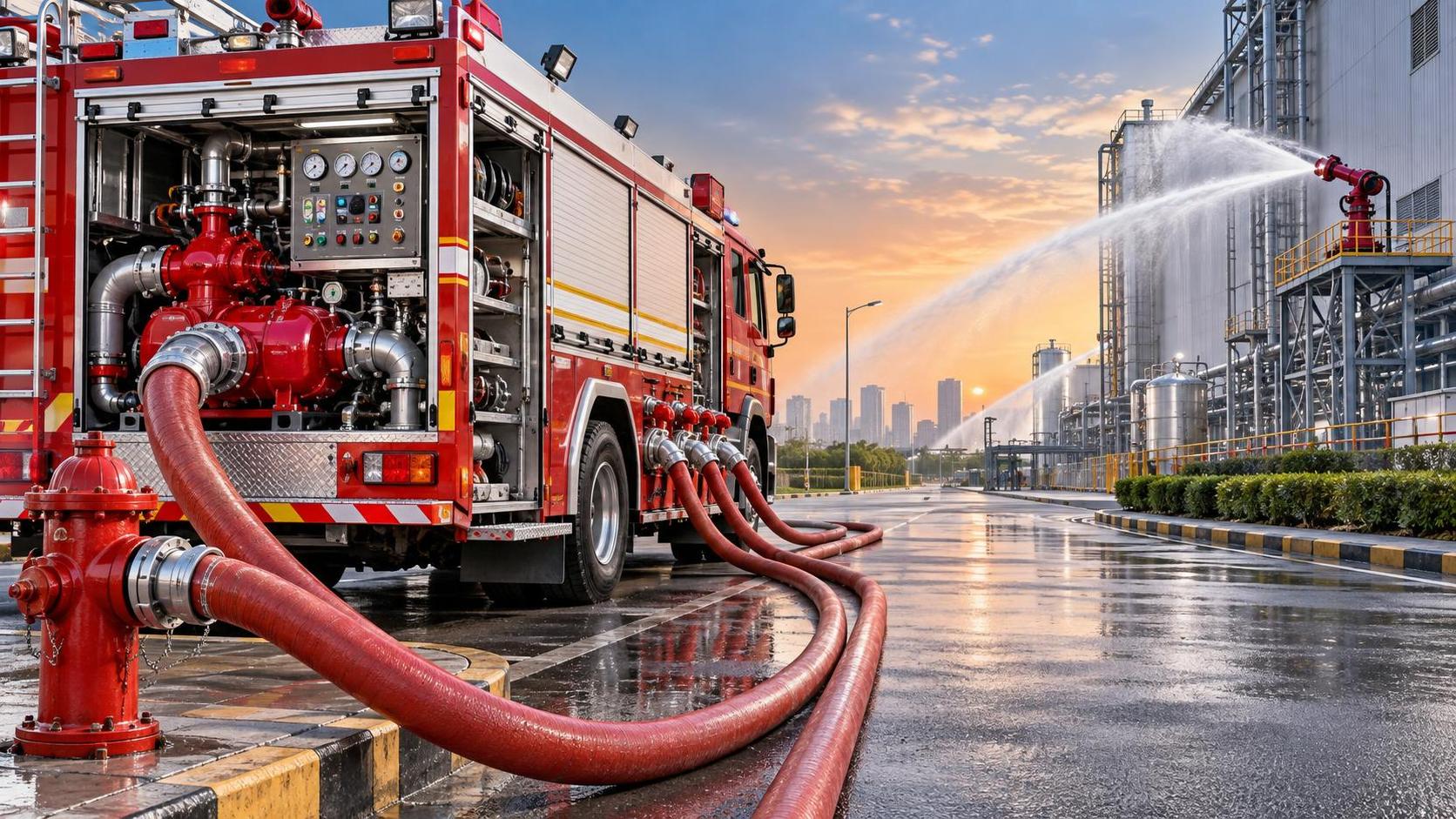
Fire suppression systems must deliver rated performance repeatedly. Stated capacity alone is not enough for approval.
A qualified fire trucks manufacturer should provide pump test curves, suction performance, pressure stability data, and foam proportioning accuracy.
Waterway design also matters. Poor routing can cause pressure loss, cavitation risk, heat buildup, or difficult maintenance access.
Suppression system verification
- Test pump output at rated pressure and extended operation time.
- Confirm priming reliability under realistic suction lift conditions.
- Check relief valves, gauges, flow meters, and pressure control response.
- Verify foam compatibility with expected agents and cleaning procedures.
- Review drain points to reduce freezing, corrosion, and residual contamination.
The fire trucks manufacturer should support witnessed tests. Independent verification reduces uncertainty before fleet acceptance.
Braking, Stability, and Drivability Are Becoming Higher-Risk Decision Points
Modern fire apparatus is heavy, tall, and often driven urgently. Stability and braking deserve direct attention.
A fire trucks manufacturer must prove braking performance under load, emergency maneuver stability, steering response, and tire specification suitability.
For aerial vehicles, outrigger deployment logic and interlocks must be reviewed carefully. Stability failure can create catastrophic scene risks.
A fire trucks manufacturer with strong testing discipline will document these conditions in measurable terms.
Electrical Safety Is Moving From Accessory Concern to Core Requirement
Lighting, sirens, radios, cameras, sensors, pump controls, chargers, and telematics all depend on electrical reliability.
A modern fire trucks manufacturer should design wiring for heat, vibration, moisture, electromagnetic interference, and future service access.
Circuit protection should be clear and labeled. Fault isolation must be possible without dismantling major body sections.
Electrical and control checks
- Review wiring diagrams, fuse ratings, relay layout, and connector specifications.
- Check waterproofing and abrasion protection in exposed harness areas.
- Verify battery isolation, shore charging, and alternator capacity.
- Confirm emergency lighting visibility from multiple approach angles.
- Assess software update control and diagnostic fault logging.
The fire trucks manufacturer should also clarify cybersecurity measures when vehicles connect to fleet platforms or public networks.
Compliance Evidence Is Becoming a Competitive Separator
Standards vary by region, but the principle is consistent. Claims must be supported by verifiable records.
A responsible fire trucks manufacturer should align with applicable fire apparatus standards, road regulations, emissions rules, and occupational safety requirements.
Documentation should not appear only at delivery. It should be reviewed during supplier qualification and design confirmation.
Essential compliance documents
- Type approvals, roadworthiness documents, and emissions certificates.
- Pump, ladder, tank, and electrical test reports.
- Material traceability records for critical structures.
- Factory quality system certificates and audit results.
- Maintenance manuals, spare parts catalogs, and training materials.
A fire trucks manufacturer that provides complete records reduces future inspection friction and supports safer fleet governance.
Lifecycle Support Now Shapes the True Safety Outcome
A vehicle is safest when it remains maintainable. Long response life depends on spare parts, training, diagnostics, and service speed.
The fire trucks manufacturer should define warranty scope, parts availability, technician support, and preventive maintenance intervals before acceptance.
Remote diagnostics can improve uptime, but only if data is accurate, accessible, and protected.
A fire trucks manufacturer should be assessed on service continuity, not only delivery capability.
Different Operational Environments Create Different Safety Priorities
No single configuration fits every city, industrial zone, airport, port, tunnel, or mining site.
The best fire trucks manufacturer will translate mission conditions into engineering choices, rather than forcing a standard catalog solution.
- Dense urban areas need compact maneuverability, visibility, and rapid pump readiness.
- Industrial facilities need foam capacity, chemical compatibility, and thermal protection.
- Rural regions need water capacity, off-road traction, and simple field maintenance.
- Airports need acceleration, specialized agents, and high-output turret systems.
- Tunnels need ventilation awareness, compact profiles, and robust communication equipment.
Selection should therefore connect risk scenarios with measurable vehicle functions.
A Practical Safety Scorecard for Supplier Approval
A structured scorecard prevents emotional decisions and supports transparent comparison.
The fire trucks manufacturer should be rated across engineering, testing, compliance, service, and digital readiness.
This scorecard helps separate a mature fire trucks manufacturer from a low-cost assembler.
How to Build a Safer Approval Path
The safest path begins with mission definition. Vehicle requirements should reflect response geography, hazard types, crew workflow, and maintenance capacity.
Next, request evidence before commercial finalization. A fire trucks manufacturer should provide test data, drawings, certificates, and service commitments.
- Define scenarios, road limits, water sources, equipment loads, and climate exposure.
- Shortlist suppliers with proven emergency vehicle experience and documented safety records.
- Audit factory processes, welding controls, electrical assembly, and inspection methods.
- Witness pump, braking, stability, lighting, and communication tests.
- Verify spare parts, training, manuals, and warranty before final acceptance.
This approach turns selection into a controlled safety decision instead of a paperwork exercise.
Final Judgment: Safety Proof Will Define the Next Generation Supplier
The fire trucks manufacturer of the future will compete through validated safety, digital transparency, and lifecycle resilience.
As cities become smarter and risks become less predictable, emergency vehicles must become more dependable and better documented.
Before approving a fire trucks manufacturer, examine the evidence behind every claim. Strong suppliers make safety visible, measurable, and maintainable.
For infrastructure-focused decision systems, the next step is clear. Build a checklist, request proof, compare risks, and approve only vehicles ready for real emergencies.
Get weekly intelligence in your inbox.
No noise. No sponsored content. Pure intelligence.
News Recommendations
 Sep 19, 2026How an electronics application guide helps prevent component mismatchHow an electronics application guide helps prevent component mismatch
 Sep 18, 2026When a resource allocation platform improves project deliveryWhen a resource allocation platform improves project delivery
 Sep 17, 2026What to compare when evaluating mineral processing equipment manufacturersWhat to compare when evaluating mineral processing equipment manufacturers
 Sep 16, 2026How mineral separation optimization can reduce concentrate lossesHow mineral separation optimization can reduce concentrate losses
 Sep 15, 2026How to assess lifecycle costs in urban tech procurementHow to assess lifecycle costs in urban tech procurement
 Sep 14, 2026Heavy industry technology trends reshaping capital investment prioritiesHeavy industry technology trends reshaping capital investment priorities
 Sep 14, 2026Global Industrial Equipment Procurement: How Top OEMs Qualify Suppliers for Mining & Infrastructure ProjectsGlobal Industrial Equipment Procurement: How Top OEMs Qualify Suppliers for Mining & Infrastructure Projects
 Sep 14, 2026Industrial & Mining Equipment Procurement: Balancing Local Sourcing, Lead Time, and Certification RequirementsIndustrial & Mining Equipment Procurement: Balancing Local Sourcing, Lead Time, and Certification Requirements
 Sep 14, 2026Infrastructure & Equipment Upgrades: What Procurement Teams Must Verify Before Signing Off on New ContractsInfrastructure & Equipment Upgrades: What Procurement Teams Must Verify Before Signing Off on New Contracts
 Sep 14, 2026Why Infrastructure Equipment Buyers Are Shifting from Catalog-Based to Capability-Based Supplier SelectionWhy Infrastructure Equipment Buyers Are Shifting from Catalog-Based to Capability-Based Supplier Selection
 Sep 14, 2026Process Automation Project Execution: How to Align Supplier Capabilities with PLC Integration, Cybersecurity & Commissioning MilestonesProcess Automation Project Execution: How to Align Supplier Capabilities with PLC Integration, Cybersecurity & Commissioning Milestones
 Sep 14, 2026Are intelligent traffic systems worth the investment for small cities?Are intelligent traffic systems worth the investment for small cities?
 Sep 14, 2026How do intelligent traffic systems handle sensor failures?How do intelligent traffic systems handle sensor failures?
 Sep 14, 2026What should I check before accepting a smart building system?What should I check before accepting a smart building system?
 Sep 14, 2026Is a smart building system worth the maintenance cost?Is a smart building system worth the maintenance cost?
 Sep 14, 2026What data is needed for reliable resource allocation planning?What data is needed for reliable resource allocation planning?
 Sep 14, 2026How can resource allocation software reduce equipment idle time?How can resource allocation software reduce equipment idle time?
 Sep 14, 2026How should smart devices be maintained in harsh outdoor conditions?How should smart devices be maintained in harsh outdoor conditions?
 Sep 14, 2026Do smart devices improve worker safety on construction sites?Do smart devices improve worker safety on construction sites?
 Sep 14, 2026What environmental risks must be assessed before deep-sea mining?What environmental risks must be assessed before deep-sea mining?
 Sep 14, 2026Is deep-sea mining equipment commercially viable in 2026?Is deep-sea mining equipment commercially viable in 2026?
 Sep 14, 2026What Inspection Checks Should Procurement Teams Perform Before Ordering Dredging Equipment in 2026?What Inspection Checks Should Procurement Teams Perform Before Ordering Dredging Equipment in 2026?
 Sep 13, 2026How to verify an industrial product information source before specifying equipmentHow to verify an industrial product information source before specifying equipment
 Sep 12, 2026Which intelligent traffic systems hardware fits an urban intersection?Which intelligent traffic systems hardware fits an urban intersection?
 Sep 11, 2026How pump capacity affects response coverage for municipal fire fighting vehiclesHow pump capacity affects response coverage for municipal fire fighting vehicles
 Sep 10, 2026What to verify before choosing a heavy industry equipment supplierWhat to verify before choosing a heavy industry equipment supplier
 Sep 09, 2026When do adaptive urban traffic control systems reduce corridor delays?When do adaptive urban traffic control systems reduce corridor delays?