Fire Trucks: Specs That Matter for Urban Response
For quality control and safety managers, fire trucks are not just emergency vehicles—they are critical response assets whose specifications can determine operational speed, crew safety, and incident outcomes in dense urban environments.
From pump capacity and maneuverability to equipment layout, braking performance, and compliance standards, every detail affects reliability under pressure.
This guide explains the fire trucks specifications that matter most for urban response, with a practical, safety-first view for fleet evaluation.
Fire Trucks: Specs That Matter for Urban Response
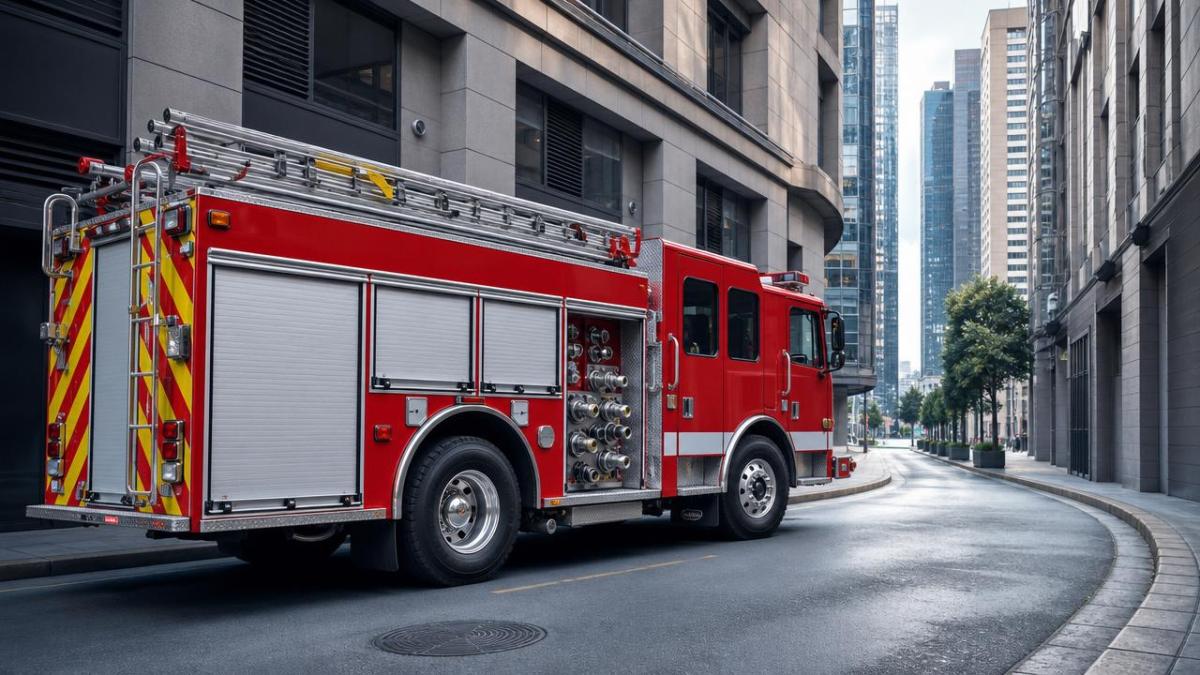
Urban incidents compress time, space, and risk. Fire trucks must reach scenes quickly, stabilize operations, and support crews in unpredictable streetscapes.
A strong urban unit is not defined by one impressive number. It is defined by balanced performance across mobility, pumping, storage, safety, and serviceability.
Modern fire trucks also serve smart city priorities. They connect emergency response with traffic control, public safety data, and resilient infrastructure planning.
What Defines Urban-Ready Fire Trucks?
Urban-ready fire trucks are designed for narrow roads, mixed traffic, underground utilities, tall buildings, and fast-changing incident zones.
They must combine compact access with enough capacity to handle structure fires, vehicle fires, rescue support, and first-arriving water supply.
The key question is not whether fire trucks are powerful. It is whether their power can be used effectively in tight urban conditions.
Core definition checklist
- Short turning radius for alleys, intersections, and congested districts.
- Reliable pump output matched to building density and hydrant availability.
- Crew cab design that supports quick deployment and protected seating.
- Equipment compartments arranged for rapid, safe access.
- Braking, suspension, and stability systems suited to stop-start driving.
For cities, compact fire trucks may outperform larger units when access is the limiting factor.
However, compact design should not compromise water, foam, ladders, rescue tools, or crew protection.
Which Pump and Tank Specs Matter Most?
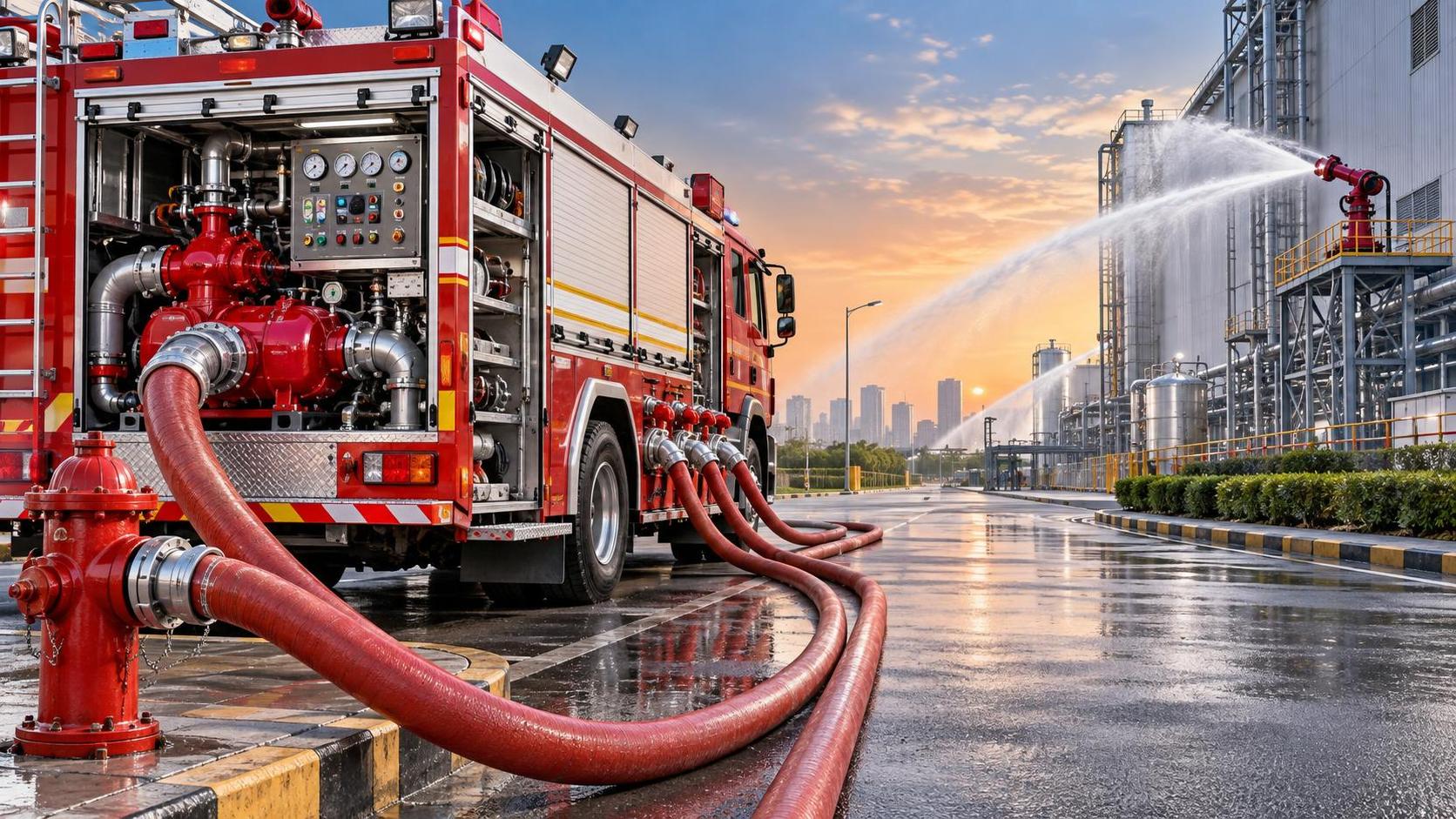
Pump and tank specifications shape how fire trucks perform during the first critical minutes of an incident.
In dense cities, hydrants may be close. Yet traffic, construction, and blocked access can delay water supply setup.
This makes onboard water capacity important, especially for first-arriving fire trucks facing fast-spreading fires.
Pump capacity
A common urban pumper may use a pump rated around 1,000 to 2,000 gallons per minute.
The correct rating depends on building heights, hose layouts, hydrant pressure, and expected fire load.
High pump capacity is valuable only when plumbing, intakes, valves, and operator controls support stable discharge.
Tank capacity
Urban fire trucks often carry 500 to 750 gallons, while specialized units may use different capacities.
A larger tank increases initial attack time but adds weight, affects braking, and may reduce maneuverability.
The best tank size balances first-response capability with axle load, road regulations, and route conditions.
Foam and pressure control
Foam systems improve response to vehicle fires, fuel spills, industrial edges, and underground parking incidents.
Pressure governors and flow meters reduce operator error and help maintain consistent stream performance.
For modern fire trucks, digital pump panels can support training, diagnostics, and safer night operations.
How Important Are Size, Turning Radius, and Access?
Maneuverability is one of the most decisive urban specifications for fire trucks.
A vehicle that cannot reach the block, courtyard, tunnel, or loading lane may lose its technical advantage.
Urban roads are shaped by parked vehicles, pedestrian zones, bike lanes, tram corridors, and temporary construction barriers.
Dimensions to compare
- Overall length, including bumpers and rear steps.
- Overall height for garages, tunnels, and overhead cables.
- Wheelbase and steering angle for turning performance.
- Ground clearance for ramps, debris, and flood-prone streets.
- Approach and departure angles for steep driveways.
Shorter fire trucks can be valuable for historic districts and dense residential areas.
Longer aerial fire trucks remain essential for high-rise operations, roof access, and elevated rescue needs.
A fleet should not rely on one layout. Urban resilience often requires pumpers, aerials, rescue units, and compact support vehicles.
What Safety and Compliance Features Should Be Checked?
Safety specifications are not secondary. They determine whether fire trucks protect crews while moving and operating.
Urban response includes sharp braking, frequent lane changes, pedestrian proximity, and poor visibility around intersections.
Vehicle safety systems
- Anti-lock braking systems for controlled emergency stops.
- Electronic stability control for reducing rollover risk.
- Rear and side cameras for crowded street awareness.
- High-visibility lighting for intersections and night scenes.
- Cab restraint systems for all seated positions.
Fire trucks should also be assessed against relevant standards, such as NFPA 1900, EN 1846, or local emergency vehicle rules.
Standards provide a baseline. Real performance still depends on inspection, maintenance, training, and operational discipline.
Crew safety at the scene
Scene lighting, non-slip steps, handrails, and low hosebed height reduce injuries during rapid deployment.
Compartment doors should open safely in narrow streets without blocking movement or exposing crews to traffic.
The safest fire trucks make routine actions simple under stress, darkness, rain, and smoke.
How Should Equipment Layout Be Evaluated?
Equipment layout can save seconds and reduce confusion. It is a practical specification, not a cosmetic detail.
Urban fire trucks often carry hoses, nozzles, ladders, breathing apparatus, cutters, fans, medical kits, and command tools.
Poor layout forces unnecessary walking, lifting, and searching. Good layout supports predictable, repeatable action.
Layout principles
- Place high-frequency tools at waist-to-chest height.
- Separate wet, dirty, sharp, and medical equipment.
- Use clear labeling visible in low light.
- Keep heavy items on slide-out trays or low shelves.
- Confirm hose deployment paths match local tactics.
For fire trucks serving mixed districts, modular storage can improve adaptability.
A vehicle may need to support residential fires in the morning and light industrial incidents at night.
The layout should reflect response data, not only catalog assumptions.
What Are the Common Mistakes When Comparing Fire Trucks?
Many mistakes begin with focusing on the largest number in the specification sheet.
For urban fire trucks, oversizing can create slower response, harder parking, higher fuel use, and more complex maintenance.
Undersizing is also risky. Too little water, storage, or reach can limit incident control before support arrives.
Risk areas to avoid
- Ignoring bridge, tunnel, and depot height restrictions.
- Choosing pump capacity without studying hydrant performance.
- Overlooking axle loads after equipment is fully installed.
- Accepting complex controls without training capacity.
- Treating compliance documents as proof of field suitability.
Lifecycle cost is another frequent blind spot.
Fire trucks require parts availability, diagnostic support, preventive maintenance, tire planning, pump testing, and electronics service.
A lower purchase price may become costly if downtime increases or specialized repairs delay readiness.
FAQ and Specification Decision Table
How long should evaluation take?
A serious evaluation should include route trials, depot fit checks, loaded weight review, and pump performance validation.
Paper specifications are useful. Field simulation reveals how fire trucks behave under local constraints.
Should electric fire trucks be considered?
Electric fire trucks can reduce emissions, noise, and depot fuel dependence.
They require careful review of charging capacity, backup power, duty cycles, and cold-weather performance.
Hybrid or electric platforms may fit cities pursuing low-carbon emergency fleets and smarter infrastructure integration.
Conclusion: Build Specifications Around the City
The best fire trucks are not simply the biggest, fastest, or most expensive.
They are vehicles whose specifications match the city’s streets, buildings, risks, maintenance capacity, and response doctrine.
Start with route realities, incident data, hydrant conditions, and crew workflow. Then compare pump, tank, chassis, safety, and storage specifications.
Before final selection, test fully loaded fire trucks in representative urban routes and emergency deployment scenarios.
For resilient urban response, specifications must serve one goal: faster, safer, and more reliable action when every second matters.
Get weekly intelligence in your inbox.
No noise. No sponsored content. Pure intelligence.
News Recommendations
 Sep 19, 2026How an electronics application guide helps prevent component mismatchHow an electronics application guide helps prevent component mismatch
 Sep 18, 2026When a resource allocation platform improves project deliveryWhen a resource allocation platform improves project delivery
 Sep 17, 2026What to compare when evaluating mineral processing equipment manufacturersWhat to compare when evaluating mineral processing equipment manufacturers
 Sep 16, 2026How mineral separation optimization can reduce concentrate lossesHow mineral separation optimization can reduce concentrate losses
 Sep 15, 2026How to assess lifecycle costs in urban tech procurementHow to assess lifecycle costs in urban tech procurement
 Sep 14, 2026Heavy industry technology trends reshaping capital investment prioritiesHeavy industry technology trends reshaping capital investment priorities
 Sep 14, 2026Global Industrial Equipment Procurement: How Top OEMs Qualify Suppliers for Mining & Infrastructure ProjectsGlobal Industrial Equipment Procurement: How Top OEMs Qualify Suppliers for Mining & Infrastructure Projects
 Sep 14, 2026Industrial & Mining Equipment Procurement: Balancing Local Sourcing, Lead Time, and Certification RequirementsIndustrial & Mining Equipment Procurement: Balancing Local Sourcing, Lead Time, and Certification Requirements
 Sep 14, 2026Infrastructure & Equipment Upgrades: What Procurement Teams Must Verify Before Signing Off on New ContractsInfrastructure & Equipment Upgrades: What Procurement Teams Must Verify Before Signing Off on New Contracts
 Sep 14, 2026Why Infrastructure Equipment Buyers Are Shifting from Catalog-Based to Capability-Based Supplier SelectionWhy Infrastructure Equipment Buyers Are Shifting from Catalog-Based to Capability-Based Supplier Selection
 Sep 14, 2026Process Automation Project Execution: How to Align Supplier Capabilities with PLC Integration, Cybersecurity & Commissioning MilestonesProcess Automation Project Execution: How to Align Supplier Capabilities with PLC Integration, Cybersecurity & Commissioning Milestones
 Sep 14, 2026Are intelligent traffic systems worth the investment for small cities?Are intelligent traffic systems worth the investment for small cities?
 Sep 14, 2026How do intelligent traffic systems handle sensor failures?How do intelligent traffic systems handle sensor failures?
 Sep 14, 2026What should I check before accepting a smart building system?What should I check before accepting a smart building system?
 Sep 14, 2026Is a smart building system worth the maintenance cost?Is a smart building system worth the maintenance cost?
 Sep 14, 2026What data is needed for reliable resource allocation planning?What data is needed for reliable resource allocation planning?
 Sep 14, 2026How can resource allocation software reduce equipment idle time?How can resource allocation software reduce equipment idle time?
 Sep 14, 2026How should smart devices be maintained in harsh outdoor conditions?How should smart devices be maintained in harsh outdoor conditions?
 Sep 14, 2026Do smart devices improve worker safety on construction sites?Do smart devices improve worker safety on construction sites?
 Sep 14, 2026What environmental risks must be assessed before deep-sea mining?What environmental risks must be assessed before deep-sea mining?
 Sep 14, 2026Is deep-sea mining equipment commercially viable in 2026?Is deep-sea mining equipment commercially viable in 2026?
 Sep 14, 2026What Inspection Checks Should Procurement Teams Perform Before Ordering Dredging Equipment in 2026?What Inspection Checks Should Procurement Teams Perform Before Ordering Dredging Equipment in 2026?
 Sep 13, 2026How to verify an industrial product information source before specifying equipmentHow to verify an industrial product information source before specifying equipment
 Sep 12, 2026Which intelligent traffic systems hardware fits an urban intersection?Which intelligent traffic systems hardware fits an urban intersection?
 Sep 11, 2026How pump capacity affects response coverage for municipal fire fighting vehiclesHow pump capacity affects response coverage for municipal fire fighting vehicles
 Sep 10, 2026What to verify before choosing a heavy industry equipment supplierWhat to verify before choosing a heavy industry equipment supplier
 Sep 09, 2026When do adaptive urban traffic control systems reduce corridor delays?When do adaptive urban traffic control systems reduce corridor delays?