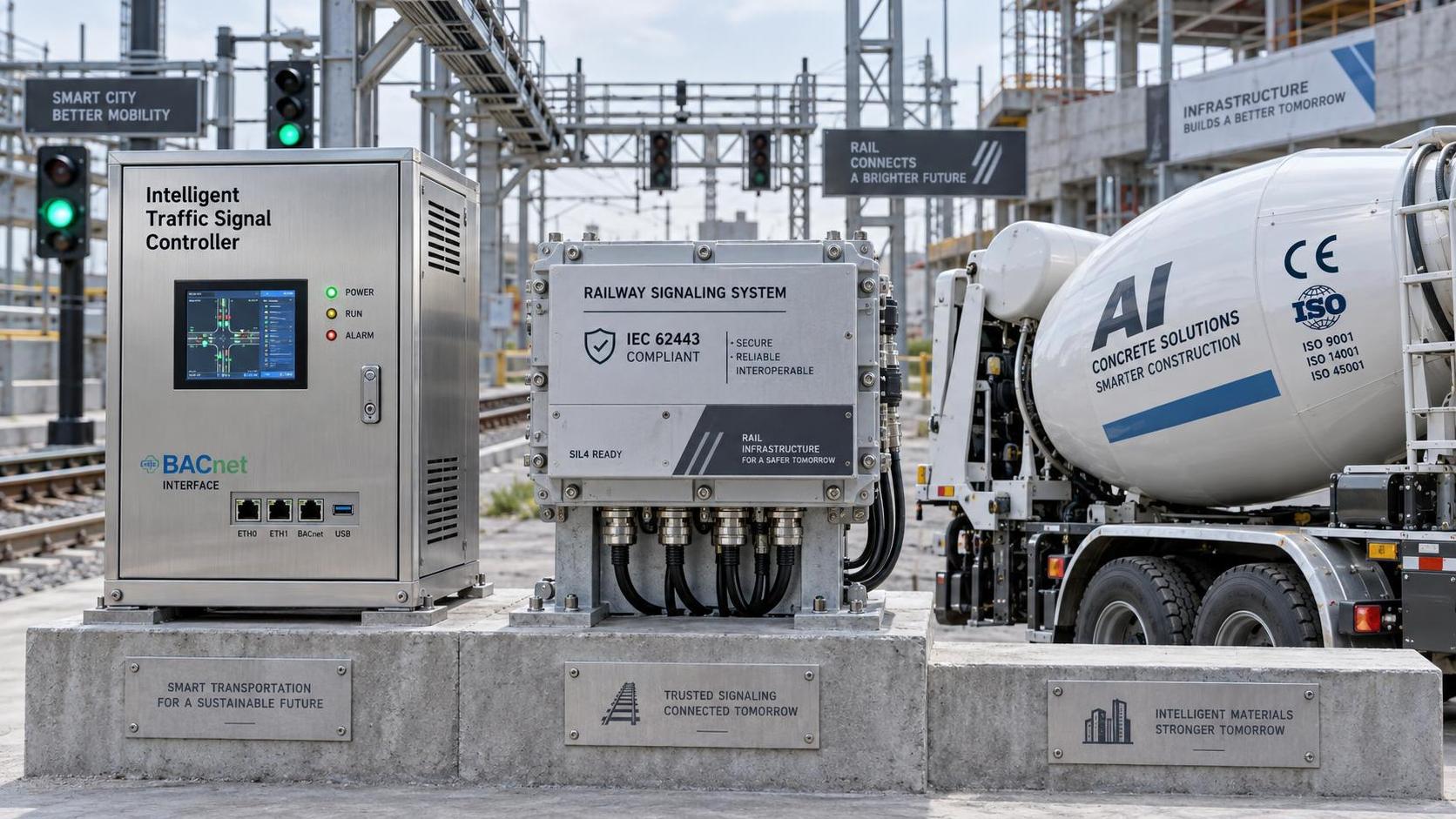
Urban Governance Software: Features That Matter in Daily Operations
Urban Governance Software: Features That Matter in Daily Operations

Urban governance software keeps daily city work organized, visible, and easier to control. In practice, that matters most during routine operations, not only during major incidents.
When teams evaluate urban governance software, feature lists alone are rarely enough. The better question is simpler: which functions reduce delays, improve coordination, and support better decisions every day?
That is where many buying decisions become clearer. Useful platforms help operators see issues early, assign tasks faster, and track outcomes without switching across disconnected systems.
For GIUT, this topic sits at the center of modern urban transformation. Smart governance only works when digital tools match real field conditions and the pace of daily city operations.
This article looks at the urban governance software features that matter most in selection and day-to-day use. It also highlights the risks of choosing a platform that looks strong in demos but weak in operations.
Start With Daily Operational Reality
The strongest urban governance software begins with common workflows. These include incident reporting, task dispatch, progress tracking, escalation, cross-department coordination, and performance follow-up.
A platform may look advanced, yet still slow down real work. That usually happens when the system adds clicks, hides information, or forces teams into rigid process templates.
From a selection perspective, buyers should examine how the software handles ordinary tasks at high volume. Daily efficiency often reveals more than a polished crisis management dashboard.
A practical review should cover three questions:
- Can issues be reported, categorized, and routed within minutes?
- Can different departments work from the same status view?
- Can managers identify delays before they become public complaints?
If the answer is unclear, the urban governance software may not support daily operations as well as expected.
Core Features That Actually Matter
In real urban operations, several features consistently shape software value. These functions affect response speed, service quality, and management visibility.
1. Unified Case and Task Management
Urban governance software should centralize complaints, field reports, sensor alerts, and service requests in one workflow. Separate queues create blind spots and duplicated effort.
The system should support clear ownership, deadlines, status updates, and escalation paths. Operators need to know what is pending, overdue, reassigned, or blocked.
2. Real-Time Visibility
Good urban governance software provides real-time dashboards that are easy to read during busy shifts. Timeliness matters more than decorative visual design.
Live status should cover incidents, work orders, service levels, location data, and response times. That allows faster adjustments when workloads move between districts or teams.
3. Cross-Department Coordination
Many city issues span sanitation, transport, utilities, emergency services, and district offices. Urban governance software should connect those parties without manual relays.
Shared records, joint workflows, and automatic notifications reduce handoff failures. This is especially important when one unresolved issue triggers another operational risk.
4. Mobile Field Support
Daily governance happens on streets, stations, worksites, and public facilities. Urban governance software should support field reporting, photo uploads, GPS positioning, and quick closure updates.
Offline capability also matters in tunnels, remote zones, or unstable networks. Without it, field teams often return to paper notes and delayed data entry.
5. Configurable Rules and Workflows
No two cities manage governance in exactly the same way. Urban governance software should allow configurable categories, routing logic, permissions, and escalation rules.
That flexibility helps the platform adapt to local policy, service standards, and operational maturity. It also reduces future customization costs.
The Data Layer Behind Better Decisions
Urban governance software is not only a workflow tool. Its long-term value depends on how well it turns operational data into usable decisions.
A strong platform should combine structured data from reports, devices, maps, departments, and historical cases. That gives managers a fuller picture of cause, pattern, and urgency.
More importantly, analytics should stay practical. Teams need trend alerts, repeat issue detection, SLA monitoring, district comparisons, and workload forecasting.
This is where urban governance software supports preventive action. Instead of responding to every issue as a separate event, cities can identify recurring failures and target root causes.
In selection reviews, it helps to ask whether the data model supports both operations and policy learning. Many systems manage tickets well but offer weak decision intelligence.
Integration Is Often the Deciding Factor
A common procurement mistake is evaluating urban governance software as a standalone product. In reality, it must fit into a wider city technology environment.
That environment may include GIS, CCTV platforms, traffic systems, utility monitoring, hotline systems, IoT devices, and document archives. Poor integration quickly limits software usefulness.
The right urban governance software should provide stable APIs, event-based data exchange, and clean synchronization rules. Integration should support operations, not create another maintenance burden.
This also affects trust in data. If one system shows a closed case while another still shows an active fault, decision quality suffers immediately.
During vendor review, integration readiness deserves direct proof. Architecture diagrams are useful, but working interfaces and reference deployments are more convincing.
Usability, Security, and Control Cannot Be Secondary
Even feature-rich urban governance software can fail if daily use feels heavy. Operators under time pressure need fast navigation, clear labels, and predictable screen logic.
Shorter learning curves reduce rollout friction. They also make staffing changes less disruptive across call centers, command rooms, and field teams.
Security matters just as much. Urban governance software often handles public records, infrastructure status, and sensitive location data.
A practical selection checklist should include:
- Role-based access control
- Audit trails for every action
- Data backup and recovery policies
- Permission settings by department and workflow stage
- Compliance support for local data governance requirements
These controls protect continuity as well as accountability. In urban operations, every missing record can become a management problem later.
A Practical Evaluation Framework
To compare urban governance software options, decision teams need a structured scoring method. That keeps procurement discussions tied to operational outcomes.
A pilot test usually reveals more than presentations. Try real cases, real staff, and real handoffs across departments before making a final software decision.
Common Selection Risks to Watch
Several risks appear repeatedly in urban governance software projects. Most are avoidable when evaluation stays close to operational needs.
- Overvaluing large feature catalogs while ignoring daily usability.
- Choosing a platform with limited integration maturity.
- Missing workflow flexibility for local governance rules.
- Underestimating training, data cleanup, and change management.
- Focusing on incident command while neglecting routine service operations.
A capable urban governance software platform should improve the ordinary workday first. Once that base is reliable, advanced coordination and smart city expansion become much easier.
Final Takeaway
The best urban governance software is not the one with the longest brochure. It is the one that supports fast action, shared visibility, and stable control during everyday city work.
For selection teams, the most useful path is practical and direct. Map daily workflows, test real coordination scenarios, verify integrations, and confirm that reporting leads to better decisions.
That approach helps identify urban governance software that can deliver value beyond procurement. In a smarter infrastructure era, operational clarity is still what turns technology into public service performance.
Get weekly intelligence in your inbox.
No noise. No sponsored content. Pure intelligence.
News Recommendations
 Sep 19, 2026How an electronics application guide helps prevent component mismatchHow an electronics application guide helps prevent component mismatch
 Sep 18, 2026When a resource allocation platform improves project deliveryWhen a resource allocation platform improves project delivery
 Sep 17, 2026What to compare when evaluating mineral processing equipment manufacturersWhat to compare when evaluating mineral processing equipment manufacturers
 Sep 16, 2026How mineral separation optimization can reduce concentrate lossesHow mineral separation optimization can reduce concentrate losses
 Sep 15, 2026How to assess lifecycle costs in urban tech procurementHow to assess lifecycle costs in urban tech procurement
 Sep 14, 2026Heavy industry technology trends reshaping capital investment prioritiesHeavy industry technology trends reshaping capital investment priorities
 Sep 14, 2026Global Industrial Equipment Procurement: How Top OEMs Qualify Suppliers for Mining & Infrastructure ProjectsGlobal Industrial Equipment Procurement: How Top OEMs Qualify Suppliers for Mining & Infrastructure Projects
 Sep 14, 2026Industrial & Mining Equipment Procurement: Balancing Local Sourcing, Lead Time, and Certification RequirementsIndustrial & Mining Equipment Procurement: Balancing Local Sourcing, Lead Time, and Certification Requirements
 Sep 14, 2026Infrastructure & Equipment Upgrades: What Procurement Teams Must Verify Before Signing Off on New ContractsInfrastructure & Equipment Upgrades: What Procurement Teams Must Verify Before Signing Off on New Contracts
 Sep 14, 2026Why Infrastructure Equipment Buyers Are Shifting from Catalog-Based to Capability-Based Supplier SelectionWhy Infrastructure Equipment Buyers Are Shifting from Catalog-Based to Capability-Based Supplier Selection
 Sep 14, 2026Process Automation Project Execution: How to Align Supplier Capabilities with PLC Integration, Cybersecurity & Commissioning MilestonesProcess Automation Project Execution: How to Align Supplier Capabilities with PLC Integration, Cybersecurity & Commissioning Milestones
 Sep 14, 2026Are intelligent traffic systems worth the investment for small cities?Are intelligent traffic systems worth the investment for small cities?
 Sep 14, 2026How do intelligent traffic systems handle sensor failures?How do intelligent traffic systems handle sensor failures?
 Sep 14, 2026What should I check before accepting a smart building system?What should I check before accepting a smart building system?
 Sep 14, 2026Is a smart building system worth the maintenance cost?Is a smart building system worth the maintenance cost?
 Sep 14, 2026What data is needed for reliable resource allocation planning?What data is needed for reliable resource allocation planning?
 Sep 14, 2026How can resource allocation software reduce equipment idle time?How can resource allocation software reduce equipment idle time?
 Sep 14, 2026How should smart devices be maintained in harsh outdoor conditions?How should smart devices be maintained in harsh outdoor conditions?
 Sep 14, 2026Do smart devices improve worker safety on construction sites?Do smart devices improve worker safety on construction sites?
 Sep 14, 2026What environmental risks must be assessed before deep-sea mining?What environmental risks must be assessed before deep-sea mining?
 Sep 14, 2026Is deep-sea mining equipment commercially viable in 2026?Is deep-sea mining equipment commercially viable in 2026?
 Sep 14, 2026What Inspection Checks Should Procurement Teams Perform Before Ordering Dredging Equipment in 2026?What Inspection Checks Should Procurement Teams Perform Before Ordering Dredging Equipment in 2026?
 Sep 13, 2026How to verify an industrial product information source before specifying equipmentHow to verify an industrial product information source before specifying equipment
 Sep 12, 2026Which intelligent traffic systems hardware fits an urban intersection?Which intelligent traffic systems hardware fits an urban intersection?
 Sep 11, 2026How pump capacity affects response coverage for municipal fire fighting vehiclesHow pump capacity affects response coverage for municipal fire fighting vehicles
 Sep 10, 2026What to verify before choosing a heavy industry equipment supplierWhat to verify before choosing a heavy industry equipment supplier
 Sep 09, 2026When do adaptive urban traffic control systems reduce corridor delays?When do adaptive urban traffic control systems reduce corridor delays?