Fire Trucks Supplier Costs Beyond the Purchase Price
Choosing a fire trucks supplier is not just a procurement decision—it is a long-term financial commitment that affects maintenance budgets, fleet availability, insurance exposure, training costs, and lifecycle value. For finance approvers, the lowest purchase price can conceal higher operating expenses, delayed parts support, or reduced resale potential. This article examines the hidden cost factors behind supplier selection and helps decision-makers evaluate total cost of ownership with greater confidence.
In public safety, industrial emergency response, airport operations, and urban infrastructure planning, a fire apparatus is not a simple vehicle asset. It is a 10–20 year operational platform connected to staffing, compliance, municipal resilience, and capital budgeting. A qualified fire trucks supplier should therefore be assessed through lifecycle economics, not only invoice value.
Why the Purchase Price Is Only the First Cost Layer
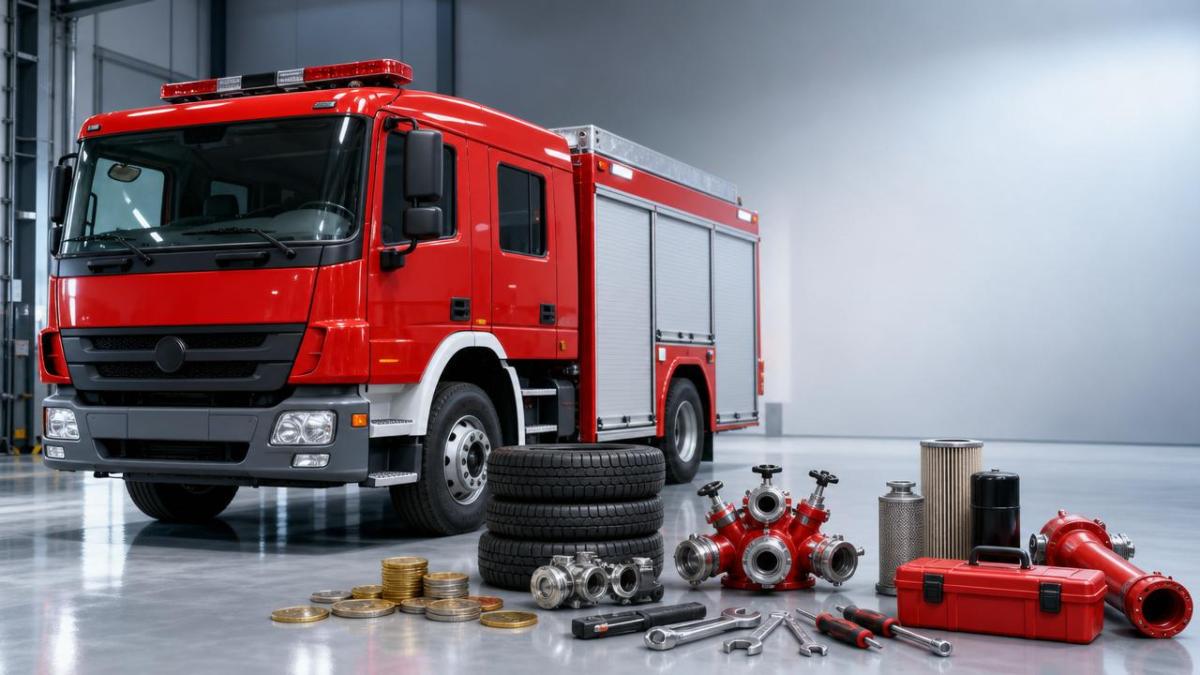
The initial purchase price may represent only one visible part of the long-term financial profile. For many fleets, maintenance, tires, pump testing, electronics support, body repair, and downtime coverage can shape the total cost of ownership more than the first contract amount.
A finance approver should ask whether the selected fire trucks supplier can support the unit for at least 10 years, provide parts within predictable lead times, and document service requirements before contract approval.
Capital Expense Versus Lifecycle Expense
A lower bid can look favorable in year 1 but become expensive by year 3 if the apparatus requires frequent corrective service. Typical procurement reviews should model 5, 10, and 15-year cost scenarios, especially for municipal and industrial fleets.
- Acquisition cost, including chassis, body, pump, foam system, lighting, and communications integration.
- Scheduled maintenance intervals, often every 6 months or based on operating hours.
- Annual testing, including pump performance, aerial device inspection, and safety systems checks.
- Parts availability, especially for electronics, valves, control panels, and driveline components.
- Residual value after 8–15 years, influenced by brand reputation, service records, and market demand.
The Financial Impact of Downtime
Downtime is often underestimated because it does not always appear as a direct line item. When a truck is unavailable for 7–21 days, agencies may need temporary coverage, mutual-aid planning, overtime staffing, or service-level adjustments.
For industrial sites, downtime can create exposure far beyond repair cost. Mining operations, logistics terminals, petrochemical facilities, and large construction zones may require emergency coverage to maintain permits, insurance conditions, and production continuity.
Key question for approvers
Before approving a fire trucks supplier, finance teams should require written answers on service response time, spare parts stocking, remote diagnostics, and warranty claim workflow. A 24–72 hour response commitment can materially reduce operational risk.
Hidden Cost Factors Finance Teams Should Quantify
A disciplined supplier evaluation converts technical risks into financial assumptions. This is especially important when comparing suppliers that quote similar apparatus types but differ in component brands, body construction, warranty scope, and after-sales capacity.
The following table shows practical cost categories that should be reviewed before selecting a fire trucks supplier. Each item affects budget certainty, fleet availability, or end-of-life asset value.
The table highlights a central point: price comparison without lifecycle assumptions is incomplete. A fire trucks supplier that provides transparent maintenance data and parts planning can reduce financial uncertainty even when the purchase price is higher.
Warranty Terms Need Financial Translation
Warranty language is often technical, but finance teams should convert it into budget exposure. A 2-year general warranty may not cover pump wear, corrosion, electronic failures, or labor travel unless clearly defined in the contract.
A better approach is to request a warranty matrix. It should list covered systems, claim response time, documentation requirements, labor responsibility, and whether replacement parts are shipped within 48 hours, 7 days, or longer.
Parts Strategy Can Decide Fleet Availability
Fire apparatus contains specialized components that are not always available through standard truck channels. Pump seals, foam proportioning devices, warning lights, ladder interlocks, and custom body panels may require supplier-specific support.
When a fire trucks supplier maintains regional stock, downtime can be contained. When every part requires factory sourcing, the buyer carries additional operational risk, especially in remote cities, ports, mines, and energy facilities.
Technical Specifications That Influence Long-Term Cost
Technical specification is not only an engineering topic. Apparatus configuration affects fuel consumption, tire wear, crew efficiency, maintenance complexity, road access, garage fit, and future upgrade costs.
For finance approvers, the goal is not to choose the most advanced vehicle. The goal is to approve a configuration that matches operating scenarios, response routes, crew capability, and budget limits over multiple fiscal cycles.
Pump, Tank, and Body Configuration
Common municipal pump capacities may range from 1,000 to 2,000 gpm, while water tanks may range from 500 to 3,000 gallons depending on urban density and hydrant access. Larger is not always cheaper over time.
Overspecification can increase chassis cost, fuel use, braking load, and tire replacement frequency. Underspecification can force additional response vehicles, creating indirect staffing and dispatch costs.
Specification points to validate
- Match tank capacity to water availability, not only worst-case assumptions.
- Confirm gross vehicle weight rating with a full crew, tools, hoses, foam, and equipment.
- Review turning radius and overall height against station doors and narrow roads.
- Assess pump control interface simplicity to reduce operator training time.
- Plan power load for radios, lighting, battery chargers, and future digital systems.
Standardization Across the Fleet
If a department operates 5, 20, or 50 apparatus units, standardization can reduce inventory complexity. Shared pumps, valves, lighting systems, and chassis platforms may lower training time and improve technician familiarity.
A reliable fire trucks supplier should help identify where standardization saves money and where mission-specific customization is necessary. The right balance prevents both unnecessary complexity and operational compromise.
Supplier Service Model: The Real Cost Control System
After delivery, the supplier’s service model becomes the buyer’s cost control system. Finance leaders should treat field service, technician training, documentation, and digital diagnostics as part of the procurement value.
The following comparison helps finance approvers distinguish a transactional vendor from a strategic fire trucks supplier capable of supporting emergency response assets over a full lifecycle.
The strongest supplier proposal is often the one that reduces unknowns. When support windows, training scope, documentation depth, and inspection stages are written into the procurement file, finance teams gain better cost visibility.
Delivery, Acceptance, and Payment Milestones
Delivery schedules for customized fire apparatus can vary widely, often from several months to more than a year depending on chassis availability, body complexity, and inspection requirements. Payment terms should reflect production risk.
A structured payment plan may include deposit, chassis completion, body installation, factory acceptance, and final handover. Each milestone should be tied to evidence such as inspection reports, photos, test certificates, or punch-list closure.
Compliance and Insurance Considerations
Regulatory expectations differ by country, city, and industrial sector. However, finance approvers should verify that the fire trucks supplier understands applicable safety standards, road rules, emission requirements, and firefighting performance documentation.
Insurance teams may also require maintenance logs, driver training records, inspection certificates, and accident repair documentation. Weak documentation can increase claim friction, even when the apparatus itself is technically sound.
A Practical Approval Framework for Finance Decision-Makers
Finance leaders need a repeatable method to compare suppliers beyond purchase price. A weighted scoring model can separate short-term savings from long-term value and make procurement decisions more defensible.
For many organizations, a practical framework includes 6 dimensions: acquisition cost, lifecycle service, technical fit, parts availability, documentation quality, and residual value. Each dimension can be scored from 1 to 5.
Recommended 5-Step Review Process
- Define operational scenarios, including urban response, industrial fire risk, airport support, or remote infrastructure protection.
- Request lifecycle cost inputs from each fire trucks supplier, not only purchase quotations.
- Compare warranty, parts, and service commitments in writing before commercial negotiation.
- Conduct technical and financial alignment meetings with fleet managers, procurement, insurance, and maintenance teams.
- Approve the supplier based on total cost, operational resilience, and documented support capacity.
Common Mistakes That Increase Costs
One frequent mistake is accepting vague warranty language. Another is failing to budget training after staff turnover. A third is ordering highly customized systems that only one technician or one factory can support.
Finance teams should also avoid comparing apparatus quotes without normalizing equipment scope. A truck including rescue tools, foam system, generator, hose inventory, and communications wiring is not equivalent to a bare vehicle quote.
Contract clauses worth adding
- Minimum spare parts availability period, preferably aligned with a 10-year service expectation.
- Defined response time for critical failures affecting emergency readiness.
- Factory acceptance testing criteria, including pump test, electrical load test, and road inspection.
- Training deliverables for at least 2 user groups: operators and maintenance personnel.
- Documentation package required before final payment release.
Building a Stronger Supplier Business Case
A well-prepared business case helps finance approvers defend the selected fire trucks supplier to boards, municipal committees, plant leadership, or infrastructure authorities. It should link spending to risk reduction and service continuity.
Instead of presenting only a purchase recommendation, procurement teams should present a total cost profile. This may include 10-year maintenance assumptions, expected inspection costs, annual training needs, and a replacement timeline.
What a Finance-Ready Proposal Should Include
A finance-ready proposal should be clear enough for non-technical stakeholders while detailed enough for fleet and engineering teams. It should show why one fire trucks supplier lowers uncertainty across the asset lifecycle.
- A specification summary explaining major cost drivers in plain language.
- A 5–10 year operating cost estimate with assumptions clearly stated.
- A risk register covering downtime, parts lead time, compliance, training, and warranty exclusions.
- A supplier support map showing service coverage, technician access, and escalation channels.
- A lifecycle value statement covering readiness, safety, asset value, and budget predictability.
When a Higher Quote Can Be the Lower-Cost Option
A higher initial quote may be financially reasonable when it includes stronger warranty coverage, shorter parts lead times, complete training, standardized components, and documented preventive maintenance support.
The decision should be based on evidence, not supplier claims. Ask each fire trucks supplier to provide lifecycle assumptions in comparable formats, then test those assumptions against your internal labor rate, duty cycle, and response requirements.
Making the Supplier Choice with Long-Term Confidence
For finance approvers, the best fire trucks supplier is not simply the lowest bidder. It is the partner that helps protect budget stability, emergency readiness, compliance confidence, and asset value over many years of operation.
The strongest procurement decisions quantify hidden costs before contract signing. Maintenance intervals, warranty limits, parts access, training scope, documentation depth, and downtime exposure should all be included in the approval file.
GIUT’s infrastructure and heavy equipment perspective supports decision-makers who need practical, technically grounded procurement insight. For cities, industrial operators, and emergency response fleets, lifecycle thinking turns apparatus buying into a smarter investment decision.
If your team is reviewing a fire apparatus purchase, comparing supplier proposals, or building a lifecycle cost model, contact us to explore tailored evaluation guidance, supplier assessment criteria, and practical procurement solutions.
Get weekly intelligence in your inbox.
No noise. No sponsored content. Pure intelligence.
News Recommendations
 Sep 19, 2026How an electronics application guide helps prevent component mismatchHow an electronics application guide helps prevent component mismatch
 Sep 18, 2026When a resource allocation platform improves project deliveryWhen a resource allocation platform improves project delivery
 Sep 17, 2026What to compare when evaluating mineral processing equipment manufacturersWhat to compare when evaluating mineral processing equipment manufacturers
 Sep 16, 2026How mineral separation optimization can reduce concentrate lossesHow mineral separation optimization can reduce concentrate losses
 Sep 15, 2026How to assess lifecycle costs in urban tech procurementHow to assess lifecycle costs in urban tech procurement
 Sep 14, 2026Heavy industry technology trends reshaping capital investment prioritiesHeavy industry technology trends reshaping capital investment priorities
 Sep 14, 2026Global Industrial Equipment Procurement: How Top OEMs Qualify Suppliers for Mining & Infrastructure ProjectsGlobal Industrial Equipment Procurement: How Top OEMs Qualify Suppliers for Mining & Infrastructure Projects
 Sep 14, 2026Industrial & Mining Equipment Procurement: Balancing Local Sourcing, Lead Time, and Certification RequirementsIndustrial & Mining Equipment Procurement: Balancing Local Sourcing, Lead Time, and Certification Requirements
 Sep 14, 2026Infrastructure & Equipment Upgrades: What Procurement Teams Must Verify Before Signing Off on New ContractsInfrastructure & Equipment Upgrades: What Procurement Teams Must Verify Before Signing Off on New Contracts
 Sep 14, 2026Why Infrastructure Equipment Buyers Are Shifting from Catalog-Based to Capability-Based Supplier SelectionWhy Infrastructure Equipment Buyers Are Shifting from Catalog-Based to Capability-Based Supplier Selection
 Sep 14, 2026Process Automation Project Execution: How to Align Supplier Capabilities with PLC Integration, Cybersecurity & Commissioning MilestonesProcess Automation Project Execution: How to Align Supplier Capabilities with PLC Integration, Cybersecurity & Commissioning Milestones
 Sep 14, 2026Are intelligent traffic systems worth the investment for small cities?Are intelligent traffic systems worth the investment for small cities?
 Sep 14, 2026How do intelligent traffic systems handle sensor failures?How do intelligent traffic systems handle sensor failures?
 Sep 14, 2026What should I check before accepting a smart building system?What should I check before accepting a smart building system?
 Sep 14, 2026Is a smart building system worth the maintenance cost?Is a smart building system worth the maintenance cost?
 Sep 14, 2026What data is needed for reliable resource allocation planning?What data is needed for reliable resource allocation planning?
 Sep 14, 2026How can resource allocation software reduce equipment idle time?How can resource allocation software reduce equipment idle time?
 Sep 14, 2026How should smart devices be maintained in harsh outdoor conditions?How should smart devices be maintained in harsh outdoor conditions?
 Sep 14, 2026Do smart devices improve worker safety on construction sites?Do smart devices improve worker safety on construction sites?
 Sep 14, 2026What environmental risks must be assessed before deep-sea mining?What environmental risks must be assessed before deep-sea mining?
 Sep 14, 2026Is deep-sea mining equipment commercially viable in 2026?Is deep-sea mining equipment commercially viable in 2026?
 Sep 14, 2026What Inspection Checks Should Procurement Teams Perform Before Ordering Dredging Equipment in 2026?What Inspection Checks Should Procurement Teams Perform Before Ordering Dredging Equipment in 2026?
 Sep 13, 2026How to verify an industrial product information source before specifying equipmentHow to verify an industrial product information source before specifying equipment
 Sep 12, 2026Which intelligent traffic systems hardware fits an urban intersection?Which intelligent traffic systems hardware fits an urban intersection?
 Sep 11, 2026How pump capacity affects response coverage for municipal fire fighting vehiclesHow pump capacity affects response coverage for municipal fire fighting vehicles
 Sep 10, 2026What to verify before choosing a heavy industry equipment supplierWhat to verify before choosing a heavy industry equipment supplier
 Sep 09, 2026When do adaptive urban traffic control systems reduce corridor delays?When do adaptive urban traffic control systems reduce corridor delays?