Deep-Sea Mining Technology: Benefits and Safety Risks
Deep-sea mining technology is moving from experimental exploration to a serious option for securing critical minerals used in batteries, grids, and advanced infrastructure.
For technical evaluators, the question is not only resource access, but whether robotics, monitoring, environmental controls, and emergency safeguards are deployment-ready.
This article examines the operational benefits, engineering constraints, and safety risks shaping future seabed mineral recovery across infrastructure, energy, and resource scenarios.
Scenario Background: Why Deep-Sea Mining Technology Is Being Reconsidered
The demand for nickel, cobalt, copper, manganese, and rare earth elements is rising with electrification, grid upgrades, and smart infrastructure expansion.
Deep-sea mining technology enters this debate because terrestrial mining faces ore decline, land conflicts, water stress, and permitting delays.
However, seabed extraction is not a universal substitute for land mining. It is a scenario-specific engineering choice.
The value of deep-sea mining technology depends on mineral type, water depth, ecosystem sensitivity, vessel capability, and regulatory certainty.
A responsible assessment should compare mineral security benefits against operational hazards and unknown environmental effects.
Scenario One: Polymetallic Nodules for Battery and Grid Supply Chains
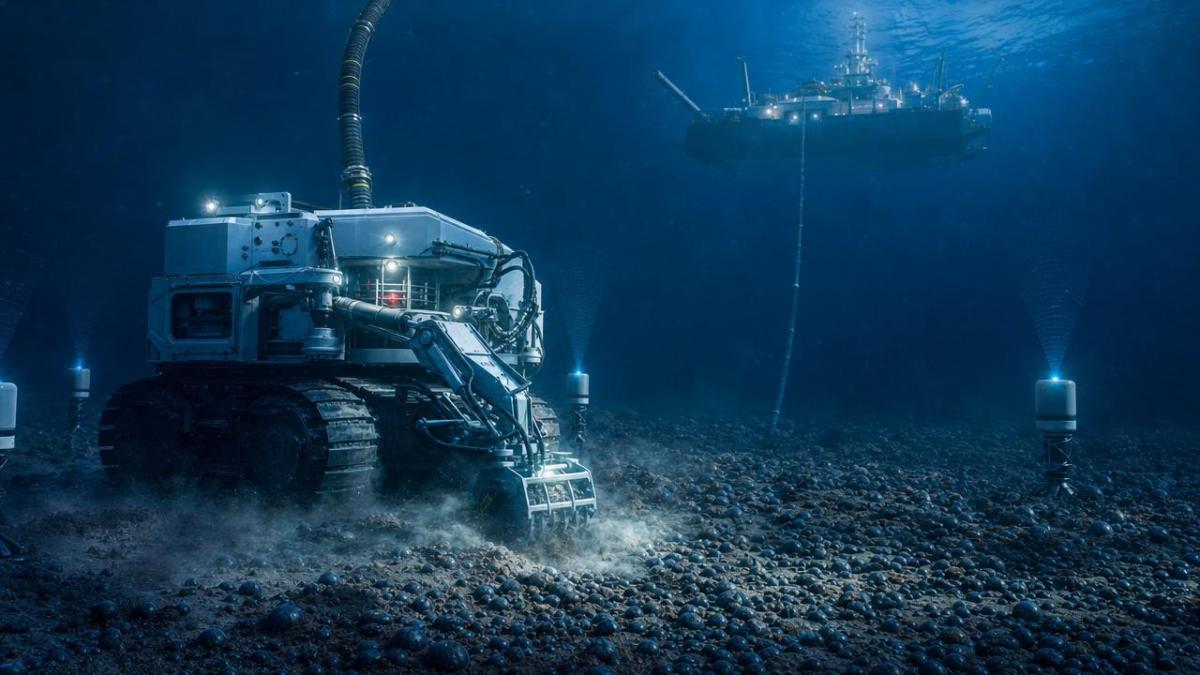
Polymetallic nodules are potato-sized mineral deposits scattered across abyssal plains, often containing nickel, cobalt, copper, and manganese.
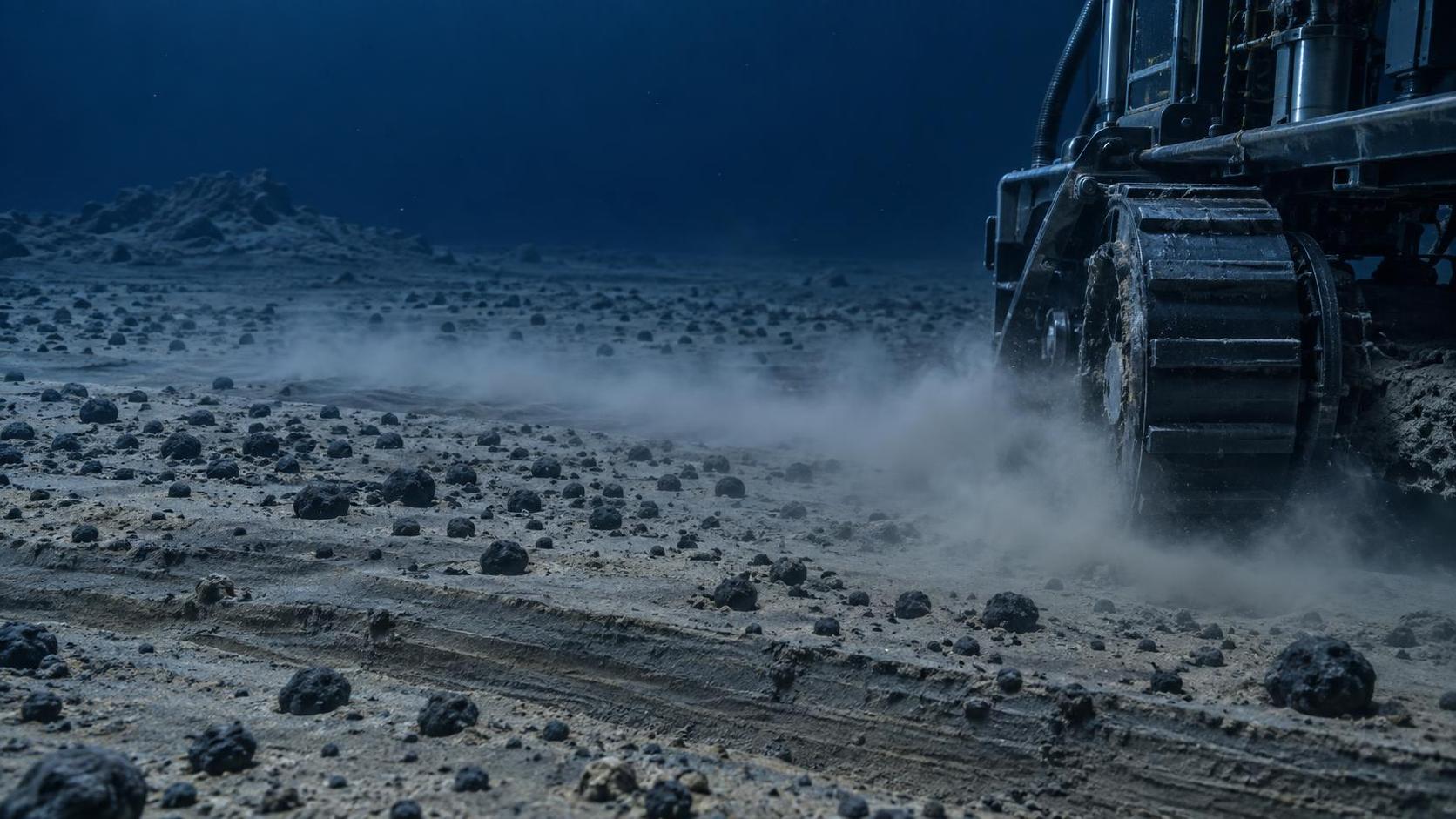
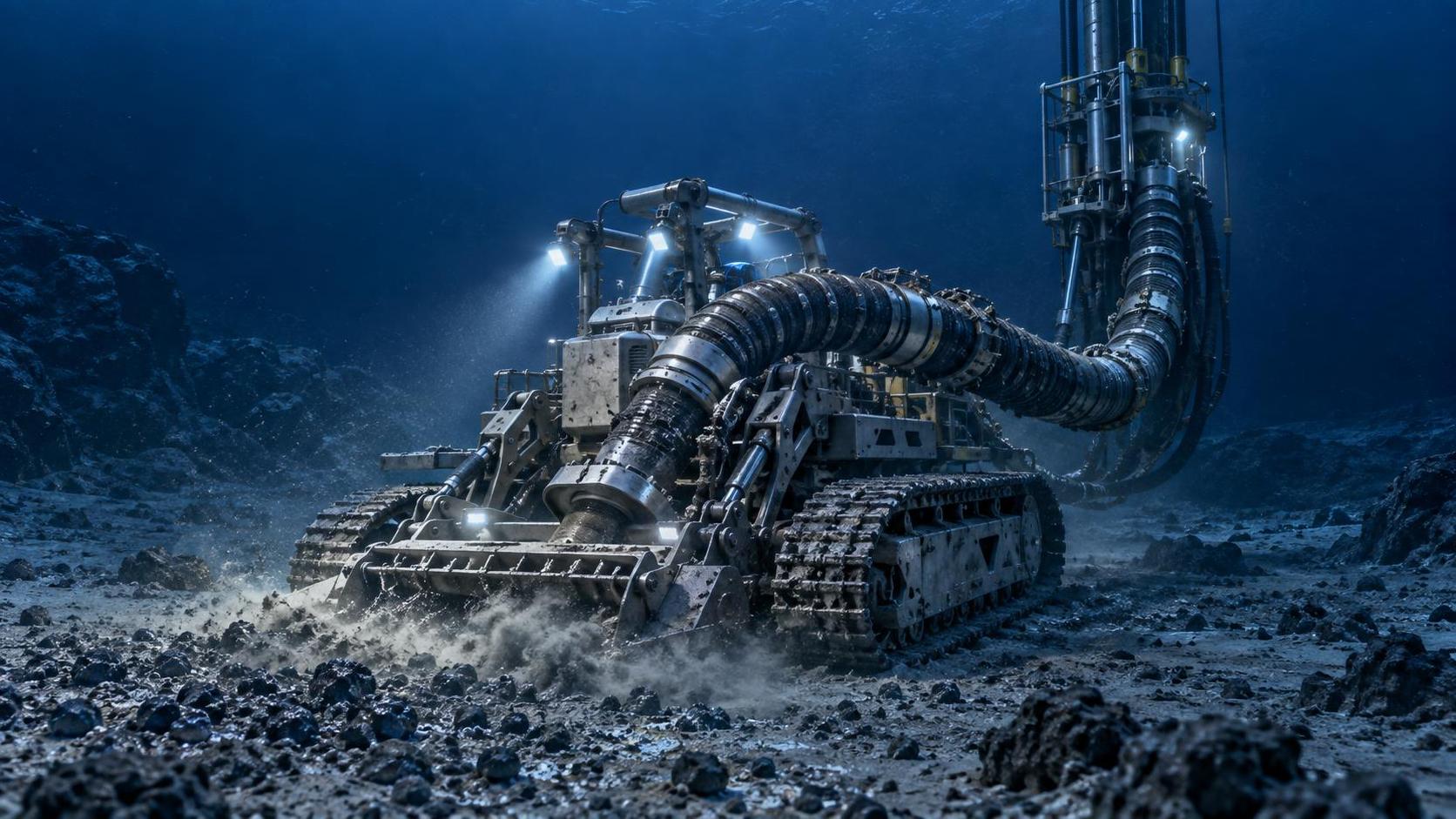
In this scenario, deep-sea mining technology relies on collector vehicles, hydraulic lift systems, riser pipes, and support vessels.
The main benefit is access to battery metals without open pits, tailings dams, or large-scale forest clearance.
The main safety concern is sediment plume behavior, which can affect benthic organisms and monitoring accuracy.
Engineering judgment should focus on collector traction, suction intensity, plume containment, and real-time turbidity thresholds.
Deep-sea mining technology is most credible here when production tools can stop automatically after environmental limits are exceeded.
Scenario Two: Seafloor Massive Sulfides Near Hydrothermal Systems
Seafloor massive sulfides may contain copper, zinc, gold, and silver. They form around hydrothermal vent systems.
This scenario is technically attractive but environmentally sensitive, because vent ecosystems can host rare biological communities.
Deep-sea mining technology for sulfides often requires cutting tools, tracked machines, subsea pumps, and advanced terrain mapping.
The operational benefit is high-grade mineral concentration, which may reduce the volume of material processed per unit metal.
The risk profile is harsher than nodule collection. Rock cutting can create noise, vibration, unstable slopes, and concentrated plumes.
Decision criteria should include biological exclusion zones, vent inactivity verification, slope stability modeling, and emergency recovery planning.
Scenario Three: Cobalt-Rich Crusts on Seamounts
Cobalt-rich crusts form on seamount slopes and may contain cobalt, nickel, platinum, tellurium, and rare earth elements.
This scenario is among the hardest applications for deep-sea mining technology because terrain is steep and irregular.
Selective cutting is essential. Excessive substrate removal can reduce resource efficiency and increase ecological disturbance.
The benefit is strategic access to metals used in aerospace, electronics, renewable energy systems, and advanced industrial equipment.
The safety risk is machine instability, tool wear, navigation error, and accidental damage to deep-sea habitats.
Deep-sea mining technology should be considered viable here only with precise bathymetry, autonomous navigation, and low-impact cutting validation.
Different Scenario Requirements for Deep-Sea Mining Technology
Each seabed resource type places different demands on equipment, monitoring, emergency response, and environmental governance.
The following comparison helps clarify where deep-sea mining technology may fit, and where caution should dominate.
Operational Benefits: Where the Technology Creates Practical Value
The strongest business case for deep-sea mining technology is supply diversification for critical minerals.
A diversified mineral base can reduce exposure to single-country supply shocks, transport bottlenecks, and geopolitical disruptions.
Seabed deposits may also contain multiple metals in one resource system, improving integrated recovery economics.
From an infrastructure perspective, deep-sea mining technology could support batteries, transmission networks, robotics, sensors, and smart city equipment.
Another benefit is digitalization. Subsea operations require mapping, simulation, acoustic positioning, and remote-control systems.
These capabilities can improve ocean engineering, offshore inspection, subsea construction, and maritime emergency response.
Safety Risks: What Must Be Controlled Before Deployment
Deep-sea mining technology works in high pressure, low temperature, darkness, corrosive seawater, and limited human access.
Equipment failure can be expensive, slow to diagnose, and difficult to recover from great depth.
Critical mechanical risks include riser blockage, pump failure, hydraulic leaks, cable damage, and vehicle immobilization.
Operational risks include vessel drift, bad weather, communication latency, acoustic interference, and collision with subsea assets.
Environmental risks include plume dispersion, noise, habitat loss, metal release, and uncertain recovery timelines.
Deep-sea mining technology therefore requires layered safeguards, not a single monitoring instrument or one-time baseline survey.
Core Engineering Safeguards
- Redundant power, communication, and positioning systems for critical subsea assets.
- Automatic shutdown rules linked to plume, noise, pressure, and equipment vibration data.
- Emergency lifting procedures for disabled collectors, pumps, and riser sections.
- Digital twins that simulate production, maintenance windows, and failure propagation.
- Independent environmental monitoring using fixed stations, autonomous vehicles, and vessel-based sensors.
Scenario Fit: When Deep-Sea Mining Technology Deserves Attention
Deep-sea mining technology deserves serious evaluation when mineral demand is strategic and land-based alternatives carry high social or ecological costs.
It is also relevant where offshore engineering capability, regulatory oversight, and environmental science capacity are already mature.
A project should not advance only because the deposit appears large or metal prices are favorable.
The better test is whether deep-sea mining technology can meet operational, ecological, and governance thresholds simultaneously.
Recommended Adaptation Checklist
- Define the target mineral scenario before selecting machines or vessel systems.
- Build a baseline covering currents, species, sediment, noise, and seasonal variability.
- Test deep-sea mining technology at pilot scale before approving commercial extraction.
- Use transparent performance thresholds for plume limits and biodiversity protection.
- Plan full lifecycle governance, including decommissioning, data disclosure, and post-mining monitoring.
Common Misjudgments in Deep-Sea Mining Technology Evaluation
One common mistake is treating the seabed as a uniform industrial surface.
In reality, geology, currents, slopes, sediment behavior, and biological communities vary sharply between project areas.
Another mistake is assuming remote operation removes safety risk. It reduces human exposure but increases dependence on automation reliability.
A third error is focusing on extraction machines while underestimating vessels, risers, processing logistics, and maintenance systems.
Deep-sea mining technology is a complete offshore production chain, not only a subsea vehicle.
The most serious misjudgment is weak baseline science. Without strong pre-operation data, impact claims are difficult to verify.
Decision Path: From Feasibility to Responsible Operation
A practical roadmap should begin with resource confirmation, environmental baseline design, and technology readiness assessment.
The next step is controlled pilot testing, where deep-sea mining technology proves collection efficiency and monitoring accuracy together.
Commercial decisions should require auditable data, independent review, emergency response capability, and adaptive management rules.
If thresholds are missed, operations should pause, redesign, or relocate rather than continue under uncertain assumptions.
This staged model protects capital, ecosystems, public trust, and long-term mineral access.
Conclusion: Benefits Are Real, but Readiness Must Be Proven
Deep-sea mining technology may help diversify critical mineral supply for batteries, grids, smart infrastructure, and advanced industry.
Its benefits are strongest when evaluated against specific seabed scenarios, not broad assumptions about ocean resources.
The decisive issues are safety engineering, environmental monitoring, emergency recovery, and transparent governance.
Before scaling extraction, compare each project against mineral need, ecological sensitivity, equipment maturity, and regulatory capacity.
GIUT will continue tracking deep-sea mining technology, subsea robotics, offshore safety systems, and sustainable resource development for infrastructure decision intelligence.
Get weekly intelligence in your inbox.
No noise. No sponsored content. Pure intelligence.
News Recommendations
 Sep 19, 2026How an electronics application guide helps prevent component mismatchHow an electronics application guide helps prevent component mismatch
 Sep 18, 2026When a resource allocation platform improves project deliveryWhen a resource allocation platform improves project delivery
 Sep 17, 2026What to compare when evaluating mineral processing equipment manufacturersWhat to compare when evaluating mineral processing equipment manufacturers
 Sep 16, 2026How mineral separation optimization can reduce concentrate lossesHow mineral separation optimization can reduce concentrate losses
 Sep 15, 2026How to assess lifecycle costs in urban tech procurementHow to assess lifecycle costs in urban tech procurement
 Sep 14, 2026Heavy industry technology trends reshaping capital investment prioritiesHeavy industry technology trends reshaping capital investment priorities
 Sep 14, 2026Global Industrial Equipment Procurement: How Top OEMs Qualify Suppliers for Mining & Infrastructure ProjectsGlobal Industrial Equipment Procurement: How Top OEMs Qualify Suppliers for Mining & Infrastructure Projects
 Sep 14, 2026Industrial & Mining Equipment Procurement: Balancing Local Sourcing, Lead Time, and Certification RequirementsIndustrial & Mining Equipment Procurement: Balancing Local Sourcing, Lead Time, and Certification Requirements
 Sep 14, 2026Infrastructure & Equipment Upgrades: What Procurement Teams Must Verify Before Signing Off on New ContractsInfrastructure & Equipment Upgrades: What Procurement Teams Must Verify Before Signing Off on New Contracts
 Sep 14, 2026Why Infrastructure Equipment Buyers Are Shifting from Catalog-Based to Capability-Based Supplier SelectionWhy Infrastructure Equipment Buyers Are Shifting from Catalog-Based to Capability-Based Supplier Selection
 Sep 14, 2026Process Automation Project Execution: How to Align Supplier Capabilities with PLC Integration, Cybersecurity & Commissioning MilestonesProcess Automation Project Execution: How to Align Supplier Capabilities with PLC Integration, Cybersecurity & Commissioning Milestones
 Sep 14, 2026Are intelligent traffic systems worth the investment for small cities?Are intelligent traffic systems worth the investment for small cities?
 Sep 14, 2026How do intelligent traffic systems handle sensor failures?How do intelligent traffic systems handle sensor failures?
 Sep 14, 2026What should I check before accepting a smart building system?What should I check before accepting a smart building system?
 Sep 14, 2026Is a smart building system worth the maintenance cost?Is a smart building system worth the maintenance cost?
 Sep 14, 2026What data is needed for reliable resource allocation planning?What data is needed for reliable resource allocation planning?
 Sep 14, 2026How can resource allocation software reduce equipment idle time?How can resource allocation software reduce equipment idle time?
 Sep 14, 2026How should smart devices be maintained in harsh outdoor conditions?How should smart devices be maintained in harsh outdoor conditions?
 Sep 14, 2026Do smart devices improve worker safety on construction sites?Do smart devices improve worker safety on construction sites?
 Sep 14, 2026What environmental risks must be assessed before deep-sea mining?What environmental risks must be assessed before deep-sea mining?
 Sep 14, 2026Is deep-sea mining equipment commercially viable in 2026?Is deep-sea mining equipment commercially viable in 2026?
 Sep 14, 2026What Inspection Checks Should Procurement Teams Perform Before Ordering Dredging Equipment in 2026?What Inspection Checks Should Procurement Teams Perform Before Ordering Dredging Equipment in 2026?
 Sep 13, 2026How to verify an industrial product information source before specifying equipmentHow to verify an industrial product information source before specifying equipment
 Sep 12, 2026Which intelligent traffic systems hardware fits an urban intersection?Which intelligent traffic systems hardware fits an urban intersection?
 Sep 11, 2026How pump capacity affects response coverage for municipal fire fighting vehiclesHow pump capacity affects response coverage for municipal fire fighting vehicles
 Sep 10, 2026What to verify before choosing a heavy industry equipment supplierWhat to verify before choosing a heavy industry equipment supplier
 Sep 09, 2026When do adaptive urban traffic control systems reduce corridor delays?When do adaptive urban traffic control systems reduce corridor delays?