Smart Building Technology Trends Shaping 2026 Projects
As 2026 projects move from concept to execution, smart building technology is becoming a strategic priority for business leaders seeking efficiency, resilience, and long-term asset value. From AI-driven energy management to integrated digital twins and adaptive building systems, the next wave of innovation is reshaping how projects are planned, built, and operated. This article explores the trends decision-makers should watch to stay competitive in a rapidly evolving built environment.
For enterprise decision-makers, the issue is no longer whether to adopt smart systems, but how to invest in the right architecture, data layer, and delivery model. In commercial towers, logistics hubs, hospitals, campuses, and mixed-use developments, the performance gap between conventional assets and connected buildings is widening across energy use, maintenance speed, occupant comfort, and compliance readiness.
Within the broader infrastructure and urban technology landscape, smart building technology now sits at the intersection of construction digitization, smart governance, grid interaction, and lifecycle asset management. That makes it especially relevant for organizations planning capital-intensive projects with 15- to 30-year operating horizons.
Why Smart Building Technology Is Becoming a Board-Level Priority in 2026
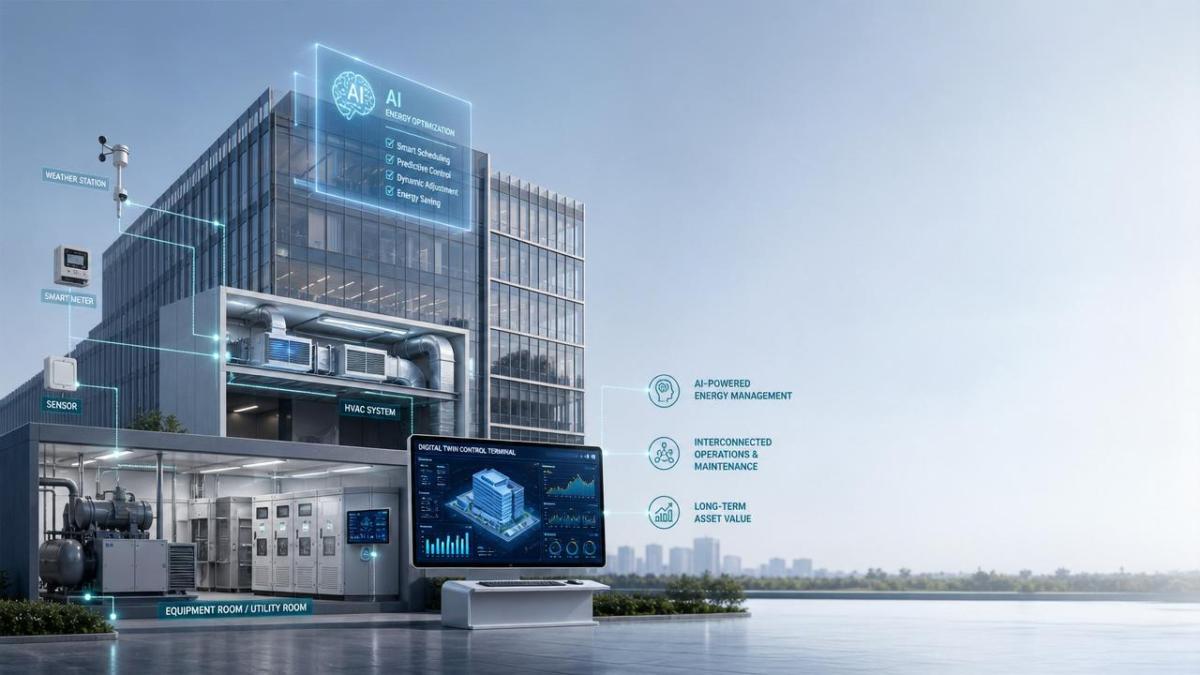
In 2026, building projects are being judged on more than construction cost and handover speed. Investors and operators increasingly track 4 performance layers at once: capital efficiency, operational resilience, sustainability outcomes, and digital readiness. Smart building technology helps connect these priorities into one operating framework.
A typical large facility may contain 8 to 15 major subsystems, including HVAC, lighting, access control, fire safety, elevators, water management, metering, and occupancy analytics. When these remain siloed, data is delayed, maintenance is reactive, and optimization opportunities are missed. Integrated platforms reduce those blind spots.
The cost pressures driving adoption
Energy volatility remains one of the biggest drivers. In many projects, HVAC and lighting together account for 45% to 70% of base-building energy demand. Even a 10% to 18% optimization range can materially affect operating margins over a 5-year period, especially for portfolios with multiple sites.
Labor scarcity is another factor. Engineering teams are expected to manage more assets with fewer technicians, while also meeting stricter reporting standards. Predictive maintenance tools, remote diagnostics, and centralized dashboards reduce inspection cycles from weekly manual rounds to exception-based interventions.
The strategic shift from isolated systems to connected assets
Earlier building automation often focused on one subsystem at a time. The 2026 model is different. Owners want a common data environment that supports design, commissioning, operations, and future retrofits. This is where digital twins, interoperable controls, and API-based software platforms are gaining traction.
- Better cross-system visibility within 1 dashboard instead of 5 to 8 separate interfaces
- Faster fault response, often measured in hours rather than days
- Improved energy benchmarking across floors, zones, or buildings
- Stronger support for ESG reporting, tenant experience, and resilience planning
The table below outlines how enterprise buyers are reframing project value when evaluating smart building technology for new construction and major upgrades.
The key message is clear: smart building technology is moving from a technical add-on to a core investment criterion. For boards and capital committees, the conversation increasingly centers on lifecycle returns, not just upfront installation cost.
The Defining Smart Building Technology Trends Shaping 2026 Projects
Several trends are converging at the same time, and together they are changing how projects are specified, procured, and operated. Decision-makers should pay attention not only to individual tools, but also to how these tools connect across the asset lifecycle.
AI-driven energy optimization becomes operational, not experimental
AI applications are moving beyond dashboards into active control strategies. In practice, this means continuously adjusting HVAC setpoints, ventilation rates, lighting schedules, and load balancing according to occupancy, weather, tariff windows, and equipment condition.
For many facilities, a practical starting point is 3 to 5 high-impact zones rather than a building-wide rollout on day one. This phased model reduces integration risk and allows operators to validate savings, comfort thresholds, and alarm logic before broader deployment.
Digital twins become a lifecycle tool
Digital twins are increasingly used from design coordination through operations. In 2026 projects, the expectation is not simply a 3D model, but a live asset environment linked to equipment status, maintenance history, and performance baselines. This helps teams compare design intent with real operating behavior.
Where digital twins create measurable value
- Commissioning verification over the first 30 to 90 days after occupancy
- Space-use optimization in offices, campuses, and public facilities
- Simulation of retrofit scenarios before capital is committed
- Faster incident diagnosis through equipment and location mapping
Interoperability and open integration gain procurement weight
One of the most important trends in smart building technology is the shift away from closed ecosystems. Buyers are increasingly asking whether systems support standard protocols, API exchange, and future third-party integration. That question matters because buildings are expected to operate for 20 years or longer, while software stacks may change every 3 to 7 years.
When integration is weak, owners face recurring middleware costs, fragmented data ownership, and difficult upgrades. When integration is planned early, buildings become easier to adapt to new regulations, new tenant requirements, and new energy programs.
Occupant-centric systems move into mainstream design
Occupant experience is no longer limited to premium offices. Schools, healthcare facilities, industrial campuses, and transport-linked developments increasingly use indoor air quality sensing, mobile access, smart wayfinding, and comfort analytics to improve utilization and retention.
The value is strategic. Better environmental quality can reduce complaint rates, support space planning, and strengthen leasing narratives. Common sensor packages now monitor 4 to 7 variables, such as temperature, humidity, CO2, particulate matter, occupancy, noise, and daylight conditions.
Cybersecurity becomes part of building design review
As more devices connect to operational technology networks, cybersecurity risk becomes inseparable from building performance. A resilient smart building strategy now includes network segmentation, user access control, patch management schedules, and vendor accountability at tender stage, not after handover.
For enterprise projects, the practical baseline usually includes 3 controls: defined device inventory, role-based permissions, and backup or recovery procedures. Buildings with critical functions, such as hospitals or data-heavy campuses, often require a deeper governance model with regular review intervals.
How Enterprise Buyers Should Evaluate Smart Building Solutions
Not every smart building package delivers the same value. Some solutions are sensor-heavy but integration-light. Others are strong in controls but weak in analytics or service continuity. For decision-makers, disciplined evaluation is essential before locking specifications into procurement documents.
The 5 evaluation dimensions that matter most
- Interoperability across current and future building systems
- Scalability from one site to a portfolio of 10, 20, or more assets
- Cybersecurity governance and data ownership clarity
- Operational support model, including training and response times
- Total cost of ownership over 3, 5, and 10 years
A frequent mistake is to compare bids only on capex. In reality, long-term value is shaped by software licensing structure, integration complexity, replacement cycles for edge devices, and the level of post-handover engineering support available during the stabilization period.
The matrix below can help procurement teams translate smart building technology claims into practical decision criteria.
The most effective procurement teams score each factor in a weighted model rather than relying on headline claims. In many cases, the best-performing option is not the one with the most features, but the one with the clearest path to stable operations within the first 6 months.
Questions executives should ask before approval
Commercial and operational questions
- What measurable outcomes are expected within 12 months of operation?
- Which 3 subsystems will generate the fastest operational return?
- How will data ownership be handled if service providers change?
- What training is required for facility teams during the first 4 to 8 weeks?
- How will cybersecurity responsibilities be divided among contractors and operators?
Implementation Roadmap: From Specification to Long-Term Performance
A strong smart building technology strategy depends as much on delivery discipline as on technical selection. Many projects underperform not because the tools are weak, but because goals, interfaces, and responsibilities are not aligned from design through operations.
A practical 4-stage rollout model
Stage 1: Define business outcomes
Start by identifying 3 to 6 measurable outcomes, such as reducing base energy intensity, shortening fault response time, improving tenant comfort visibility, or enabling portfolio benchmarking. Without these targets, systems often become overengineered and underused.
Stage 2: Build the integration and data strategy
Map how data will flow between design models, building management systems, meters, IoT sensors, CMMS platforms, and reporting tools. This stage should also define ownership of naming conventions, point lists, alarms, and cybersecurity controls before installation begins.
Stage 3: Commission for operations, not just handover
Commissioning should test not only equipment startup, but also data integrity, dashboard logic, occupancy schedules, alarm thresholds, and exception workflows. A 30-day functional test may be enough for some assets, while complex facilities often need 60 to 90 days of tuning.
Stage 4: Optimize after occupancy
Post-occupancy optimization is where much of the value emerges. Usage patterns typically shift during the first 3 months, and seasonal variations can expose control gaps. Regular reviews at 30, 90, and 180 days help teams stabilize performance and capture missed efficiencies.
Common implementation risks to avoid
- Specifying connected devices without a clear data governance model
- Overlooking training for in-house operations and maintenance teams
- Accepting proprietary lock-in that limits future expansion
- Separating cybersecurity review from building controls procurement
- Failing to define which KPIs will be tracked after handover
Organizations that avoid these pitfalls are typically better positioned to scale successful pilots into portfolio-wide standards. That matters for infrastructure-linked real estate, industrial campuses, and urban developments where replication speed can influence long-term competitiveness.
What This Means for Infrastructure, Urban Tech, and Asset Strategy
Smart building technology should not be viewed in isolation. Its real value appears when buildings interact with broader systems such as district energy, smart grids, mobility networks, logistics flows, and public service infrastructure. This is especially relevant for city-scale developments and large enterprise estates.
For example, a smart building that can respond to demand signals, share occupancy patterns, and integrate with campus-wide utilities is more than an efficient structure. It becomes a responsive node within a wider urban operating environment. That is increasingly important as infrastructure planning moves toward connected, lower-carbon, and data-driven models.
This broader perspective also changes leadership priorities. Capital planners, facility heads, sustainability teams, IT leaders, and risk managers need to collaborate earlier in the project cycle. In most major developments, the most successful digital building decisions are made 12 to 18 months before handover, not after equipment is already fixed in place.
Where decision-makers should focus next
- Prioritize interoperability and lifecycle adaptability over short-term feature lists
- Set measurable business KPIs before procurement begins
- Require commissioning and post-occupancy optimization in vendor scope
- Align smart building investments with wider infrastructure and ESG objectives
As 2026 projects advance, the winners will be the organizations that treat smart building technology as a long-term operational platform rather than a one-time installation. The strongest outcomes come from linking design intent, data quality, systems integration, and measurable business value across the full asset lifecycle.
For business leaders navigating construction, urban tech, and infrastructure modernization, this is the right time to review project specifications, integration strategy, and procurement criteria. To explore tailored guidance for your next development, upgrade program, or smart infrastructure initiative, contact us to discuss a customized solution and learn more about practical pathways to deployment.
Get weekly intelligence in your inbox.
No noise. No sponsored content. Pure intelligence.
News Recommendations
 Sep 19, 2026How an electronics application guide helps prevent component mismatchHow an electronics application guide helps prevent component mismatch
 Sep 18, 2026When a resource allocation platform improves project deliveryWhen a resource allocation platform improves project delivery
 Sep 17, 2026What to compare when evaluating mineral processing equipment manufacturersWhat to compare when evaluating mineral processing equipment manufacturers
 Sep 16, 2026How mineral separation optimization can reduce concentrate lossesHow mineral separation optimization can reduce concentrate losses
 Sep 15, 2026How to assess lifecycle costs in urban tech procurementHow to assess lifecycle costs in urban tech procurement
 Sep 14, 2026Heavy industry technology trends reshaping capital investment prioritiesHeavy industry technology trends reshaping capital investment priorities
 Sep 14, 2026Global Industrial Equipment Procurement: How Top OEMs Qualify Suppliers for Mining & Infrastructure ProjectsGlobal Industrial Equipment Procurement: How Top OEMs Qualify Suppliers for Mining & Infrastructure Projects
 Sep 14, 2026Industrial & Mining Equipment Procurement: Balancing Local Sourcing, Lead Time, and Certification RequirementsIndustrial & Mining Equipment Procurement: Balancing Local Sourcing, Lead Time, and Certification Requirements
 Sep 14, 2026Infrastructure & Equipment Upgrades: What Procurement Teams Must Verify Before Signing Off on New ContractsInfrastructure & Equipment Upgrades: What Procurement Teams Must Verify Before Signing Off on New Contracts
 Sep 14, 2026Why Infrastructure Equipment Buyers Are Shifting from Catalog-Based to Capability-Based Supplier SelectionWhy Infrastructure Equipment Buyers Are Shifting from Catalog-Based to Capability-Based Supplier Selection
 Sep 14, 2026Process Automation Project Execution: How to Align Supplier Capabilities with PLC Integration, Cybersecurity & Commissioning MilestonesProcess Automation Project Execution: How to Align Supplier Capabilities with PLC Integration, Cybersecurity & Commissioning Milestones
 Sep 14, 2026Are intelligent traffic systems worth the investment for small cities?Are intelligent traffic systems worth the investment for small cities?
 Sep 14, 2026How do intelligent traffic systems handle sensor failures?How do intelligent traffic systems handle sensor failures?
 Sep 14, 2026What should I check before accepting a smart building system?What should I check before accepting a smart building system?
 Sep 14, 2026Is a smart building system worth the maintenance cost?Is a smart building system worth the maintenance cost?
 Sep 14, 2026What data is needed for reliable resource allocation planning?What data is needed for reliable resource allocation planning?
 Sep 14, 2026How can resource allocation software reduce equipment idle time?How can resource allocation software reduce equipment idle time?
 Sep 14, 2026How should smart devices be maintained in harsh outdoor conditions?How should smart devices be maintained in harsh outdoor conditions?
 Sep 14, 2026Do smart devices improve worker safety on construction sites?Do smart devices improve worker safety on construction sites?
 Sep 14, 2026What environmental risks must be assessed before deep-sea mining?What environmental risks must be assessed before deep-sea mining?
 Sep 14, 2026Is deep-sea mining equipment commercially viable in 2026?Is deep-sea mining equipment commercially viable in 2026?
 Sep 14, 2026What Inspection Checks Should Procurement Teams Perform Before Ordering Dredging Equipment in 2026?What Inspection Checks Should Procurement Teams Perform Before Ordering Dredging Equipment in 2026?
 Sep 13, 2026How to verify an industrial product information source before specifying equipmentHow to verify an industrial product information source before specifying equipment
 Sep 12, 2026Which intelligent traffic systems hardware fits an urban intersection?Which intelligent traffic systems hardware fits an urban intersection?
 Sep 11, 2026How pump capacity affects response coverage for municipal fire fighting vehiclesHow pump capacity affects response coverage for municipal fire fighting vehicles
 Sep 10, 2026What to verify before choosing a heavy industry equipment supplierWhat to verify before choosing a heavy industry equipment supplier
 Sep 09, 2026When do adaptive urban traffic control systems reduce corridor delays?When do adaptive urban traffic control systems reduce corridor delays?