
Can smart construction sites detect schedule delays early enough?
Schedule delays rarely begin with a missed deadline. They start with smaller discrepancies: a workfront that is not ready, a delivery pushed back, or a crew completing less than the weekly plan assumes. By the time those discrepancies appear in a monthly report, the easiest recovery options may already be gone.
Smart construction sites can detect emerging delays early enough to support intervention—but only when field observations connect to schedule logic and a practical response process. Sensors, cameras, equipment telemetry, and digital twins provide evidence. They do not automatically establish which problem threatens handover or what the project team should do about it.
For project managers evaluating these systems, the useful question is therefore not “How much data can we collect?” It is “Will this information reach the right person while there is still time to change the outcome?” That distinction should shape both technology selection and implementation.
“Early enough” means before a recovery option disappears
A warning is valuable only in relation to the decision it enables. Detecting a delayed concrete pour one day in advance may allow a team to reassign labor. Detecting a long-lead equipment problem one day before installation is usually too late to change procurement.
There is no universal warning period. Each risk has its own intervention window, influenced by supplier lead times, access restrictions, permits, inspection availability, and the flexibility of downstream work.
Consider an illustrative building project. Installation quantities on one floor are falling behind the expected production rate, although the scheduled finish date has not yet passed. Field records also show unresolved coordination issues in the same area. If the system links those observations to the ceiling-close activity and its inspection prerequisites, the manager can investigate before follow-on crews arrive.
The warning becomes useful when it explains:
- Which activity or location is underperforming.
- What evidence supports the concern and how current it is.
- Which successor activities or milestones may be affected.
- How much usable float remains under the current schedule.
- Who needs to act, and by when.
An alert saying “progress is below plan” may be accurate yet operationally weak. An alert identifying an approaching inspection constraint, supported by verified incomplete work, gives the team something to resolve.
How smart construction sites turn field evidence into schedule warnings
The strongest systems follow a traceable chain: observe site conditions, match them to planned work, assess schedule consequences, and route exceptions for review. A break anywhere in that chain can turn an impressive dashboard into little more than a digital progress board.
Observation: capture the right evidence, not everything
Different data sources answer different questions. Equipment telemetry can reveal utilization patterns, but an idle excavator does not necessarily indicate a delay. It may be waiting for a planned survey check. Computer vision may identify installed components, but visible installation does not prove that testing, documentation, or acceptance is complete.
Choose sources around the project’s dominant risks. An earthworks package may benefit more from fleet performance and survey quantities than from detailed building imagery. A hospital fit-out may need location-based installation tracking, inspection status, and design-issue visibility.
Connection: relate observations to executable activities
Site data must map to the schedule at a level that supports decisions. A model element, equipment record, or photograph needs a reliable relationship to a location, work package, activity, or constraint. Otherwise, managers still have to reconstruct that relationship manually.
This is where a construction digital twin can add value: it provides spatial context for comparing planned and observed conditions. However, the label itself guarantees nothing. Ask whether the proposed system maintains meaningful links between physical assets, current field status, and schedule activities—or simply displays a model beside a dashboard.
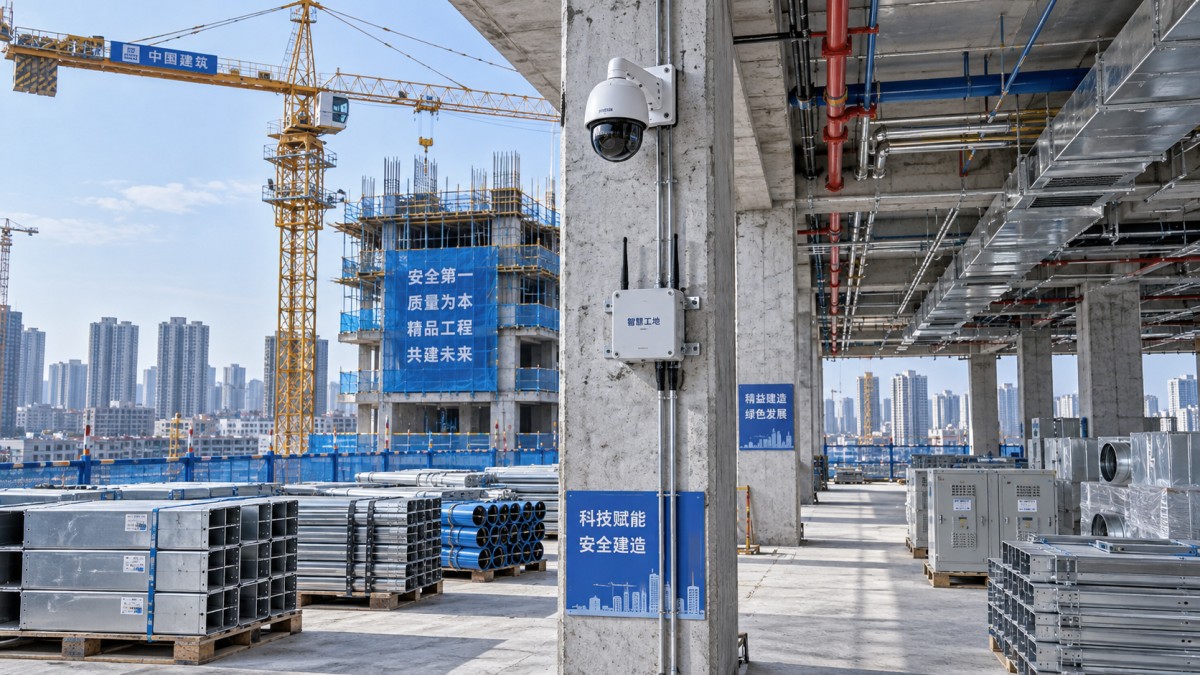
The underlying schedule also needs credible dependencies and remaining durations. If unfinished work is routinely marked complete, or if activities lack meaningful predecessor relationships, analytics will inherit those weaknesses.
Interpretation: separate local variance from milestone risk
Not every production shortfall threatens completion. A late activity may have available float, while a seemingly minor inspection delay may block several critical successors. Useful analysis considers current progress, remaining quantities, realistic production rates, and network dependencies together.
Some platforms use rules and thresholds; others apply predictive models. Neither approach is automatically superior. Rules can be transparent and effective for known constraints. Predictive models may identify patterns across larger datasets, but their reliability depends on data relevance, changing site conditions, and validation.
For either approach, require a distinction between observed facts, inferred progress, and forecast outcomes. A predicted finish date should not appear more certain than the evidence allows.
Evaluate the system with a live decision, not a polished demonstration
Vendor demonstrations often show clean models, consistent activity codes, and complete data. Real projects contain revised drawings, missing records, inconsistent naming, and subcontractors using different tools. Selection should test those conditions rather than assume them away.
Ask shortlisted suppliers to work through one representative schedule risk using your project structure. For example: a delayed delivery affects installation, testing, and energization across several zones. Can the system show the affected chain, identify missing information, and explain why it issued a warning?
Questions that distinguish useful platforms
- Schedule integration: Does it exchange activity identifiers, calendars, dependencies, and status with the planning tools you use? Which updates still require manual reconciliation?
- Progress definitions: Can it distinguish installed, inspected, tested, and accepted work instead of treating all visible completion as finished?
- Data freshness: Does every observation carry a timestamp? Are stale or missing inputs clearly flagged?
- Traceability: Can planners inspect the records behind an alert and correct a mistaken interpretation?
- Operational workflow: Can an issue be assigned, acknowledged, escalated, and closed with evidence?
- Interoperability: Can the project export its data in usable formats and preserve identifiers if systems change?
- Deployment practicality: How does capture work with poor connectivity, restricted access, changing layouts, or subcontractor turnover?
Security and workforce privacy also belong in the evaluation. Camera coverage and location tracking can introduce sensitive information unrelated to scheduling. Define access rights, retention periods, and permitted uses before deployment, with appropriate legal and workforce consultation.
A smaller system that reliably connects constraints to weekly planning may outperform a broader platform whose information no one trusts. Feature count is a poor substitute for decision quality.
A bounded pilot makes the purchasing decision clearer
Start with a package where progress can be verified and intervention remains possible. Repetitive floor cycles, earthworks zones, or installation areas with clear quantities can provide manageable test conditions. Avoid selecting only the easiest work if it does not represent the risks that justify the investment.
Before the pilot begins, agree on the baseline schedule, completion definitions, data owners, and review cadence. Record existing reporting performance so the team can distinguish genuine improvement from a more attractive interface.
During the trial, assess:
- Warning lead time: How long before a verified problem affected a planned activity did the system raise a useful alert?
- Alert usefulness: How many warnings justified investigation or action, and how many were noise?
- Missed risks: Which meaningful delays emerged without warning, and why?
- Response speed: How quickly did assigned owners review and resolve exceptions?
- Operating effort: How much time went into capture, correction, administration, and integration?
Do not equate every detected variance with a prevented delay. A credible evaluation separates detection, management action, and the subsequent result. Where possible, retain a decision log showing what changed because of the warning.
Cost assessment should include more than licensing: hardware, installation, connectivity, model preparation, integration, training, and ongoing data stewardship all matter. Benefits may include less manual reporting and fewer avoidable disruptions, but they should be assessed against project evidence rather than vendor-wide savings claims.
Where early detection still fails
Technology cannot recover time that the team has no authority or resources to protect. A warning about a blocked workfront may be correct, but ineffective if design decisions remain unresolved or contractual responsibilities prevent rapid coordination.
Another common failure is updating information faster than the organization can respond. Daily observations offer little advantage when exceptions wait weeks for a coordination meeting. Reporting frequency should match the speed at which work and decisions change.
Progress metrics can also create false reassurance. A package may be nearly complete by quantity while its remaining tasks control testing and handover. Likewise, a dashboard may look healthy against an outdated baseline even as the current completion forecast deteriorates.
Keep the approved baseline, current forecast, and short-term execution plan distinct. Each answers a different question: what was committed, what is now expected, and what crews can realistically accomplish next.
Finally, some risks originate outside the observed site. Financing changes, supplier failures, approvals, and design revisions may not appear in sensor data. Smart construction sites need connections to procurement and constraint management—not just more physical monitoring.
The buying decision: choose an early-warning capability, not a dashboard
For project leaders, the strongest business case is a shorter, more reliable path from emerging variance to corrective action. That requires trustworthy field evidence, a credible schedule, transparent analysis, and named people empowered to respond.
GIUT’s infrastructure and urban technology perspective favors this systems-level evaluation: construction intelligence should be judged by how well it connects engineering reality with management decisions, rather than by the sophistication of its visualization alone.
Smart construction sites can provide earlier warning of schedule delays. The deciding test is whether that warning preserves an option—resequencing work, resolving a constraint, changing a delivery, or protecting a critical handoff—that would otherwise have been lost. If a pilot demonstrates that connection consistently, the technology has earned a place in project control.
Questions about this sector or your project? Contact Sector Deep Dive for expert insights.
We respect your privacy. Your information is strictly confidential.
Get weekly intelligence in your inbox.
No noise. No sponsored content. Pure intelligence.
News Recommendations
 Oct 31, 2026How does an engineering data model support project handover?How does an engineering data model support project handover?
 Oct 12, 2026How to keep smart construction site sensors working without Wi-FiHow to keep smart construction site sensors working without Wi-Fi
 Oct 12, 2026Can smart construction sites detect schedule delays early enough?Can smart construction sites detect schedule delays early enough?
 Oct 11, 2026When does a smart jobsite improve project management visibility?When does a smart jobsite improve project management visibility?
 Oct 08, 2026Why Builder Quality Checklists Fail—and How Site Teams Close Inspection GapsWhy Builder Quality Checklists Fail—and How Site Teams Close Inspection Gaps
 Oct 08, 2026Can Site IQ digital twin improve coordination across active sitesCan Site IQ digital twin improve coordination across active sites
 Oct 08, 2026When digital site and operations solutions reduce reporting delaysWhen digital site and operations solutions reduce reporting delays
 Sep 14, 2026How to Compare Vendor Specifications Across Industrial Equipment Categories — A Framework for EngineersHow to Compare Vendor Specifications Across Industrial Equipment Categories — A Framework for Engineers
 Sep 14, 2026What data is needed for reliable resource allocation planning?What data is needed for reliable resource allocation planning?
 Sep 14, 2026How can resource allocation software reduce equipment idle time?How can resource allocation software reduce equipment idle time?
 Aug 30, 2026When does a smart infrastructure integrator reduce project risk?When does a smart infrastructure integrator reduce project risk?
 Aug 29, 2026How smart devices integration reduces delays on active construction sitesHow smart devices integration reduces delays on active construction sites
 Aug 24, 2026When does construction technology for contractors pay off on site?When does construction technology for contractors pay off on site?
 Aug 22, 2026When do heavy equipment technology systems deliver real gains on site?When do heavy equipment technology systems deliver real gains on site?
 Aug 21, 2026When does jobsite automation for contractors pay off on site?When does jobsite automation for contractors pay off on site?
 Aug 09, 2026How Smart Construction Solutions in Asia Reduce Delays on Large ProjectsHow Smart Construction Solutions in Asia Reduce Delays on Large Projects
 Jul 13, 2026Digital City Integration Challenges: What Fails First in Real ProjectsDigital City Integration Challenges: What Fails First in Real Projects
 Jul 11, 2026How AI Smart Governance Platforms Reduce Risk in Multi-Site OperationsHow AI Smart Governance Platforms Reduce Risk in Multi-Site Operations
 Jul 09, 2026Smart Jobsite Monitoring: What Actually Prevents DelaysSmart Jobsite Monitoring: What Actually Prevents Delays
 Jul 06, 2026Construction Technology for Contractors: What Delivers ROI in 2026Construction Technology for Contractors: What Delivers ROI in 2026
 Jul 03, 2026Customization Options for Smart Devices That Improve User ExperienceCustomization Options for Smart Devices That Improve User Experience
 Jun 28, 2026Construction and Smart Building Trends to Watch in 2026Construction and Smart Building Trends to Watch in 2026
 Jun 27, 2026Smart Jobsites: 7 Deployment Mistakes That Delay Site PerformanceSmart Jobsites: 7 Deployment Mistakes That Delay Site Performance
 Jun 25, 2026Supporting Technologies That Improve Smart Building System IntegrationSupporting Technologies That Improve Smart Building System Integration
 Jun 24, 2026Smart Jobsites: 7 Metrics That Expose Hidden DelaysSmart Jobsites: 7 Metrics That Expose Hidden Delays
 Jun 23, 2026How Smart Building Solutions Cut Energy and Upgrade CostsHow Smart Building Solutions Cut Energy and Upgrade Costs
 Jun 22, 2026Construction Technology Trends Reshaping Jobsite Efficiency in 2026Construction Technology Trends Reshaping Jobsite Efficiency in 2026


