Digital Twin Use Cases in Infrastructure Construction Projects
For technical evaluators, digital twins are no longer abstract innovation showcases; they are decision platforms for de-risking infrastructure construction projects. A physical world digital twin connects BIM, IoT sensors, geospatial data, equipment telemetry, and project controls into a live operational model that can simulate, monitor, and optimize assets before and after delivery. From bridge erection sequencing to smart jobsite safety, rail corridor maintenance, and carbon-aware urban development, the real value lies in measurable performance gains. This article explores practical use cases that help teams assess feasibility, integration complexity, and return on investment.
Where a Physical World Digital Twin Creates Measurable Construction Value

A physical world digital twin is most useful when the project team must coordinate many moving systems under tight risk, time, and compliance constraints. It becomes a shared decision environment, not just a visualization layer.
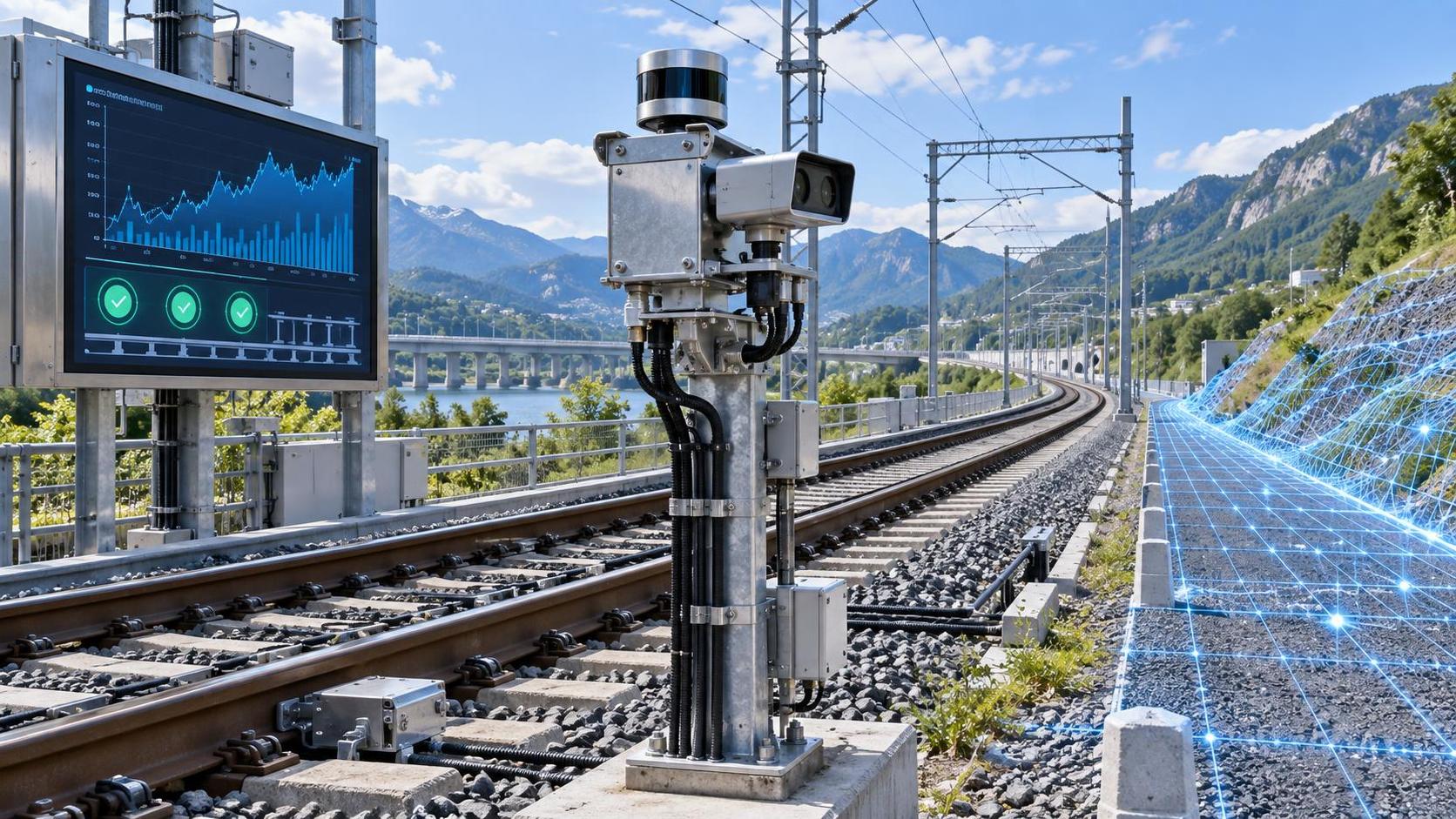
For infrastructure construction, value appears when model intelligence is tied to field reality. That means drone progress data, crane telemetry, concrete maturity sensors, rail alignment data, and cost schedules must update the same operational picture.
Use cases technical teams should prioritize first
- Construction sequencing simulation for bridges, tunnels, stations, utilities, and high-rise structures where temporary works and equipment access create delivery risk.
- Smart jobsite monitoring that links workforce location, exclusion zones, lifting operations, and safety alerts with real-time site geometry.
- Asset handover validation where BIM objects, commissioning records, inspection data, and operations manuals are checked before owner acceptance.
- Maintenance forecasting for rail corridors, bridges, drainage networks, and smart building systems using sensor trends and inspection histories.
GIUT evaluates these use cases across construction, smart cities, railway logistics, resource technology, and heavy equipment. This cross-sector view matters because infrastructure projects rarely operate inside one technical domain.
Which Infrastructure Scenarios Fit a Digital Twin Investment?
Not every project needs a high-fidelity simulation model. Technical evaluators should match investment depth to project complexity, asset criticality, data maturity, and the consequences of delayed decisions.
The table below compares common infrastructure scenarios where a physical world digital twin can support design validation, construction control, and operational performance.
The strongest business case usually appears where schedule delay, safety exposure, or asset downtime is expensive. A physical world digital twin should be evaluated against these measurable outcomes.
How Technical Evaluators Should Define the Architecture
Architecture decisions determine whether a digital twin remains a useful project tool or becomes another isolated model. The evaluation should begin with data flow, not software branding.
A practical physical world digital twin normally includes model federation, field data capture, analytics, user permissions, and integration with project controls. Each layer must have an owner and update rule.
Core components to verify before procurement
- Model base: confirm whether BIM, GIS, point clouds, CAD, and asset registries can be federated without losing coordinates or object relationships.
- Data ingestion: check support for IoT protocols, equipment telemetry, inspection forms, drone imagery, and site progress updates.
- Simulation logic: define whether the project needs 4D construction planning, hydraulic modelling, energy modelling, structural monitoring, or traffic simulation.
- Governance: specify access rights, audit trails, data validation rules, cybersecurity controls, and handover responsibilities.
GIUT’s engineering-led review approach treats the digital twin as an infrastructure system. That perspective helps evaluators avoid buying an impressive interface that cannot support field decisions.
Digital Twin Versus BIM, GIS, and Traditional Monitoring
Many procurement teams struggle because BIM platforms, GIS systems, CMMS tools, and monitoring dashboards overlap. The difference is not the file type; it is the operational feedback loop.
The following comparison helps clarify when a physical world digital twin is justified and when a lighter tool may be sufficient.
The comparison shows why selection should not be driven only by visualization quality. Evaluators need proof that the platform improves decisions across construction and asset management.
Procurement Criteria: What to Check Before Shortlisting Vendors
A vendor demonstration may show a polished model, but technical evaluators need evidence of integration reliability, data accuracy, security, and delivery support under real project conditions.
For a physical world digital twin, the procurement checklist should combine engineering requirements with IT controls and commercial constraints.
Shortlisting questions that reveal implementation risk
- Can the platform ingest data from existing BIM authoring tools, GIS databases, SCADA systems, IoT gateways, and project management software?
- Does the solution support open data exchange formats such as IFC, CityGML, GeoJSON, COBie, or API-based integration where appropriate?
- How are sensor errors, missing inspection records, coordinate conflicts, and outdated model objects identified before they affect decisions?
- What is included in the implementation scope: configuration, data migration, simulation setup, training, support, or lifecycle handover?
The next table outlines evaluation dimensions that are especially relevant for infrastructure, smart city, railway, mining, and heavy equipment environments.
A disciplined procurement process protects budget and schedule. It also ensures the physical world digital twin supports engineering governance instead of creating another digital burden.
Implementation Roadmap for Construction and Operations Teams
Implementation should start with a narrow, measurable use case rather than a full city-scale model. Successful teams validate the data pipeline, then expand into more assets and workflows.
A practical phased approach
- Define the decision problem, such as lift planning, tunnel settlement monitoring, rail asset inspection, or energy commissioning verification.
- Map required data sources, including design models, sensor feeds, site reports, geospatial layers, equipment logs, and schedule systems.
- Build a pilot physical world digital twin with limited asset scope, clear update frequency, and accountable data owners.
- Test outputs against field evidence, then refine thresholds, alerts, dashboards, and simulation assumptions before scaling.
- Convert the construction twin into an operational twin by linking asset IDs, inspection plans, maintenance systems, and handover records.
The transition from construction to operation is where many projects lose value. Early asset information requirements reduce rework during commissioning and owner acceptance.
Cost, Compliance, and Risk Factors That Affect ROI
Digital twin cost is not only software licensing. It includes data preparation, sensor deployment, integration engineering, field validation, user training, and long-term governance.
Technical evaluators should also consider alignment with standards and good practices. Common references include ISO 19650 for information management, openBIM principles, cybersecurity controls, and asset management concepts from ISO 55000.
Common ROI risks to control
- Over-modeling: excessive geometry increases cost without improving decisions, especially when field data is incomplete.
- Under-integration: a visually rich twin with no connection to schedule, cost, sensors, or maintenance systems delivers limited operational value.
- Unclear ownership: if no team owns updates after handover, the physical world digital twin becomes obsolete quickly.
- Compliance gaps: weak access control and unclear data retention rules may create risk for critical infrastructure operators.
Budget-limited projects can still benefit from a staged model. Start with high-risk assets, prove decision improvement, then extend the digital twin across adjacent systems.
FAQ: Technical Questions About Physical World Digital Twin Projects
How detailed should the model be for an infrastructure construction project?
Model detail should match the decision. Lift planning needs temporary works, crane reach, and structural interfaces. Facility operations need maintainable assets, equipment IDs, and commissioning records.
Is a physical world digital twin suitable for small or mid-sized projects?
Yes, if the project has coordination risk, safety exposure, or lifecycle performance requirements. A focused twin for utilities, equipment tracking, or commissioning can be more practical than a full-scale platform.
What data causes the most implementation difficulty?
Coordinate inconsistency, outdated BIM objects, incomplete asset registers, and unvalidated sensor feeds are common blockers. Data governance should be specified before platform configuration begins.
How long does a pilot usually take to evaluate?
A focused pilot can often be assessed within one construction phase or inspection cycle. The key is to define measurable outputs before deployment, such as reduced rework or faster issue response.
Why Consult GIUT for Digital Twin Evaluation?
GIUT connects infrastructure engineering, smart city architecture, railway systems, resource technology, and heavy machinery analysis into one evaluation perspective. This is essential for complex physical assets.
Our role is to help technical teams judge whether a physical world digital twin is feasible, useful, and commercially defensible. We focus on decision quality, not technology fashion.
- Consult us to confirm required parameters, model scope, data sources, sensor strategy, and integration boundaries before procurement.
- Request support for vendor comparison, pilot design, delivery timeline review, compliance questions, and lifecycle handover planning.
- Discuss customized evaluation frameworks for bridges, smart buildings, rail corridors, urban utilities, mining assets, or special equipment fleets.
- Engage GIUT when you need quotation communication guidance, technical clarification, or a practical roadmap from pilot to operational deployment.
A well-designed physical world digital twin can turn infrastructure data into safer construction, clearer procurement, and more sustainable asset operation. GIUT helps teams engineer the foundation and sustain the future.
Get weekly intelligence in your inbox.
No noise. No sponsored content. Pure intelligence.
News Recommendations
 Sep 19, 2026How an electronics application guide helps prevent component mismatchHow an electronics application guide helps prevent component mismatch
 Sep 18, 2026When a resource allocation platform improves project deliveryWhen a resource allocation platform improves project delivery
 Sep 17, 2026What to compare when evaluating mineral processing equipment manufacturersWhat to compare when evaluating mineral processing equipment manufacturers
 Sep 16, 2026How mineral separation optimization can reduce concentrate lossesHow mineral separation optimization can reduce concentrate losses
 Sep 15, 2026How to assess lifecycle costs in urban tech procurementHow to assess lifecycle costs in urban tech procurement
 Sep 14, 2026Heavy industry technology trends reshaping capital investment prioritiesHeavy industry technology trends reshaping capital investment priorities
 Sep 14, 2026Global Industrial Equipment Procurement: How Top OEMs Qualify Suppliers for Mining & Infrastructure ProjectsGlobal Industrial Equipment Procurement: How Top OEMs Qualify Suppliers for Mining & Infrastructure Projects
 Sep 14, 2026Industrial & Mining Equipment Procurement: Balancing Local Sourcing, Lead Time, and Certification RequirementsIndustrial & Mining Equipment Procurement: Balancing Local Sourcing, Lead Time, and Certification Requirements
 Sep 14, 2026Infrastructure & Equipment Upgrades: What Procurement Teams Must Verify Before Signing Off on New ContractsInfrastructure & Equipment Upgrades: What Procurement Teams Must Verify Before Signing Off on New Contracts
 Sep 14, 2026Why Infrastructure Equipment Buyers Are Shifting from Catalog-Based to Capability-Based Supplier SelectionWhy Infrastructure Equipment Buyers Are Shifting from Catalog-Based to Capability-Based Supplier Selection
 Sep 14, 2026Process Automation Project Execution: How to Align Supplier Capabilities with PLC Integration, Cybersecurity & Commissioning MilestonesProcess Automation Project Execution: How to Align Supplier Capabilities with PLC Integration, Cybersecurity & Commissioning Milestones
 Sep 14, 2026Are intelligent traffic systems worth the investment for small cities?Are intelligent traffic systems worth the investment for small cities?
 Sep 14, 2026How do intelligent traffic systems handle sensor failures?How do intelligent traffic systems handle sensor failures?
 Sep 14, 2026What should I check before accepting a smart building system?What should I check before accepting a smart building system?
 Sep 14, 2026Is a smart building system worth the maintenance cost?Is a smart building system worth the maintenance cost?
 Sep 14, 2026What data is needed for reliable resource allocation planning?What data is needed for reliable resource allocation planning?
 Sep 14, 2026How can resource allocation software reduce equipment idle time?How can resource allocation software reduce equipment idle time?
 Sep 14, 2026How should smart devices be maintained in harsh outdoor conditions?How should smart devices be maintained in harsh outdoor conditions?
 Sep 14, 2026Do smart devices improve worker safety on construction sites?Do smart devices improve worker safety on construction sites?
 Sep 14, 2026What environmental risks must be assessed before deep-sea mining?What environmental risks must be assessed before deep-sea mining?
 Sep 14, 2026Is deep-sea mining equipment commercially viable in 2026?Is deep-sea mining equipment commercially viable in 2026?
 Sep 14, 2026What Inspection Checks Should Procurement Teams Perform Before Ordering Dredging Equipment in 2026?What Inspection Checks Should Procurement Teams Perform Before Ordering Dredging Equipment in 2026?
 Sep 13, 2026How to verify an industrial product information source before specifying equipmentHow to verify an industrial product information source before specifying equipment
 Sep 12, 2026Which intelligent traffic systems hardware fits an urban intersection?Which intelligent traffic systems hardware fits an urban intersection?
 Sep 11, 2026How pump capacity affects response coverage for municipal fire fighting vehiclesHow pump capacity affects response coverage for municipal fire fighting vehicles
 Sep 10, 2026What to verify before choosing a heavy industry equipment supplierWhat to verify before choosing a heavy industry equipment supplier
 Sep 09, 2026When do adaptive urban traffic control systems reduce corridor delays?When do adaptive urban traffic control systems reduce corridor delays?