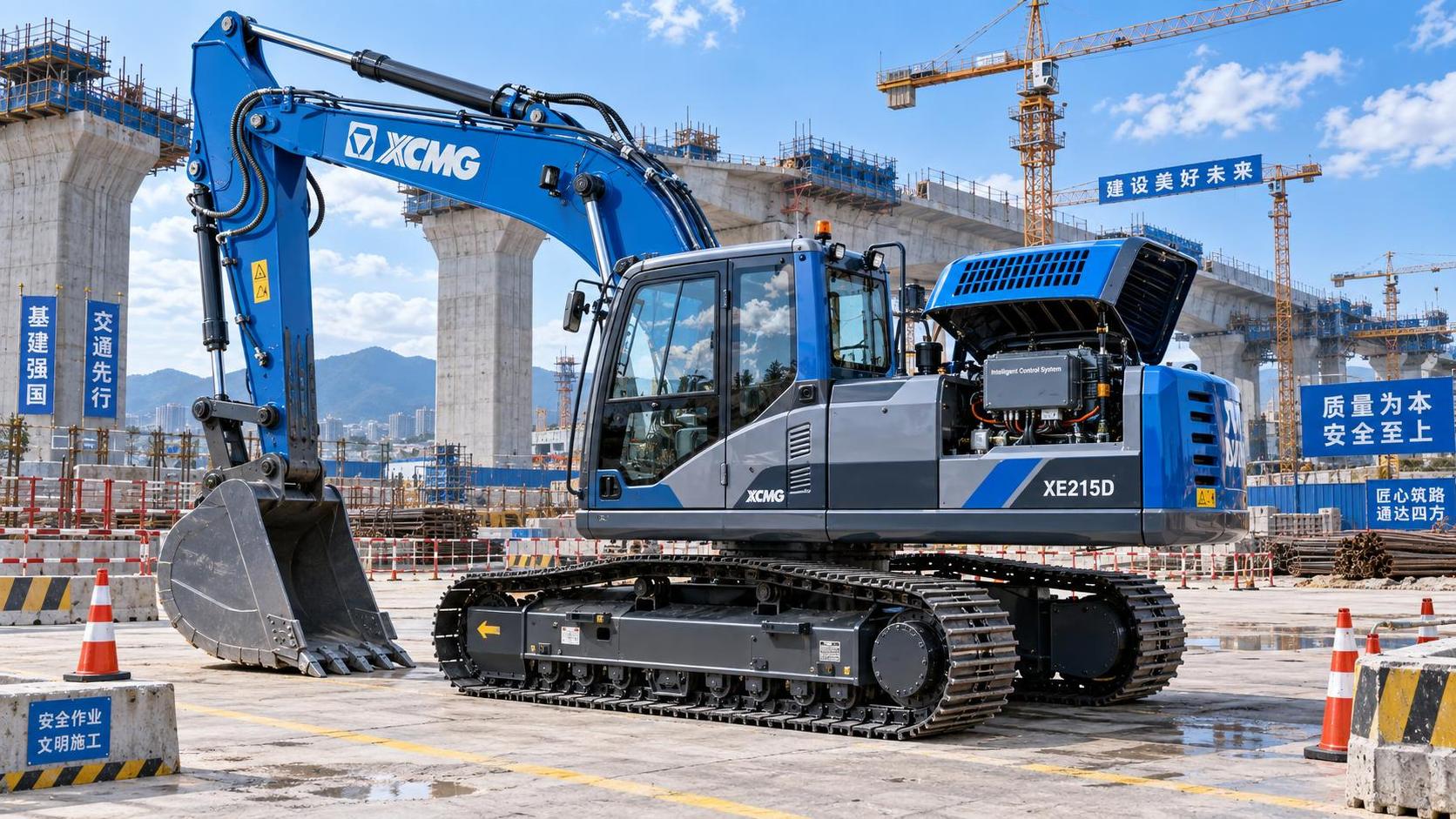
Choosing whether to buy or lease heavy equipment for construction is no longer just an operations decision.
For financial approvers, it is a capital allocation question with long-term balance sheet, tax, and risk implications.
The right choice depends on utilization rates, cash flow flexibility, depreciation strategy, maintenance exposure, and project pipeline certainty.
The Real Question: Which Option Protects Capital While Keeping Projects Moving?
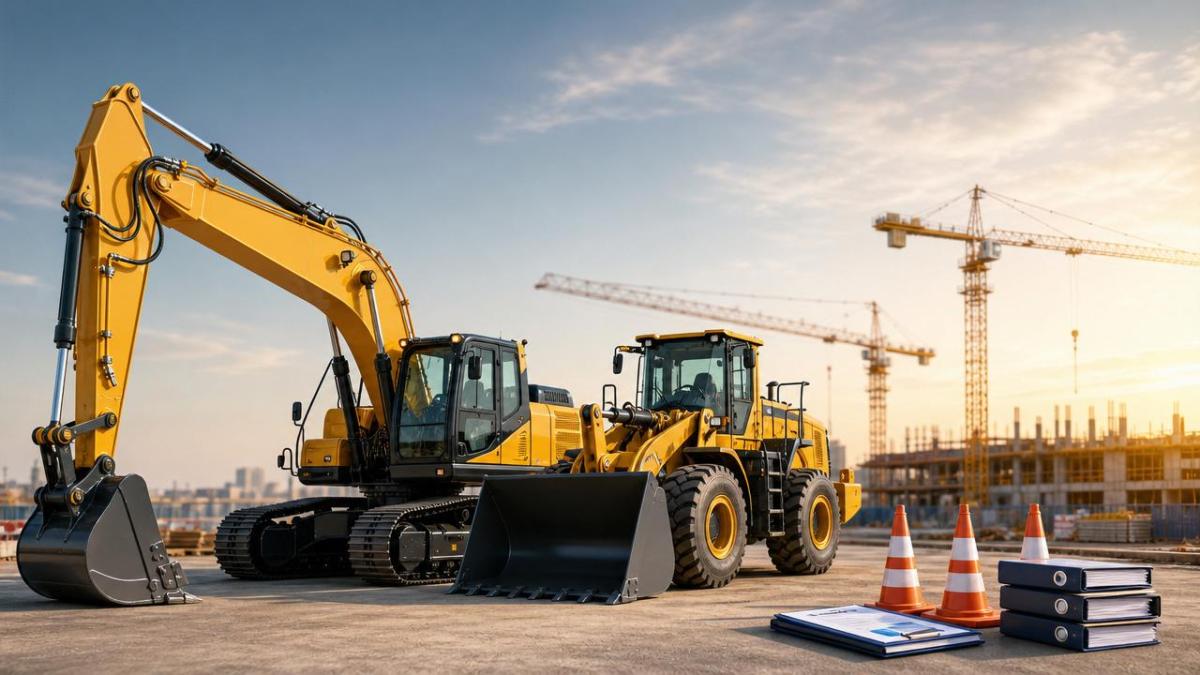
For finance leaders, the buy-versus-lease decision should begin with capital discipline, not equipment preference.
Heavy equipment for construction creates value only when it is working, billing, and supporting profitable project delivery.
If an excavator, crane, loader, or concrete pump sits idle, ownership can quickly become a stranded asset.
If leased equipment is overused for years, monthly payments may quietly exceed the economics of ownership.
The practical answer is usually not “buy everything” or “lease everything.” It is a portfolio decision.
Core machines with predictable utilization often justify ownership, while specialized or project-specific units often fit leasing better.
Start With Utilization, Not the Purchase Price
The most important financial variable is not the dealer quote. It is annual utilization across realistic project schedules.
A machine used consistently over multiple contracts can absorb depreciation, insurance, storage, and maintenance more efficiently.
A machine used sporadically can look affordable at purchase but expensive when calculated per productive operating hour.
Financial approvers should request expected annual hours, project duration, standby risk, and backup equipment availability before approving capital.
For example, a grader needed across a five-year roadwork pipeline may be a strong ownership candidate.
A high-reach demolition excavator required for one complex project may be better leased or rented with service support.
A useful threshold is to compare expected utilization against the breakeven point of ownership versus leasing payments.
If utilization is uncertain, leasing preserves flexibility and reduces the danger of locking capital into underused assets.
Cash Flow Flexibility Can Be More Valuable Than Accounting Ownership
Buying heavy equipment usually requires a large upfront payment or a financing commitment secured by company credit capacity.
Leasing spreads cost over time and may preserve liquidity for payroll, materials, bonding, technology, and bid security.
For contractors operating across volatile project cycles, cash flow flexibility can be a strategic advantage.
This is especially true when public infrastructure payments are delayed or private developers extend payment terms.
Ownership can improve long-term cost efficiency, but it also concentrates cash into equipment before revenue is fully realized.
Finance teams should model monthly cash requirements under conservative assumptions, not only under ideal project performance.
If leasing keeps the company liquid during mobilization and early project phases, the premium may be justified.
If the balance sheet is strong and backlog is secured, ownership may lower long-term equipment cost.
Depreciation, Tax Treatment, and Balance Sheet Impact Matter
Equipment ownership brings depreciation benefits, but these benefits must be evaluated within the company’s tax position.
Accelerated depreciation may improve after-tax economics when taxable income is strong and asset use is predictable.
However, depreciation is not the same as cash savings, and tax rules vary by jurisdiction and accounting standard.
Leases may be treated differently depending on structure, duration, purchase options, and applicable reporting requirements.
Financial approvers should coordinate with tax advisors before assuming one option automatically improves financial statements.
The decision should also consider debt ratios, borrowing capacity, covenant limits, and bonding requirements.
Large equipment purchases can strengthen asset base, but they may also increase leverage and reduce financial agility.
For companies bidding on large infrastructure programs, preserving bonding capacity can outweigh the appeal of ownership.
Maintenance Risk Is Often Underestimated in Ownership Models
Heavy equipment for construction carries maintenance exposure that grows as operating hours and site conditions intensify.
Ownership means the company bears repair cost, parts availability risk, technician capacity, downtime, and residual value uncertainty.
Leasing arrangements may include maintenance packages, service response commitments, or replacement provisions during major failures.
These features can reduce operational disruption, especially when equipment uptime directly affects liquidated damages or milestone payments.
Finance teams should avoid comparing purchase payments against lease payments without adding realistic lifecycle maintenance costs.
Fuel efficiency, tire wear, hydraulic components, telematics subscriptions, attachments, transport, and storage all affect true cost.
A machine operating in quarrying, tunneling, demolition, or marine environments may age faster than spreadsheet assumptions suggest.
When maintenance history is uncertain, leasing transfers part of the technical risk to the lessor or fleet provider.
Project Pipeline Certainty Should Drive the Ownership Decision
Buying makes stronger sense when the company has a visible pipeline requiring the same equipment type repeatedly.
Pipeline certainty means more than optimism. It means signed contracts, awarded frameworks, funded programs, or reliable recurring demand.
If management expects future work but contracts remain unawarded, leasing can prevent overcommitment before revenue is secured.
Construction markets are affected by interest rates, public budgets, permitting delays, supply chains, and political priorities.
A financial approver should ask whether equipment demand survives a delayed contract or cancelled phase.
If the machine can be redeployed across business units, ownership risk decreases and residual value improves.
If the machine fits only one narrow project scope, leasing usually offers better downside protection.
The more specialized the asset, the stronger the argument for flexible access rather than permanent ownership.
Technology Obsolescence Is Changing the Equation
Modern heavy equipment increasingly includes telematics, emissions controls, automation features, safety systems, and fuel optimization software.
These technologies improve productivity, but they also shorten the practical evaluation cycle for ownership decisions.
A diesel machine purchased today may face resale pressure if future projects require low-emission or electric equipment.
Smart jobsites may also demand integrated data reporting, geofencing, machine control, and predictive maintenance compatibility.
Leasing can help companies access newer technology without committing to equipment that may become noncompliant or less competitive.
Ownership still works when the machine’s technology remains stable and the company can upgrade components cost-effectively.
Financial approvers should include emissions regulations, client sustainability requirements, and digital integration in investment analysis.
For GIUT’s infrastructure audience, this is where equipment finance connects directly to smart construction strategy.
When Buying Heavy Equipment Usually Makes Financial Sense
Buying is often preferable when utilization is high, project demand is stable, and the asset is central to operations.
Examples include earthmoving fleets for civil contractors, concrete equipment for recurring building programs, or loaders for logistics yards.
Ownership allows greater scheduling control, custom configuration, operator familiarity, and long-term cost efficiency at high utilization.
It may also improve responsiveness when projects require rapid mobilization without waiting for equipment availability.
Companies with strong maintenance teams can capture additional value by extending useful life beyond standard financing periods.
Ownership can also support brand consistency and operational standardization across multiple sites and regional divisions.
The financial case improves when resale markets are strong and the equipment category retains value well.
In short, buy when the machine is strategic, frequently used, maintainable, and supported by confirmed long-term demand.
When Leasing Heavy Equipment Is the Smarter Choice
Leasing is often better when project requirements are temporary, uncertain, specialized, or tied to changing compliance standards.
It is also useful when the company wants to conserve cash or protect borrowing capacity for higher-return uses.
Leasing can provide access to newer machines, manufacturer support, and predictable payments aligned with project revenue.
For short-cycle projects, leasing avoids the administrative burden of disposal, resale negotiations, and idle fleet management.
It can also reduce risk when entering a new region, work type, or infrastructure segment.
If project margins depend on advanced machine control or emissions compliance, leasing may accelerate technology adoption.
Finance teams should still review mileage, hour limits, damage clauses, return conditions, and early termination penalties carefully.
Leasing is not automatically cheaper, but it can be more financially resilient under uncertainty.
Build a Total Cost of Ownership Model Before Approval
A serious decision requires a total cost of ownership model, not a simple monthly payment comparison.
The model should include acquisition cost, financing interest, depreciation, taxes, insurance, fuel, maintenance, repairs, attachments, and transport.
It should also include downtime risk, resale value, utilization assumptions, operator training, storage, compliance upgrades, and administrative burden.
For leasing, include base payments, service inclusions, excess hour charges, delivery fees, insurance requirements, and end-of-lease costs.
Approvers should require sensitivity analysis using optimistic, expected, and conservative utilization scenarios.
This reveals whether the decision remains sound if a project is delayed, shortened, or extended unexpectedly.
The strongest models convert all costs into cost per productive hour or cost per billable project unit.
That approach connects financial approval directly to operational productivity and bid margin protection.
Questions Financial Approvers Should Ask Before Signing
Before approving any purchase or lease, finance leaders should challenge assumptions that may be too operationally optimistic.
What confirmed projects will use this equipment, and for how many productive hours per year?
What happens financially if the main contract is delayed, reduced, disputed, or cancelled?
Does the company have internal capacity to maintain the asset at the required uptime level?
Will future emissions, safety, or digital reporting requirements reduce the asset’s useful life?
How will this decision affect liquidity, debt ratios, bonding capacity, and strategic investment flexibility?
Is there a realistic resale market, and has residual value been stress-tested rather than assumed?
These questions shift the discussion from preference to evidence, which is where finance adds real strategic value.
A Practical Decision Framework
Buy when utilization is high, demand is confirmed, technology risk is moderate, and maintenance capability is strong.
Lease when utilization is uncertain, equipment is specialized, capital is constrained, or technology and compliance needs are changing.
Use a hybrid fleet when the business has stable core requirements but fluctuating project-specific equipment needs.
This hybrid model is increasingly common among contractors balancing growth, sustainability targets, and balance sheet discipline.
Core assets provide operational control, while leased assets protect flexibility during market shifts and project variability.
Financial approvers should review fleet strategy at least annually, not only when a project urgently needs machinery.
Telematics data, maintenance records, and utilization dashboards should inform future buy-or-lease decisions with measurable evidence.
Over time, this creates a smarter equipment portfolio aligned with both project delivery and capital efficiency.
Conclusion: The Best Choice Is the One That Matches Risk to Return
The decision to buy or lease heavy equipment for construction should be grounded in utilization, cash flow, risk, and strategy.
Buying can deliver superior economics when equipment is essential, heavily used, and supported by a reliable project pipeline.
Leasing can protect liquidity, reduce obsolescence risk, and provide flexibility when demand or compliance requirements are uncertain.
For financial approvers, the goal is not to minimize one visible cost, but to optimize total capital performance.
The strongest decision links equipment access to margin protection, balance sheet resilience, and long-term infrastructure competitiveness.
In a smarter, greener construction economy, fleet finance must support productivity today and adaptability tomorrow.