High-Speed Rail Construction Trends to Watch in 2026
As 2026 approaches, high-speed rail construction is becoming a strategic priority for governments, infrastructure investors, and technology providers seeking faster, greener, and more resilient mobility networks.
From digital twins and automated track-laying to low-carbon materials and smarter signaling systems, the sector is entering a new phase of engineering intelligence.
Understanding these trends helps align capital planning, project controls, carbon targets, and regional connectivity strategies with the next generation of rail infrastructure.
Why High-Speed Rail Construction Needs a 2026 Checklist
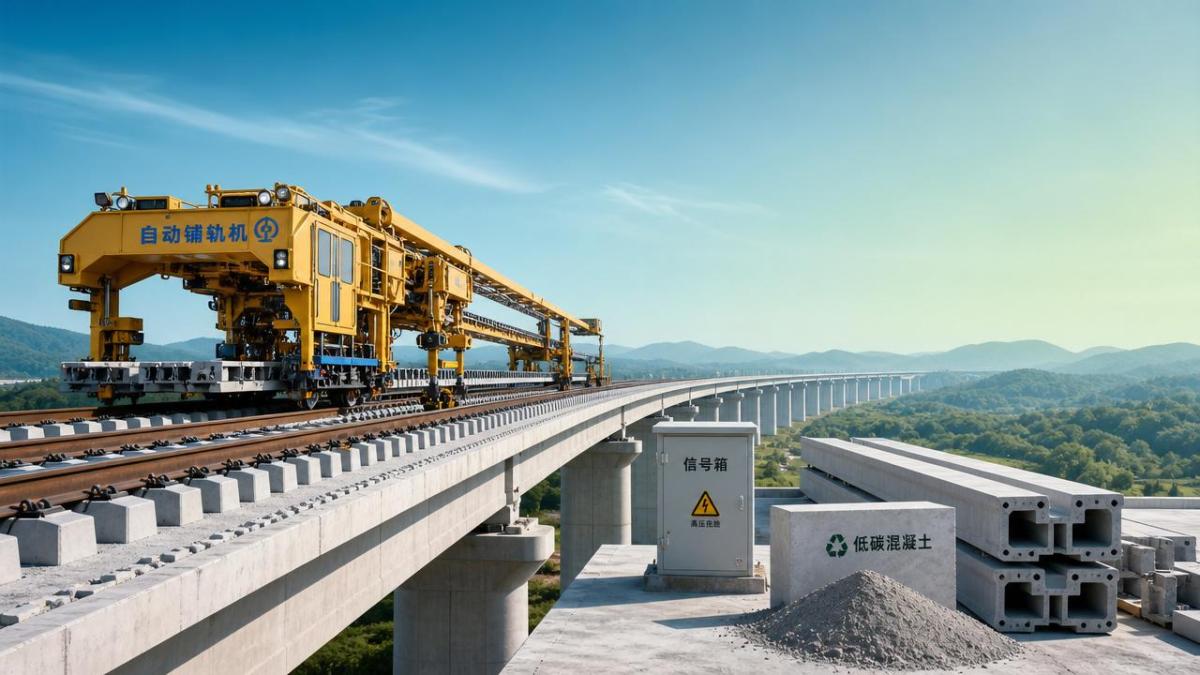
High-speed rail construction is no longer only a civil engineering challenge. It now combines digital design, energy planning, supply chain resilience, and smart governance.
Projects are becoming larger, faster, and more politically visible. Small errors in alignment, tunneling, signaling, or station integration can create long delays.
A checklist approach helps compare technologies, identify weak assumptions, and connect engineering decisions with long-term operating performance.
For high-speed rail construction in 2026, the most successful programs will treat planning data, construction automation, and carbon management as one system.
Core Checklist for High-Speed Rail Construction in 2026
1. Validate Demand, Corridor Logic, and Regional Value
- Map population centers, airport links, logistics nodes, and commuting flows before locking corridor geometry or station locations.
- Compare high-speed rail construction benefits against road expansion, aviation capacity, and conventional rail upgrades.
- Test ridership scenarios under different fare levels, travel times, urban growth patterns, and tourism assumptions.
- Confirm that station districts support mixed-use development, intermodal transfers, and future urban regeneration.
A strong corridor is not defined by speed alone. It must shorten real door-to-door journeys and unlock measurable regional value.
High-speed rail construction should begin with spatial economics, not only engineering ambition. This reduces the risk of underused stations.
2. Build Digital Twins Before Major Earthworks
- Create a corridor-level digital twin covering geology, utilities, land parcels, hydrology, bridges, tunnels, and environmental constraints.
- Link BIM, GIS, schedule data, cost models, and field progress into one controlled project information environment.
- Use simulation to test construction sequencing, traffic diversions, emergency access, and material delivery windows.
- Update the digital twin continuously with drone surveys, LiDAR scans, sensor readings, and quality inspection records.
Digital twins are becoming a baseline requirement for high-speed rail construction. They reduce information gaps between design offices and jobsites.
In 2026, leading programs will use digital models for claim prevention, carbon tracking, and predictive maintenance planning.
3. Prioritize Automated and Modular Construction Methods
- Deploy automated track-laying systems where alignment length, access conditions, and logistics stability justify mechanized production.
- Standardize viaduct segments, station components, noise barriers, and equipment rooms to shorten installation cycles.
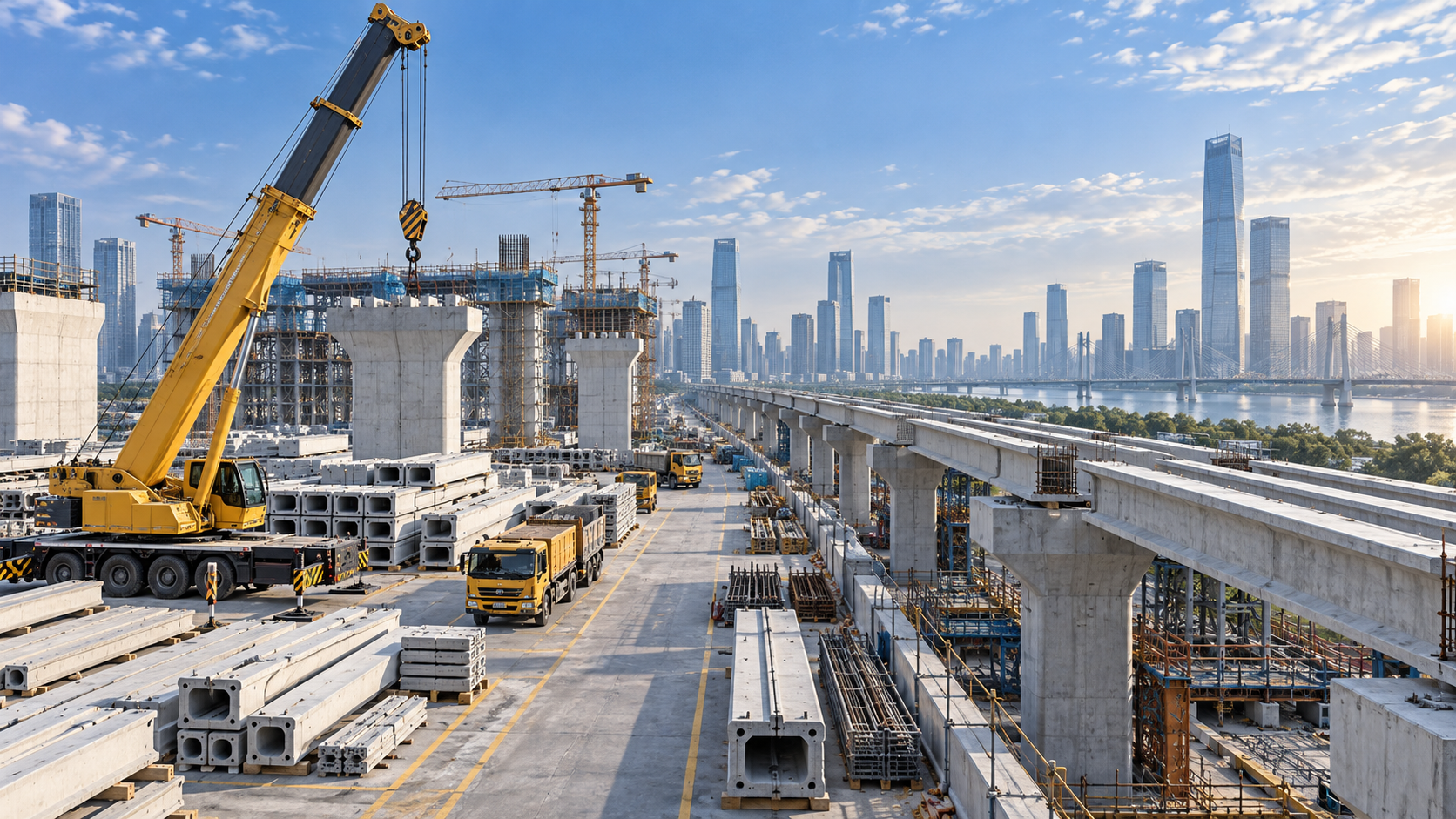
- Use prefabricated bridge elements when site congestion, safety exposure, or weather risk threatens conventional methods.
- Integrate robotics for rebar placement, tunnel inspection, welding checks, and repetitive quality control tasks.
High-speed rail construction often faces schedule pressure across long linear sites. Automation helps stabilize productivity across multiple work fronts.
Modular systems also improve quality consistency. They allow controlled manufacturing conditions and reduce rework during final commissioning.
4. Treat Signaling, Power, and Communications as Early Design Drivers
- Define signaling architecture before finalizing station layouts, tunnel portals, traction substations, and maintenance access points.
- Coordinate ETCS, CBTC, or local train control requirements with rolling stock procurement and operational speed targets.
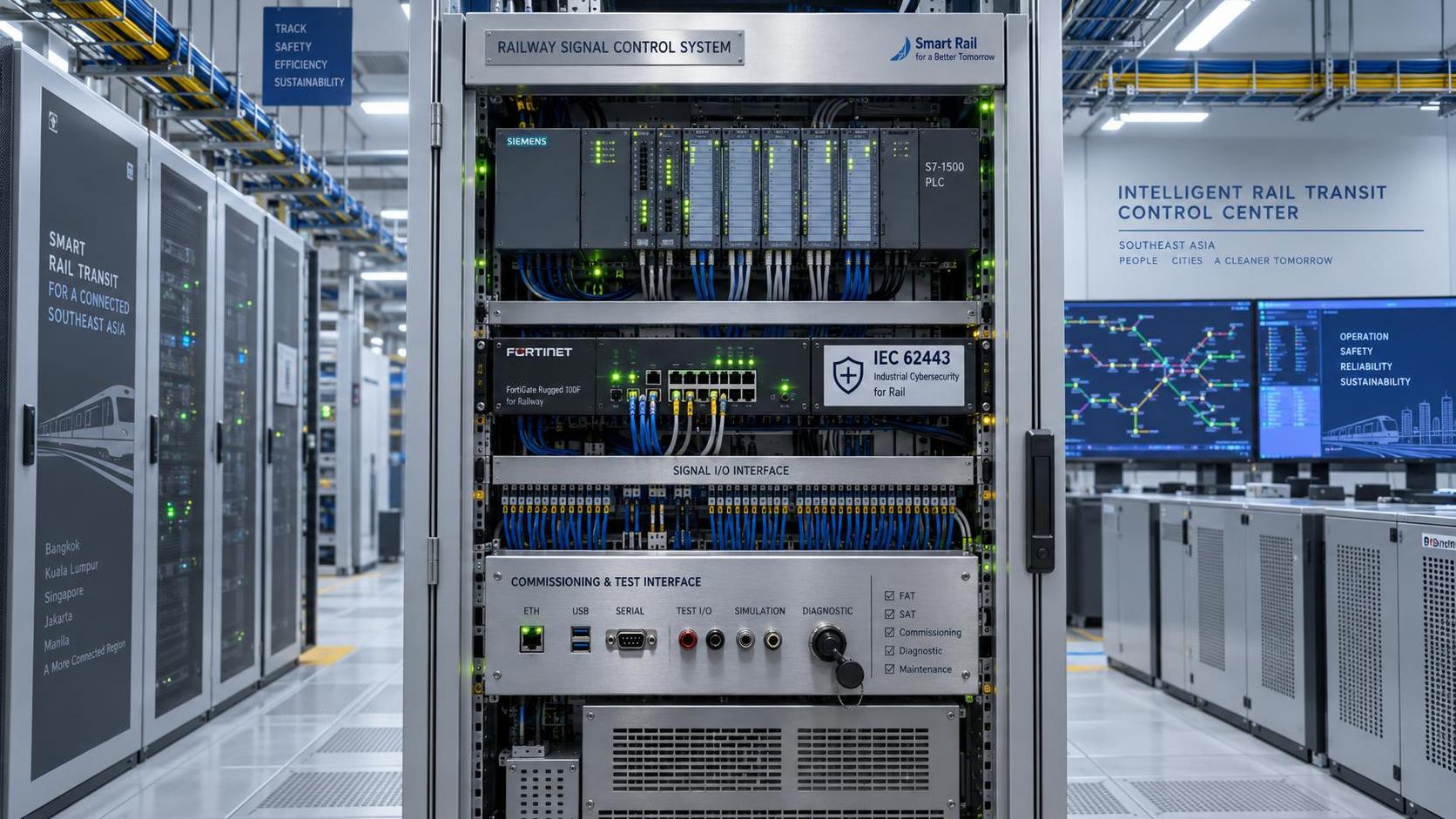
- Plan fiber networks, radio systems, cybersecurity controls, and redundancy pathways during civil design coordination.
- Model traction power demand under peak operations, emergency scenarios, regenerative braking, and future timetable expansion.
In high-speed rail construction, late integration of systems can become more expensive than earthworks. Interfaces must be managed from day one.
Power and signaling decisions affect route capacity, safety certification, energy efficiency, and long-term operational flexibility.
5. Embed Low-Carbon Materials and Circular Resource Planning
- Specify low-clinker cement, recycled aggregates, green steel, and verified environmental product declarations where performance allows.
- Track embodied carbon across tunnels, viaducts, stations, depots, ballastless track, and major utility relocations.
- Reuse excavated material for embankments, landscaping, noise berms, or approved off-site infrastructure applications.
- Include carbon cost, lifecycle maintenance, durability, and replacement cycles in material selection decisions.
High-speed rail construction supports lower-emission mobility, yet construction itself can generate significant carbon before the first train runs.
The next advantage will come from reducing embodied carbon while preserving safety, durability, and whole-life asset performance.
6. Strengthen Resilience Against Climate and Geotechnical Risk
- Assess flood exposure, heat stress, landslide risk, seismic zones, wind loads, and drainage capacity along the full corridor.
- Increase geotechnical investigation density in tunnels, cuttings, soft ground areas, coastal sections, and river crossings.
- Design maintenance access for extreme weather recovery, power restoration, emergency evacuation, and rapid inspection.
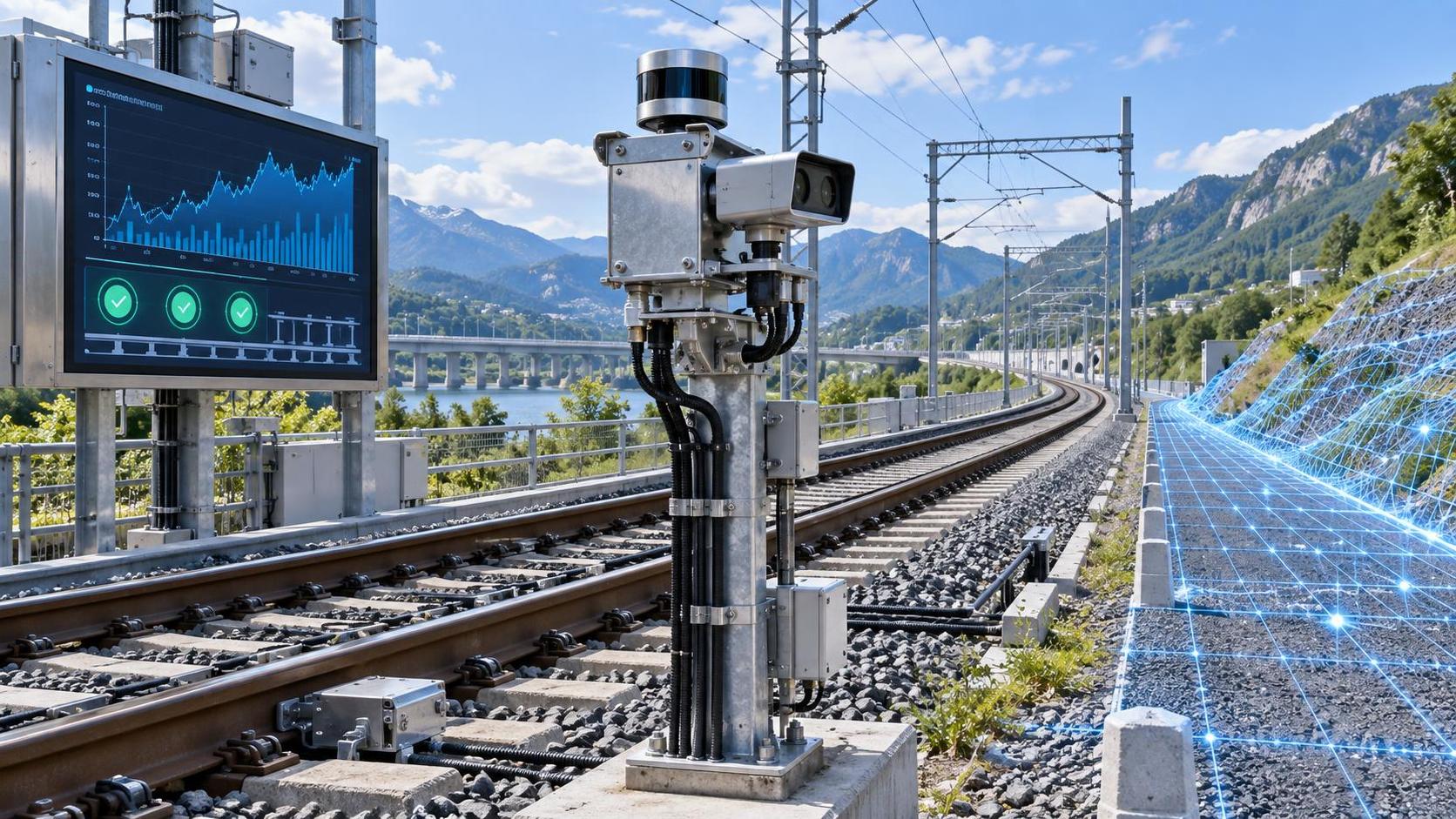
- Use sensor networks to monitor slope movement, bridge behavior, tunnel deformation, and track geometry stability.
Climate resilience is becoming central to high-speed rail construction. Extreme heat, rainfall, and ground instability can disrupt both delivery and operations.
Resilience should not be treated as a late design enhancement. It must shape alignments, structures, materials, and maintenance systems.
7. Secure Supply Chains for Critical Rail Systems
- Identify long-lead components, including rails, turnouts, transformers, signaling equipment, cables, elevators, and platform screen doors.
- Qualify alternative suppliers without compromising certification, interoperability, maintenance standards, or warranty requirements.
- Monitor steel, copper, cement, semiconductor, and energy market volatility during procurement planning.
- Align delivery milestones with installation sequences, storage capacity, inspection protocols, and commissioning windows.
High-speed rail construction depends on specialized components that cannot always be sourced quickly. Procurement strategy must mirror the construction sequence.
Supply chain visibility reduces idle crews, fragmented deliveries, and costly redesigns caused by unavailable equipment.
Scenario Notes for Different High-Speed Rail Construction Programs
New National Corridors
New national corridors require strong land acquisition planning, environmental permitting, and phased opening strategies.
For these programs, high-speed rail construction should begin with political alignment, financing clarity, and transparent benefit measurement.
Upgrades to Existing Rail Networks
Upgrading existing corridors often means working near live operations, constrained stations, and legacy signaling systems.
The checklist should focus on possession planning, passenger disruption control, interface risk, and staged certification.
Cross-Border High-Speed Rail Links
Cross-border routes add customs, standards harmonization, energy compatibility, data exchange, and security considerations.
High-speed rail construction in this setting needs early agreement on interoperability, operating rules, and emergency response protocols.
Dense Urban Approaches
Urban approaches often involve deep tunnels, complex utilities, vibration limits, and sensitive community impacts.
Construction planning must prioritize settlement control, stakeholder communication, night work rules, and station-area integration.
Commonly Overlooked Risks in High-Speed Rail Construction
Interface Drift Between Civil Works and Rail Systems
Civil teams may optimize structures while systems teams require space, access, cable routes, or equipment clearances.
Avoid this risk by running regular interface reviews with frozen baselines, change logs, and accountable design owners.
Underestimated Utility Relocation
Urban high-speed rail construction can be delayed by undocumented utilities, unclear ownership, and slow relocation approvals.
Use ground-penetrating radar, trial pits, digital utility maps, and early agreements with utility operators.
Weak Commissioning Readiness
Many projects focus heavily on physical completion but underestimate testing, training, documentation, and safety certification.
Commissioning plans should start during design, not after track installation. Each subsystem needs measurable acceptance criteria.
Carbon Claims Without Verification
Green claims can weaken credibility if material data, energy assumptions, or offset logic lacks independent verification.
High-speed rail construction teams should maintain auditable carbon records from procurement through handover.
Practical Execution Steps for 2026 Planning
- Establish a corridor readiness dashboard covering demand, permits, land, design maturity, utilities, funding, and supply chain status.
- Run a systems integration workshop before major procurement packages are issued or civil designs are frozen.
- Create a carbon baseline and require verified reporting for concrete, steel, tunneling, power systems, and station materials.
- Adopt digital twin governance rules covering data ownership, update frequency, model validation, and handover requirements.
- Review climate resilience assumptions against updated flood maps, heat projections, seismic standards, and maintenance access needs.
- Build an integrated commissioning schedule that includes trial running, cybersecurity testing, staff training, and emergency drills.
These steps turn high-speed rail construction strategy into controlled execution. They also expose weak assumptions before they become contractual disputes.
The goal is not to add bureaucracy. The goal is to make faster, safer, and more sustainable delivery measurable.
Technology Trends to Watch Closely
- Track AI-assisted planning tools that compare alignment options, predict schedule risk, and identify constructability conflicts.
- Monitor autonomous inspection systems for tunnels, bridges, overhead lines, slab track, and station assets.
- Evaluate advanced ballastless track solutions designed for lower maintenance, higher stability, and better lifecycle performance.
- Assess smart substations, energy storage, and regenerative braking integration for more efficient high-speed rail construction outcomes.
Technology must serve reliability. The strongest innovations will reduce safety risk, improve productivity, or lower lifecycle costs.
Tools that cannot integrate with existing workflows, standards, or certification processes may create more complexity than value.
Summary and Next Actions
High-speed rail construction in 2026 will be defined by intelligent planning, resilient engineering, low-carbon delivery, and deeper systems integration.
The most effective programs will not separate civil works from digital systems, power design, climate risk, or station-area development.
Begin with a structured readiness review. Then test the corridor, technology, supply chain, and commissioning strategy against measurable evidence.
A disciplined checklist makes high-speed rail construction easier to finance, easier to govern, and easier to operate for decades.
Get weekly intelligence in your inbox.
No noise. No sponsored content. Pure intelligence.
News Recommendations
 Sep 19, 2026How an electronics application guide helps prevent component mismatchHow an electronics application guide helps prevent component mismatch
 Sep 18, 2026When a resource allocation platform improves project deliveryWhen a resource allocation platform improves project delivery
 Sep 17, 2026What to compare when evaluating mineral processing equipment manufacturersWhat to compare when evaluating mineral processing equipment manufacturers
 Sep 16, 2026How mineral separation optimization can reduce concentrate lossesHow mineral separation optimization can reduce concentrate losses
 Sep 15, 2026How to assess lifecycle costs in urban tech procurementHow to assess lifecycle costs in urban tech procurement
 Sep 14, 2026Heavy industry technology trends reshaping capital investment prioritiesHeavy industry technology trends reshaping capital investment priorities
 Sep 14, 2026Why Infrastructure Equipment Buyers Are Shifting from Catalog-Based to Capability-Based Supplier SelectionWhy Infrastructure Equipment Buyers Are Shifting from Catalog-Based to Capability-Based Supplier Selection
 Sep 14, 2026Process Automation Project Execution: How to Align Supplier Capabilities with PLC Integration, Cybersecurity & Commissioning MilestonesProcess Automation Project Execution: How to Align Supplier Capabilities with PLC Integration, Cybersecurity & Commissioning Milestones
 Sep 14, 2026Are intelligent traffic systems worth the investment for small cities?Are intelligent traffic systems worth the investment for small cities?
 Sep 14, 2026How do intelligent traffic systems handle sensor failures?How do intelligent traffic systems handle sensor failures?
 Sep 14, 2026What should I check before accepting a smart building system?What should I check before accepting a smart building system?
 Sep 14, 2026Is a smart building system worth the maintenance cost?Is a smart building system worth the maintenance cost?
 Sep 14, 2026What data is needed for reliable resource allocation planning?What data is needed for reliable resource allocation planning?
 Sep 14, 2026How can resource allocation software reduce equipment idle time?How can resource allocation software reduce equipment idle time?
 Sep 14, 2026How should smart devices be maintained in harsh outdoor conditions?How should smart devices be maintained in harsh outdoor conditions?
 Sep 14, 2026Do smart devices improve worker safety on construction sites?Do smart devices improve worker safety on construction sites?
 Sep 14, 2026What environmental risks must be assessed before deep-sea mining?What environmental risks must be assessed before deep-sea mining?
 Sep 14, 2026Is deep-sea mining equipment commercially viable in 2026?Is deep-sea mining equipment commercially viable in 2026?
 Sep 14, 2026What Inspection Checks Should Procurement Teams Perform Before Ordering Dredging Equipment in 2026?What Inspection Checks Should Procurement Teams Perform Before Ordering Dredging Equipment in 2026?
 Sep 13, 2026How to verify an industrial product information source before specifying equipmentHow to verify an industrial product information source before specifying equipment
 Sep 12, 2026Which intelligent traffic systems hardware fits an urban intersection?Which intelligent traffic systems hardware fits an urban intersection?
 Sep 11, 2026How pump capacity affects response coverage for municipal fire fighting vehiclesHow pump capacity affects response coverage for municipal fire fighting vehicles
 Sep 10, 2026What to verify before choosing a heavy industry equipment supplierWhat to verify before choosing a heavy industry equipment supplier
 Sep 09, 2026When do adaptive urban traffic control systems reduce corridor delays?When do adaptive urban traffic control systems reduce corridor delays?
 Sep 08, 2026When logistics technology solutions in North America reduce delivery delaysWhen logistics technology solutions in North America reduce delivery delays
 Sep 07, 2026How reliable are wireless mining safety systems in underground mines?How reliable are wireless mining safety systems in underground mines?
 Sep 07, 2026How to assess a smart lighting technology platform for interoperabilityHow to assess a smart lighting technology platform for interoperability