Industrial compliance guide to identifying applicable regulations
Industrial Compliance Guide to Identifying Applicable Regulations
Identifying which regulations apply to an industrial operation is rarely straightforward. Requirements vary by location, activity, equipment, and materials, creating overlapping obligations for quality and safety managers.
This industrial compliance guide provides a practical method for identifying laws, standards, and permits across infrastructure, construction, mining, rail, and heavy equipment operations.
Start by mapping what happens at each site, then verify requirements with authoritative sources. Record the resulting duties, assign owners, and update the baseline whenever operations change.
What Determines Whether an Industrial Regulation Applies?

Applicability depends on facts: where work occurs, who controls it, which activities are performed, and whether equipment, substances, emissions, or workforce numbers meet specified thresholds.
A construction company, for example, may face different requirements at its fabrication shop, temporary worksite, and materials storage yard, even when the same project connects them.
Do not assume that a sector label supplies the answer. A railway maintenance depot may also handle hazardous chemicals, operate lifting equipment, discharge wastewater, and employ contractors.
The practical question is therefore: “Does this specific obligation apply to this activity at this location, and what must our organization do?”
A useful baseline connects each answer to evidence, an accountable owner, a deadline, and a review trigger. It also records why potentially relevant requirements were excluded.
Step 1: Define the Operation Before Searching for Rules
Create a site and activity inventory with operations, shifts, headcount, contractors, locations, and the organizations responsible for each facility or project phase.
Include temporary and occasional work. Commissioning, shutdowns, demolition, emergency repairs, and equipment transfers can introduce duties that do not arise during normal production.
List equipment and processes that create distinct risks: cranes, pressure systems, electrical installations, confined spaces, mobile machinery, welding, excavation, and work at height.
For environmental and chemical screening, document substances, maximum quantities, storage arrangements, emissions, wastewater, waste streams, and any releases to land or water.
Quality teams should add product specifications, inspection stages, testing methods, traceability requirements, and customer acceptance criteria. Safety teams should identify workforce exposure and emergency scenarios.
Confirm the inventory through a site walk, discussions with supervisors and contractors, equipment records, and safety data sheets. Desk reviews alone often miss actual practices.
Step 2: Identify Jurisdictions, Regulators, and Other Binding Sources
Start with the jurisdiction where the activity physically occurs. Depending on the country, national, regional, municipal, and site-specific authorities may all impose requirements.
Identify the agencies responsible for occupational safety, environmental protection, construction, mining, transport, fire protection, and product or equipment safety where relevant.
Check official legislation databases and regulator websites for current legal text, amendments, implementation dates, approved guidance, and requirements that apply to existing installations.
Then review permits, licenses, approvals, and enforcement notices for the specific site. These can impose conditions that are more detailed than generally applicable legislation.
Contracts, customer specifications, insurance conditions, and certification agreements may also be binding on the organization. Record their source separately from statutory obligations.
For cross-border projects, assess each jurisdiction independently. Import rules, product conformity requirements, and local operating permits may apply at different stages of the same supply chain.
Where requirements appear inconsistent, seek qualified local advice. Do not assume that following the least demanding provision resolves every duty or contractual commitment.
Step 3: Decide Which Standards and Guidance Are Mandatory
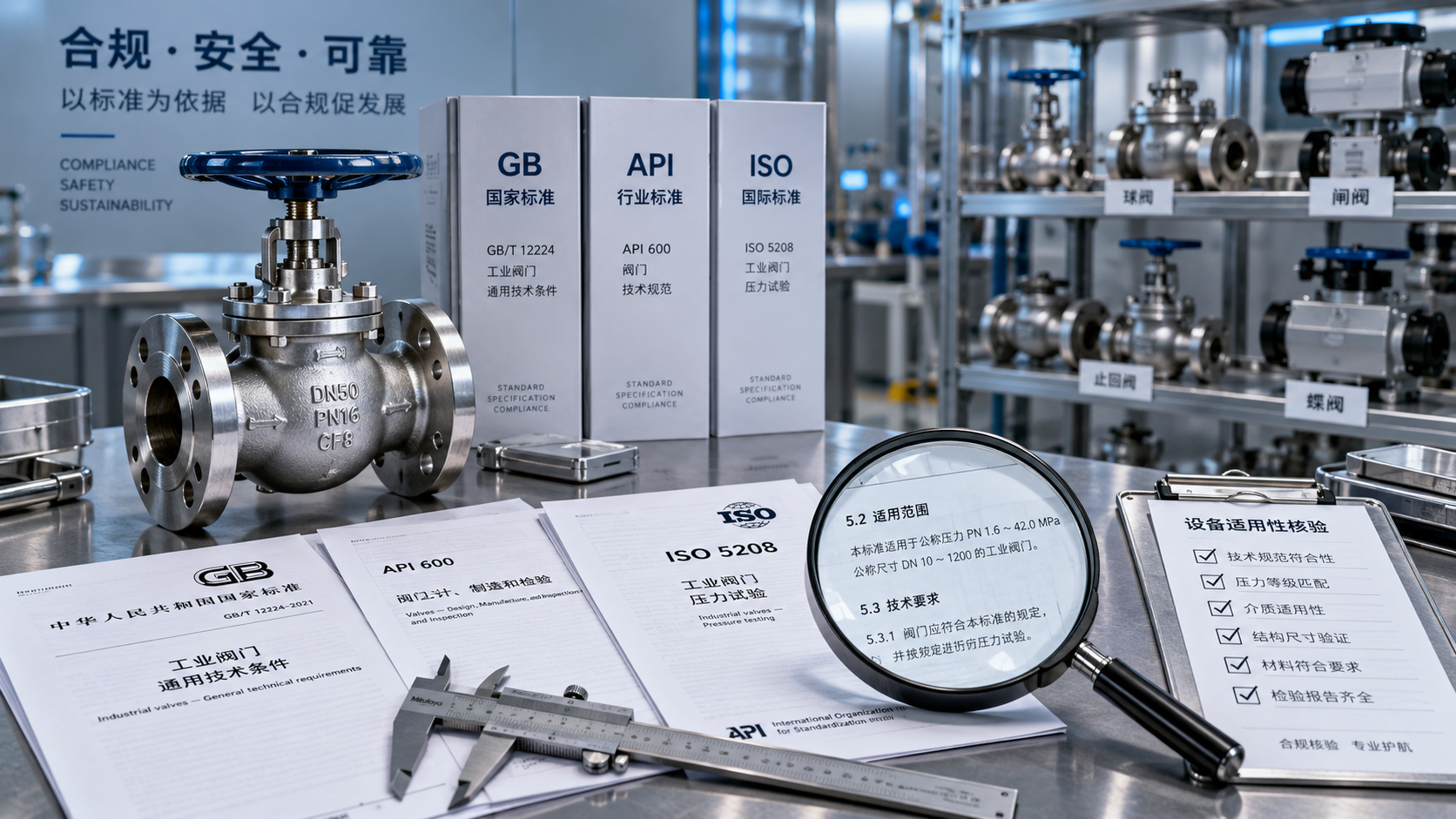
Standards can become mandatory when legislation, a permit, or another binding instrument incorporates them. A contract can also require compliance between the contracting parties.
Check the exact edition, referenced clauses, scope, and effective date. A regulation may adopt only part of a standard or allow a defined transition period.
Voluntary standards and regulator guidance can still help establish controls or demonstrate good practice, but their legal status depends on the relevant jurisdiction and circumstances.
Certification to a management system standard does not automatically prove compliance with every applicable law. Verify the underlying legal duties and site conditions separately.
Record whether each source is law, a permit condition, a contractual requirement, or guidance. This distinction helps teams understand both enforceability and the action required.
Step 4: Test Applicability Against Thresholds and Exemptions
Read the scope and definitions before adding an obligation to the register. Look for thresholds involving substance quantities, equipment capacity, workforce size, emissions, or project value.
Check how quantities are calculated, which activities are included, and whether related storage areas or operations must be combined. Thresholds may use different measurement periods.
Document exemptions and transitional provisions with their conditions and expiry dates. An exemption valid for existing equipment may disappear after a modification or change of use.
Where facts are uncertain, assign an owner to resolve them before making an applicability decision. Preserve measurements, calculations, and interpretations alongside the register entry.
When an authority’s interpretation is needed, submit a precise description of the operation and retain its written response. Obtain specialist advice where legal uncertainty remains.
Build a Compliance Register That People Can Use
A compliance register should translate source documents into specific duties. A link to legislation alone does not tell a supervisor what to inspect or when.
Give each requirement a unique identifier and record its jurisdiction, issuing authority, source, relevant provision, current version, affected site, activity, and applicability decision.
Describe the obligation in operational language: what must happen, who must do it, how often, and what evidence will demonstrate completion.
Add the responsible owner, supporting roles, due date or frequency, evidence location, current status, and date of the next review.
For excluded requirements, record the reason and supporting facts. This creates a clear trail when auditors ask why a provision was considered inapplicable.
This example shows the structure, not a universal inspection schedule. The applicable jurisdiction and equipment determine the actual requirements, intervals, and qualifications.
Which Requirements Commonly Need Review by Sector?
Use sector screening to find candidates for further investigation, not to assume every listed rule applies. Validate each requirement against the actual operation.
Construction and smart buildings
Review building approvals, excavation controls, temporary works, lifting operations, electrical safety, fire protection, and contractor coordination. Occupancy and commissioning may introduce additional approvals.
For connected building systems, assess relevant electrical, product, data protection, and cybersecurity obligations where applicable. Identify who owns maintenance after handover.
Mining and resource operations
Screen mining licenses, ground stability, ventilation, dust, emergency response, mobile equipment, water management, and waste or tailings controls against local requirements.
Requirements can differ between surface and underground operations and may change as extraction areas expand. Review permit boundaries, monitoring conditions, and closure obligations.
Railway and logistics operations
Assess rail operating authorizations, signaling and maintenance requirements, worker protection near tracks, dangerous goods transport, and interfaces with infrastructure owners or operators.
Responsibilities can differ between the asset owner, rail operator, maintenance contractor, and freight customer. Record those interfaces explicitly rather than assuming a single party owns every duty.
Heavy equipment and special purpose vehicles
Review machinery and vehicle requirements for design, import, road use, maintenance, operator competence, and modifications. The obligations may differ for manufacturers, employers, and owners.
Check whether equipment changes affect conformity documentation, inspection requirements, or operating limits. Keep manufacturer instructions available, while verifying any additional local legal duties.
How to Prioritize Gaps Without Missing a Deadline
Compare the register with actual controls and evidence. Mark each duty as met, unmet, pending verification, or not yet due, with an explanation.
Prioritize immediate threats to people or the environment, missing authorizations, and overdue mandatory actions. Escalate situations requiring work to stop under applicable procedures or law.
For remaining gaps, consider severity, likelihood, exposure, legal deadlines, and the reliability of existing controls. Assign corrective actions with owners and completion dates.
Risk ranking helps sequence remediation; it does not cancel a legal obligation. Track every applicable duty to completion, including lower-risk administrative and recordkeeping requirements.
Where evidence is missing, distinguish an unverified control from a confirmed failure. Inspect the work, interview the responsible person, and retrieve records before closing the finding.
Keep the Compliance Baseline Current
Assign someone to monitor regulator updates, permit renewals, standards incorporated by reference, and changes to customer or contract requirements.
Connect compliance review to change management. New machinery, substances, contractors, locations, production volumes, or work methods should trigger an applicability reassessment before implementation.
Review the register on a defined schedule and after incidents, inspections, acquisitions, or organizational changes. Confirm that owners, evidence links, and deadlines remain accurate.
Use internal audits and field checks to test whether documented controls work in practice. Track corrective actions through verification, not merely through assignment.
Keep version histories and the basis for key decisions. When a rule changes, identify affected sites, update instructions, train relevant personnel, and retain implementation evidence.
Conclusion: Turn Regulatory Research Into Action
A dependable compliance baseline starts with a factual inventory, authoritative sources, and a documented applicability decision for each relevant operation.
For quality and safety managers, the most useful result is a register that connects every duty to an owner, a deadline, and verifiable evidence.
Revisit those decisions whenever operations or requirements change. This makes regulatory research a practical control that supports safer work, consistent quality, and accountable decisions.
Questions about this sector or your project? Contact Sector Deep Dive for expert insights.
We respect your privacy. Your information is strictly confidential.
Get weekly intelligence in your inbox.
No noise. No sponsored content. Pure intelligence.
News Recommendations
 Nov 23, 2026Excavator Pontoon Procurement: Evaluating Compatibility and DocumentationExcavator Pontoon Procurement: Evaluating Compatibility and Documentation
 Nov 22, 2026Can deep-sea mining equipment operate profitably in 2026?Can deep-sea mining equipment operate profitably in 2026?
 Nov 16, 2026What are the main arteries of a logistics network?What are the main arteries of a logistics network?
 Nov 15, 2026How to build a resource allocation model for multiple projectsHow to build a resource allocation model for multiple projects
 Nov 14, 2026Industrial compliance guide to identifying applicable regulationsIndustrial compliance guide to identifying applicable regulations
 Nov 08, 2026Which industrial equipment categories suit material handling?Which industrial equipment categories suit material handling?
 Nov 06, 2026How much does it cost to invest in urban technology?How much does it cost to invest in urban technology?
 Nov 04, 2026How to choose packaging for heavy industrial productsHow to choose packaging for heavy industrial products
 Nov 03, 2026How to prepare component specifications that suppliers can quote accuratelyHow to prepare component specifications that suppliers can quote accurately
 Nov 01, 2026How much does an engineering data platform cost to implement?How much does an engineering data platform cost to implement?
 Oct 27, 2026How to verify ISO compliance references in supplier documentsHow to verify ISO compliance references in supplier documents
 Oct 26, 2026Can an industrial technology platform connect legacy equipment?Can an industrial technology platform connect legacy equipment?
 Oct 26, 2026Buying or Renting a Slurry Dredger for Short-Term Sand RemovalBuying or Renting a Slurry Dredger for Short-Term Sand Removal
 Oct 24, 2026How to choose a product comparison database with reliable dataHow to choose a product comparison database with reliable data
 Oct 19, 2026An industrial buyer's guide to comparing equipment lifecycle costsAn industrial buyer's guide to comparing equipment lifecycle costs
 Oct 19, 2026Comparing Ductile Iron Pipe Quotes Beyond the Price per MetreComparing Ductile Iron Pipe Quotes Beyond the Price per Metre
 Oct 19, 2026Water Pipeline Ball Valve Procurement: What to Specify in an RFQWater Pipeline Ball Valve Procurement: What to Specify in an RFQ
 Oct 18, 2026How to prepare project specifications that make bids comparableHow to prepare project specifications that make bids comparable
 Oct 17, 2026How to select industrial equipment for continuous-duty operationHow to select industrial equipment for continuous-duty operation
 Oct 16, 2026How to evaluate long-term software support when choosing electronicsHow to evaluate long-term software support when choosing electronics
 Oct 13, 2026How to verify an industrial compliance information platform's accuracyHow to verify an industrial compliance information platform's accuracy
 Oct 12, 2026What to look for in a processing services guide before outsourcingWhat to look for in a processing services guide before outsourcing
 Oct 09, 2026How to source urban technology solutions without vendor lock-inHow to source urban technology solutions without vendor lock-in
 Oct 08, 2026Which customization options add value to OEM projects?Which customization options add value to OEM projects?
 Oct 08, 2026Best practices for digital twin ROI start with measurable use casesBest practices for digital twin ROI start with measurable use cases
 Oct 08, 2026What to map before starting an automation planning processWhat to map before starting an automation planning process
 Oct 08, 2026Supply Checks for a YLCSD200 Cutter Suction Dredger Procurement PlanSupply Checks for a YLCSD200 Cutter Suction Dredger Procurement Plan