2026 Prefabricated Construction Cost: What Drives Budget Overruns?
For finance approvers, understanding prefabricated construction cost in 2026 is no longer just about comparing supplier quotes. Budget overruns are more often triggered by late design changes, logistics swings, labor misalignment, compliance upgrades, and hidden lifecycle trade-offs. The key judgment is simple: prefabrication can reduce total project risk, but only when cost drivers are modeled early, contract structures are aligned, and factory-to-site execution is tightly controlled.
Search intent behind “prefabricated construction cost” is practical and decision-oriented. Readers want to know what really drives cost escalation, which risks are underpriced at approval stage, and how to evaluate whether a modular or off-site scheme will stay within budget. For finance approvers, the most useful content is not a generic comparison with traditional construction, but a framework for identifying overruns before capital is committed.
Why prefabricated construction cost overruns happen even when the initial bid looks competitive
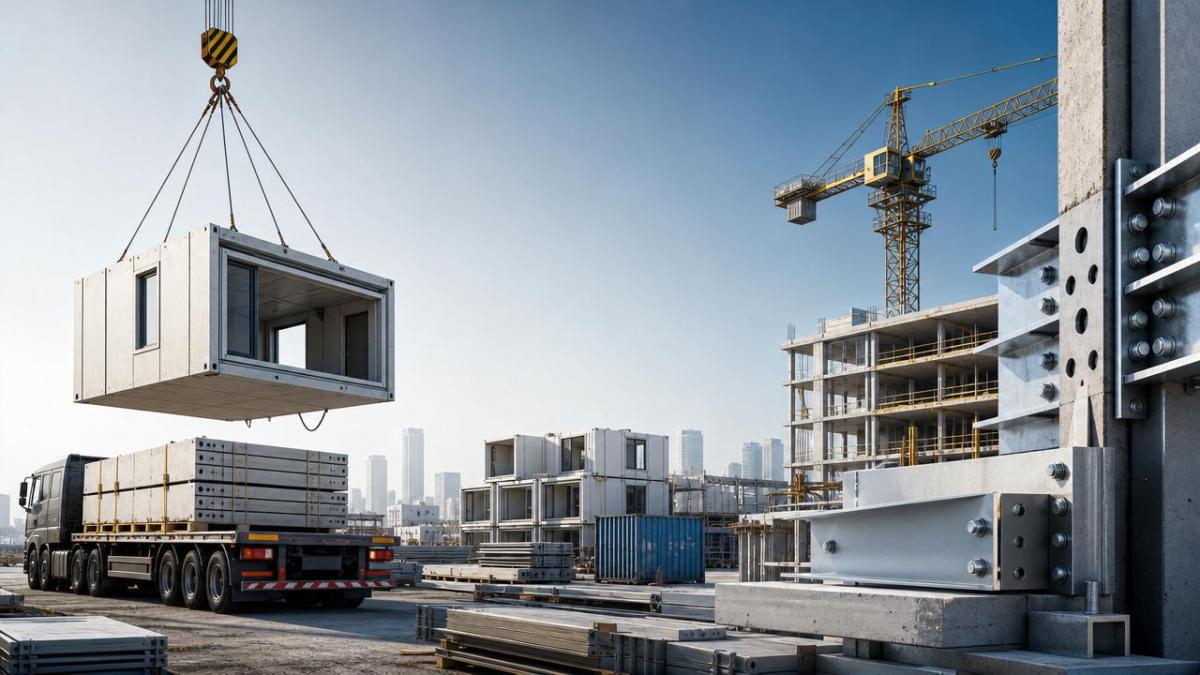
The biggest mistake in budget approval is treating the factory quote as the project cost. In 2026, the approved number must absorb design maturity, transport constraints, crane strategy, staging areas, digital coordination, inspection timing, and contingency for supplier capacity changes.
Many modular and off-site projects look economical during early procurement because repetitive manufacturing creates an attractive unit rate. However, that rate usually covers only the fabricated components. It may not fully include design freeze risk, tolerances between trades, or costs caused by last-minute client revisions.
Finance teams should view prefabricated construction cost as an integrated delivery system rather than a material line item. The relevant question is not whether prefabrication is cheaper per module, but whether the project organization is capable of capturing schedule savings without creating offsetting overruns elsewhere.
In practice, overruns often appear where responsibilities are fragmented. The architect may optimize form, the manufacturer may optimize production efficiency, and the general contractor may optimize site sequence. If these goals are not contractually aligned, budget drift emerges between factory and field.
What finance approvers should examine first before approving a prefabricated project budget
Before reviewing supplier pricing, finance decision-makers should test five fundamentals: design maturity, logistics feasibility, site readiness, interface management, and contingency quality. If any of these areas is weak, the low initial bid is unlikely to remain low through completion.
Design maturity is the first gate. Prefabrication rewards early decisions and penalizes late revisions. Once modules or assemblies enter production, changing dimensions, MEP routing, façade specifications, or finish packages can create scrap, rework, delivery delays, and additional engineering fees.
Logistics feasibility is the second gate. Oversized elements may require special permits, route surveys, escort vehicles, temporary road closures, or restricted delivery windows. These issues can materially affect prefabricated construction cost, especially for urban projects or remote locations with poor transport infrastructure.
Site readiness is equally important. Off-site manufacturing only creates value when foundations, utilities, crane access, laydown zones, and installation crews are ready when components arrive. If the site cannot receive fabricated elements on schedule, storage, double handling, and weather exposure can consume expected savings.
Interface management is another frequent blind spot. A project may include multiple vendors for structural modules, bathroom pods, MEP racks, cladding systems, and smart building controls. Without a disciplined coordination model, each interface becomes a potential source of variation claims and installation delay.
Finally, finance approvers should examine how contingency has been calculated. A single percentage applied to the total budget is often too simplistic. Modular delivery needs risk-based contingency, with separate allowances for design revisions, freight volatility, crane disruption, and commissioning complexity.
Design changes are still the fastest route to budget overruns
For traditional construction, some design changes can be absorbed gradually on site. In prefabrication, changes become expensive much earlier because factory workflows depend on standardized inputs, locked shop drawings, and synchronized procurement of components and subassemblies.
That means the timing of decisions matters as much as the decisions themselves. A façade revision after fabrication starts does not simply change an aesthetic package. It may alter structural loading, waterproofing interfaces, transportation dimensions, and installation sequencing, multiplying the cost effect.
Finance approvers should ask a direct question during review: has the project truly reached design freeze, or is “approval” being requested while major decisions remain open? If the latter, the prefabricated construction cost baseline is not stable enough for a confident investment decision.
One effective control is staged approval tied to measurable design completion milestones. Instead of releasing full capital at concept stage, decision-makers can require completion of coordination models, clash detection, prototype validation, and transport review before final budget authorization.
Logistics volatility is now a strategic cost factor, not a minor line item
In 2026, transportation risk has become one of the most underestimated causes of cost escalation in modular and off-site projects. Freight pricing, fuel costs, regional permitting rules, driver shortages, and border or customs friction can all change the total landed cost materially.
Prefabricated systems are more exposed to logistics risk because value is concentrated before arrival on site. A delayed truck or damaged module does not just postpone delivery of raw material. It can stall crane operations, trade sequencing, commissioning plans, and occupancy milestones.
For finance teams, the practical step is to separate factory price from delivered installed price. A quote should be stress-tested under alternative route conditions, staged delivery schedules, restricted urban access, and potential waiting time at site. If those scenarios are missing, the estimate is incomplete.
Storage assumptions also deserve scrutiny. Prefabrication works best with just-in-time delivery, but many sites cannot support that ideal. If temporary storage, off-site warehousing, or rehandling is likely, the budget should reflect those costs explicitly rather than bury them in general contingency.
Labor savings are real, but labor coordination failures can erase them
One reason many investors favor prefabrication is the expectation of lower on-site labor demand. That expectation is often valid. Factory production can improve productivity, reduce weather dependence, and compress site installation time. But labor savings are not automatic net savings.
The labor profile simply shifts. Instead of relying mainly on traditional site trades, the project depends more heavily on manufacturing planners, logistics coordinators, precision installers, crane operators, commissioning specialists, and digital model coordinators. If those roles are scarce, rates can rise quickly.
Another source of overrun is mismatch between factory output and site crew readiness. If modules arrive before installation teams, labor costs increase through standby, overtime recovery, or re-sequencing. If crews arrive before components, the same problem appears in reverse.
Finance approvers should therefore request a labor integration plan, not just a labor cost estimate. The plan should show who is responsible for factory scheduling, transport timing, lifting strategy, fit-out interfaces, punch-list closure, and final systems testing. Coordination quality is a cost variable.
Compliance, certification, and insurance costs are rising in importance
Regulatory and assurance requirements are becoming more demanding across jurisdictions. Fire safety, acoustic performance, thermal compliance, seismic performance, digital traceability, and embodied carbon reporting can all affect the economics of prefabricated construction in 2026.
These costs are often underestimated because teams assume that factory fabrication automatically simplifies compliance. In reality, manufactured assemblies may need additional testing, third-party certification, prototype inspection, or cross-border standards alignment before they can be accepted by local authorities.
Insurance also deserves closer attention. Carriers may evaluate off-site production, transit exposure, storage conditions, and installation methods differently from traditional construction. Premiums, deductibles, and exclusions can change depending on whether risk ownership is clearly defined between manufacturer, transporter, and contractor.
For finance approvers, this means compliance should be treated as an active cost driver, not a back-office detail. Early review with code consultants, insurers, and certifiers often costs less than resolving late-stage approval failures after production has already begun.
The hidden lifecycle trade-off: lower build time does not always mean lower total cost
Prefabrication is often approved because it shortens schedule, and schedule compression can create real financial value. Earlier revenue generation, lower financing costs, and reduced site overhead may more than justify a higher manufacturing price. But the lifecycle equation must be tested carefully.
A project can still underperform if short-term speed comes with long-term maintenance complexity. If modules use proprietary connectors, constrained access points, or specialized replacement components, future maintenance costs may rise. Finance approvers should ask whether the design supports practical asset management after handover.
Adaptability is another concern. Highly optimized modular systems can be efficient at delivery but expensive to alter later. For assets likely to change use, tenant mix, or technical systems, a lower initial prefabricated construction cost may be less attractive than a more flexible configuration.
The right evaluation model combines capex, schedule value, operating impact, maintenance profile, replacement cycles, and residual asset flexibility. A narrow focus on procurement price alone will miss the full financial case, both positive and negative.
How to evaluate prefabricated construction cost with more confidence
Finance approvers do not need to become manufacturing engineers, but they do need a sharper review framework. The most effective approach is to test whether the estimate reflects system-wide delivery reality rather than isolated component pricing.
Start by requiring a transparent cost breakdown: design and engineering, factory production, materials escalation assumptions, transport, permits, lifting operations, site installation, quality assurance, commissioning, and contingency by risk category. Hidden bundles usually conceal future claims.
Next, compare baseline and stress-case scenarios. What happens if design freeze slips by four weeks? What if transport permits are delayed? What if crane utilization is lower than planned? Scenario testing helps reveal whether the current budget is robust or merely optimistic.
It is also useful to examine contractual alignment. If one party carries design risk, another carries manufacturing risk, and a third carries installation risk, who pays when an interface issue appears? The answer should be visible before approval, not negotiated during a dispute.
Finally, insist on measurable controls after approval. Good governance includes milestone-based releases, earned-value tracking, logistics dashboards, nonconformance reporting, and change-order thresholds that trigger executive review. Budget discipline requires ongoing visibility, not one-time authorization.
When prefabrication is financially compelling—and when caution is justified
Prefabrication tends to be financially compelling when projects have repeatable layouts, strong design standardization, reliable logistics corridors, constrained schedules, and owners who value faster occupancy or reduced site disruption. In such cases, budget certainty can improve alongside speed.
Caution is justified when the project still has unstable design assumptions, highly customized architecture, uncertain site access, fragmented vendors, or weak digital coordination. Under those conditions, the apparent efficiency of modular delivery can be outweighed by rework, delay, and interface claims.
For finance approvers, the correct position is neither automatic approval nor automatic skepticism. The critical task is to determine whether the organization has the maturity to manage prefabrication as an integrated business system. If yes, the model can outperform conventional delivery. If not, overruns become more likely.
Conclusion: the right question is not “Is prefabrication cheaper?”
In 2026, the smarter question is whether the project team can control the full chain of prefabricated construction cost drivers from design freeze to final installation. Budget overruns are rarely caused by one dramatic failure. More often, they emerge from small unpriced risks across design, logistics, labor, compliance, and lifecycle planning.
For finance approvers, the practical takeaway is clear. Approve based on delivery readiness, risk transparency, and lifecycle logic—not on a narrow factory quote. When prefabrication is matched with mature planning and disciplined governance, it can improve both speed and cost confidence. When it is approved too early or too loosely, the savings story can reverse quickly.
Get weekly intelligence in your inbox.
No noise. No sponsored content. Pure intelligence.
News Recommendations
 Sep 19, 2026How an electronics application guide helps prevent component mismatchHow an electronics application guide helps prevent component mismatch
 Sep 18, 2026When a resource allocation platform improves project deliveryWhen a resource allocation platform improves project delivery
 Sep 17, 2026What to compare when evaluating mineral processing equipment manufacturersWhat to compare when evaluating mineral processing equipment manufacturers
 Sep 16, 2026How mineral separation optimization can reduce concentrate lossesHow mineral separation optimization can reduce concentrate losses
 Sep 15, 2026How to assess lifecycle costs in urban tech procurementHow to assess lifecycle costs in urban tech procurement
 Sep 14, 2026Heavy industry technology trends reshaping capital investment prioritiesHeavy industry technology trends reshaping capital investment priorities
 Sep 14, 2026Why Infrastructure Equipment Buyers Are Shifting from Catalog-Based to Capability-Based Supplier SelectionWhy Infrastructure Equipment Buyers Are Shifting from Catalog-Based to Capability-Based Supplier Selection
 Sep 14, 2026Process Automation Project Execution: How to Align Supplier Capabilities with PLC Integration, Cybersecurity & Commissioning MilestonesProcess Automation Project Execution: How to Align Supplier Capabilities with PLC Integration, Cybersecurity & Commissioning Milestones
 Sep 14, 2026Are intelligent traffic systems worth the investment for small cities?Are intelligent traffic systems worth the investment for small cities?
 Sep 14, 2026How do intelligent traffic systems handle sensor failures?How do intelligent traffic systems handle sensor failures?
 Sep 14, 2026What should I check before accepting a smart building system?What should I check before accepting a smart building system?
 Sep 14, 2026Is a smart building system worth the maintenance cost?Is a smart building system worth the maintenance cost?
 Sep 14, 2026What data is needed for reliable resource allocation planning?What data is needed for reliable resource allocation planning?
 Sep 14, 2026How can resource allocation software reduce equipment idle time?How can resource allocation software reduce equipment idle time?
 Sep 14, 2026How should smart devices be maintained in harsh outdoor conditions?How should smart devices be maintained in harsh outdoor conditions?
 Sep 14, 2026Do smart devices improve worker safety on construction sites?Do smart devices improve worker safety on construction sites?
 Sep 14, 2026What environmental risks must be assessed before deep-sea mining?What environmental risks must be assessed before deep-sea mining?
 Sep 14, 2026Is deep-sea mining equipment commercially viable in 2026?Is deep-sea mining equipment commercially viable in 2026?
 Sep 14, 2026What Inspection Checks Should Procurement Teams Perform Before Ordering Dredging Equipment in 2026?What Inspection Checks Should Procurement Teams Perform Before Ordering Dredging Equipment in 2026?
 Sep 13, 2026How to verify an industrial product information source before specifying equipmentHow to verify an industrial product information source before specifying equipment
 Sep 12, 2026Which intelligent traffic systems hardware fits an urban intersection?Which intelligent traffic systems hardware fits an urban intersection?
 Sep 11, 2026How pump capacity affects response coverage for municipal fire fighting vehiclesHow pump capacity affects response coverage for municipal fire fighting vehicles
 Sep 10, 2026What to verify before choosing a heavy industry equipment supplierWhat to verify before choosing a heavy industry equipment supplier
 Sep 09, 2026When do adaptive urban traffic control systems reduce corridor delays?When do adaptive urban traffic control systems reduce corridor delays?
 Sep 08, 2026When logistics technology solutions in North America reduce delivery delaysWhen logistics technology solutions in North America reduce delivery delays
 Sep 07, 2026How reliable are wireless mining safety systems in underground mines?How reliable are wireless mining safety systems in underground mines?
 Sep 07, 2026How to assess a smart lighting technology platform for interoperabilityHow to assess a smart lighting technology platform for interoperability