Sustainable Infrastructure or Lower Cost First?
Sustainable infrastructure or lower cost first: what is the smarter financial question?
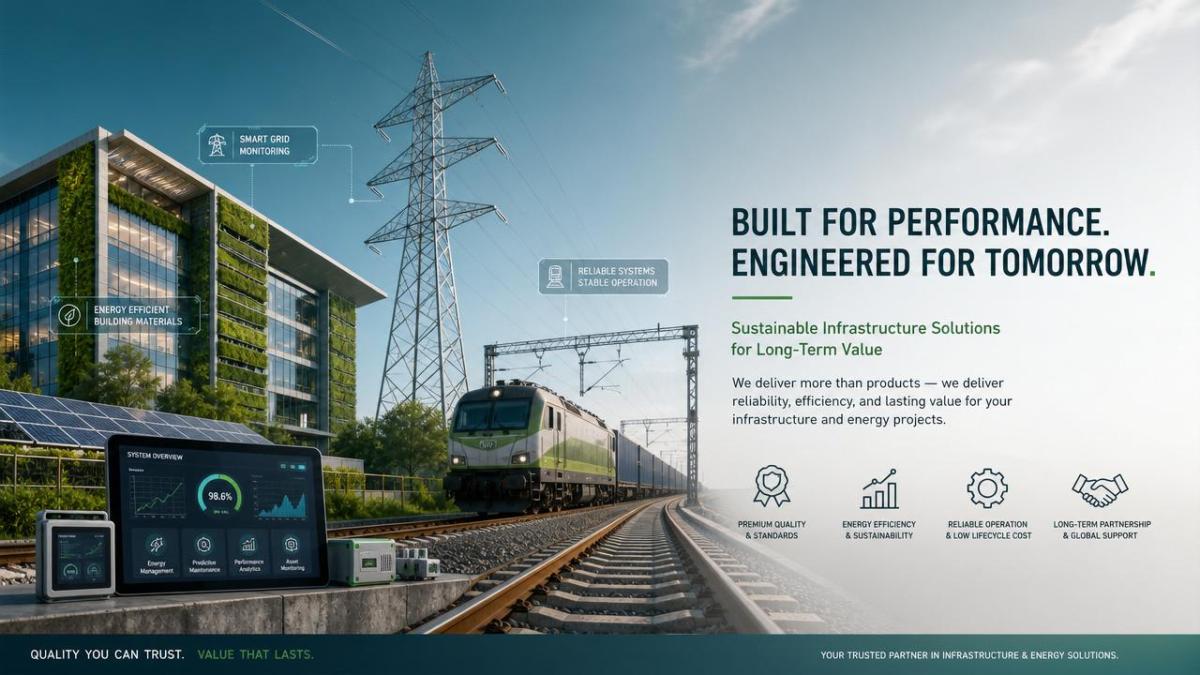
The debate often starts with price, but it rarely ends there.
For long-life assets, the better question is which option protects value over twenty or thirty years.
That is why sustainable infrastructure has moved from a design preference to a capital allocation issue.
In roads, rail, buildings, grids, mining systems, and fleet equipment, initial savings can disappear through energy waste, maintenance spikes, and compliance exposure.
More practical reviews now look at lifetime value, resilience, carbon obligations, and operational continuity together.
GIUT follows this shift closely across construction, urban tech, resource systems, logistics networks, and heavy equipment.
Its engineering-led analysis shows a consistent pattern: better infrastructure economics usually come from stronger system performance, not simply the lowest bid.
Does sustainable infrastructure always cost more at the beginning?
Not always, and that is where many decisions become distorted.
Some sustainable infrastructure options do carry higher upfront cost.
Examples include advanced insulation, smart controls, recycled materials with certified traceability, low-emission equipment, and digital monitoring layers.
But other options are cost-neutral when specified early.
A better site layout, passive cooling, modular construction, optimized signaling, or predictive maintenance sensors may reduce waste from day one.
The real premium often comes from late-stage redesign.
If sustainability is treated as an add-on, budgets rise quickly.
If it is built into scope definition, procurement criteria, and asset modeling, the cost gap narrows.
In practice, the strongest comparison is not green versus cheap.
It is efficient, durable, compliant systems versus assets that look affordable but age expensively.
A quick screening table helps clarify the trade-off
Before approving a proposal, it helps to compare cost layers rather than headline price alone.
When does sustainable infrastructure clearly outperform a cheaper option?
The advantage becomes clearer when the asset is energy-intensive, mission-critical, or hard to retrofit later.
That includes transport corridors, public buildings, water systems, smart grids, mining operations, and specialized fleets with long duty cycles.
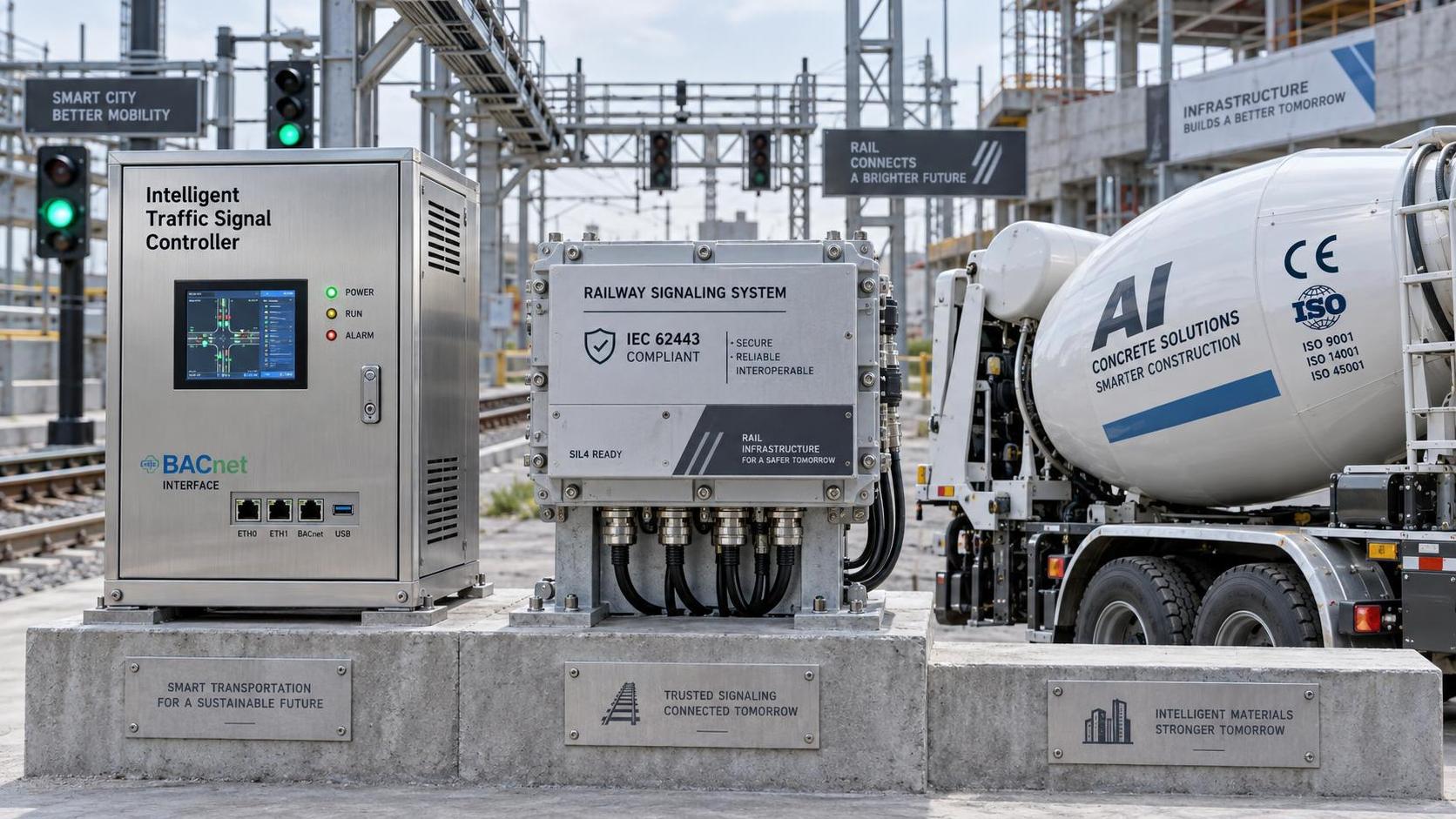
Consider a rail signaling upgrade.
A low-cost package may reduce purchase price, yet create higher fault rates, slower diagnostics, and more service interruptions.
A sustainable infrastructure approach might integrate energy efficiency, digital monitoring, and maintainability.
The return appears through uptime, lower field intervention, and fewer emergency replacements.
The same pattern appears in smart buildings.
Cheaper mechanical systems may win tenders, but they often lock in higher operating expenses for decades.
Sustainable infrastructure performs best where three conditions exist:
- The asset has a long service life.
- Downtime carries direct financial or public-service consequences.
- Regulation, energy prices, or climate stress are likely to tighten.
When these factors overlap, selecting on price alone usually underestimates total exposure.
How should cost be evaluated beyond the first purchase price?
A useful review starts with total cost of ownership, but it should not stop there.
For sustainable infrastructure, cost evaluation needs a wider frame that includes operational, regulatory, and strategic variables.
In actual projects, five questions tend to reveal the true economics.
- How much energy, water, or fuel will the asset consume each year?
- What is the expected maintenance pattern under real operating loads?
- How likely is a future retrofit due to emissions, safety, or digital reporting rules?
- What is the financial effect of downtime, poor reliability, or service disruption?
- Will the asset remain acceptable to lenders, insurers, and public stakeholders?
This broader lens matters because sustainable infrastructure is increasingly tied to risk pricing.
Insurance terms, funding access, and approval processes are moving closer to performance-based scrutiny.
GIUT’s cross-sector reporting often highlights the same lesson.
Data-rich assets are easier to operate, defend, and refinance than opaque assets that only looked cheaper on paper.
A practical way to structure the review
If competing proposals seem close, score them across these dimensions instead of relying on unit price alone.
What are the most common mistakes when comparing cheaper bids with sustainable infrastructure?
The first mistake is treating all cost as immediate cost.
That sounds obvious, yet many reviews still underweight operating volatility and lifecycle exposure.
Another mistake is comparing technical promises without checking delivery conditions.
For example, a supplier may claim efficiency gains, but the business case depends on maintenance access, software support, and local operating skills.
A third mistake is ignoring system effects.
In urban tech or transport, one weak subsystem can drag down the performance of the entire asset base.
More common pitfalls include:
- Using payback alone for assets with thirty-year service life.
- Ignoring disposal, retrofit, or decommissioning costs.
- Assuming stable energy prices across the full asset horizon.
- Overlooking reputational damage from outdated infrastructure performance.
Sustainable infrastructure should not be approved on ideology.
It should be approved when the numbers, risk profile, and operating logic make sense.
So how do you decide when budgets are tight?
Tight budgets do not automatically favor the cheapest route.
They usually favor the option with the most predictable long-term burden.
A practical approach is to separate must-have performance from optional enhancement.
Then test whether each sustainable infrastructure feature lowers a measurable risk, cost, or future capital event.
If a feature reduces energy intensity, avoids regulatory retrofit, extends asset life, or strengthens resilience, it deserves serious weighting.
If it adds little beyond image value, it can wait.
This is where GIUT’s sector intelligence becomes useful.
Across smart governance, construction, mining technology, railway systems, and heavy equipment, evidence-based benchmarking helps distinguish durable value from fashionable specification.
A sound next step is to build a simple decision sheet.
- List upfront cost, annual operating cost, and expected maintenance profile.
- Add compliance risk, downtime impact, and climate resilience factors.
- Compare scenarios at five, ten, and twenty years.
- Flag any option that depends on major retrofit later.
That process usually makes the real winner easier to see.
When sustainable infrastructure supports stronger lifetime value, lower volatility, and better operational continuity, the decision is not about paying more.
It is about avoiding the hidden cost of buying too cheaply.
Get weekly intelligence in your inbox.
No noise. No sponsored content. Pure intelligence.
News Recommendations
 Sep 19, 2026How an electronics application guide helps prevent component mismatchHow an electronics application guide helps prevent component mismatch
 Sep 18, 2026When a resource allocation platform improves project deliveryWhen a resource allocation platform improves project delivery
 Sep 17, 2026What to compare when evaluating mineral processing equipment manufacturersWhat to compare when evaluating mineral processing equipment manufacturers
 Sep 16, 2026How mineral separation optimization can reduce concentrate lossesHow mineral separation optimization can reduce concentrate losses
 Sep 15, 2026How to assess lifecycle costs in urban tech procurementHow to assess lifecycle costs in urban tech procurement
 Sep 14, 2026Heavy industry technology trends reshaping capital investment prioritiesHeavy industry technology trends reshaping capital investment priorities
 Sep 14, 2026Global Industrial Equipment Procurement: How Top OEMs Qualify Suppliers for Mining & Infrastructure ProjectsGlobal Industrial Equipment Procurement: How Top OEMs Qualify Suppliers for Mining & Infrastructure Projects
 Sep 14, 2026Industrial & Mining Equipment Procurement: Balancing Local Sourcing, Lead Time, and Certification RequirementsIndustrial & Mining Equipment Procurement: Balancing Local Sourcing, Lead Time, and Certification Requirements
 Sep 14, 2026Infrastructure & Equipment Upgrades: What Procurement Teams Must Verify Before Signing Off on New ContractsInfrastructure & Equipment Upgrades: What Procurement Teams Must Verify Before Signing Off on New Contracts
 Sep 14, 2026Why Infrastructure Equipment Buyers Are Shifting from Catalog-Based to Capability-Based Supplier SelectionWhy Infrastructure Equipment Buyers Are Shifting from Catalog-Based to Capability-Based Supplier Selection
 Sep 14, 2026Process Automation Project Execution: How to Align Supplier Capabilities with PLC Integration, Cybersecurity & Commissioning MilestonesProcess Automation Project Execution: How to Align Supplier Capabilities with PLC Integration, Cybersecurity & Commissioning Milestones
 Sep 14, 2026Are intelligent traffic systems worth the investment for small cities?Are intelligent traffic systems worth the investment for small cities?
 Sep 14, 2026How do intelligent traffic systems handle sensor failures?How do intelligent traffic systems handle sensor failures?
 Sep 14, 2026What should I check before accepting a smart building system?What should I check before accepting a smart building system?
 Sep 14, 2026Is a smart building system worth the maintenance cost?Is a smart building system worth the maintenance cost?
 Sep 14, 2026What data is needed for reliable resource allocation planning?What data is needed for reliable resource allocation planning?
 Sep 14, 2026How can resource allocation software reduce equipment idle time?How can resource allocation software reduce equipment idle time?
 Sep 14, 2026How should smart devices be maintained in harsh outdoor conditions?How should smart devices be maintained in harsh outdoor conditions?
 Sep 14, 2026Do smart devices improve worker safety on construction sites?Do smart devices improve worker safety on construction sites?
 Sep 14, 2026What environmental risks must be assessed before deep-sea mining?What environmental risks must be assessed before deep-sea mining?
 Sep 14, 2026Is deep-sea mining equipment commercially viable in 2026?Is deep-sea mining equipment commercially viable in 2026?
 Sep 14, 2026What Inspection Checks Should Procurement Teams Perform Before Ordering Dredging Equipment in 2026?What Inspection Checks Should Procurement Teams Perform Before Ordering Dredging Equipment in 2026?
 Sep 13, 2026How to verify an industrial product information source before specifying equipmentHow to verify an industrial product information source before specifying equipment
 Sep 12, 2026Which intelligent traffic systems hardware fits an urban intersection?Which intelligent traffic systems hardware fits an urban intersection?
 Sep 11, 2026How pump capacity affects response coverage for municipal fire fighting vehiclesHow pump capacity affects response coverage for municipal fire fighting vehicles
 Sep 10, 2026What to verify before choosing a heavy industry equipment supplierWhat to verify before choosing a heavy industry equipment supplier
 Sep 09, 2026When do adaptive urban traffic control systems reduce corridor delays?When do adaptive urban traffic control systems reduce corridor delays?