Civil Engineering Technology Trends Shaping 2026 Projects
Civil engineering technology is moving from support function to strategic control layer
Infrastructure planning in 2026 is no longer driven by cost and schedule alone.
A clearer shift is underway toward resilience, carbon visibility, data coordination, and asset intelligence across the full project lifecycle.
That is why civil engineering technology now sits closer to board-level investment discussion than to a narrow engineering upgrade.
For roads, railways, utilities, industrial sites, and smart urban systems, the question is changing.
The issue is not whether digital tools exist.
It is whether projects can connect design intent, field execution, equipment performance, and long-term operating value in one decision framework.
This broader view matters across the GIUT landscape, where construction, urban tech, logistics corridors, resource development, and heavy equipment increasingly share the same data spine.
Civil engineering technology is becoming the practical bridge between physical assets and intelligent governance.
Why the signal is getting stronger before 2026
Recent demand patterns show that project owners are under pressure from several directions at once.
Labor shortages persist, climate exposure is harder to ignore, and financing scrutiny is becoming more detailed.
At the same time, urban systems are more interconnected than earlier infrastructure models assumed.
A bridge is not just a bridge anymore.
It affects logistics reliability, sensor networks, maintenance budgeting, and emergency response capacity.
That interdependence is one reason civil engineering technology is expanding beyond design software into operational intelligence.
Taken together, these signals explain why civil engineering technology is no longer evaluated as a specialist toolset.
It is being judged by how well it supports governance, capital efficiency, and future service performance.
The real shift is happening in how projects are conceived and delivered
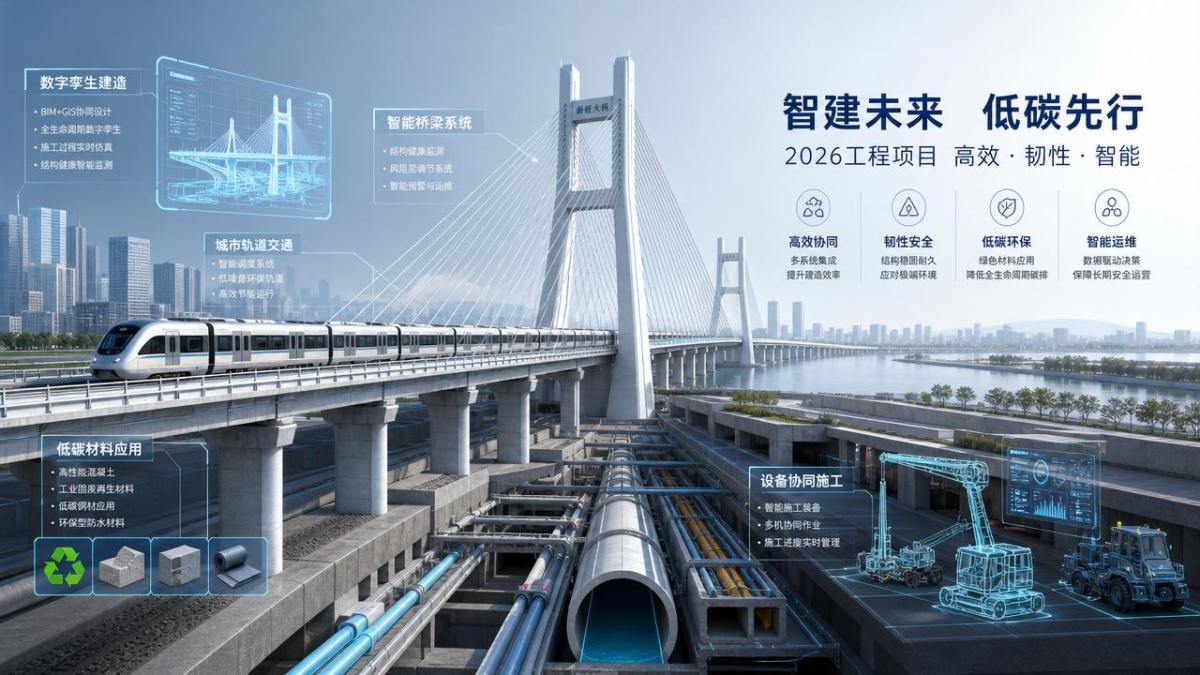
Digital twins are a good example.
They were once discussed as advanced visualization tools.
Now they are being used to test phasing decisions, drainage performance, traffic behavior, utility conflicts, and maintenance scenarios before physical work accelerates.
That changes procurement logic and schedule logic at the same time.
Prefabrication is following a similar path.
It is not simply about faster assembly.
More projects are using industrialized construction to stabilize quality, reduce rework, and make labor allocation more predictable.
In transport corridors and urban expansion zones, this matters because disruption windows are getting shorter.
AI-driven jobsite systems are also becoming more practical.
The strongest use cases are not futuristic robotics headlines.
They are progress tracking, equipment utilization analysis, safety anomaly detection, and material flow optimization.
In other words, civil engineering technology is shifting toward measurable execution control.
Low-carbon materials are also changing the investment conversation
Concrete alternatives, recycled aggregates, and optimized steel use are no longer fringe topics.
What matters is not a generic green claim.
What matters is whether the material strategy can satisfy performance standards, local supply realities, and future compliance expectations.
This is where civil engineering technology becomes especially valuable.
It enables earlier modeling of carbon trade-offs, transport distances, lifecycle maintenance loads, and construction sequencing impacts.
Impact is spreading well beyond the design office
One of the most important changes is that benefits and risks now move across connected sectors.
In smart cities, civil engineering technology influences how roadworks align with traffic systems, utilities, and public service continuity.
In rail and logistics networks, it shapes maintenance planning, uptime forecasting, and corridor expansion efficiency.
In mining and resource projects, it supports safer earthworks, water control, and remote asset oversight.
Even special purpose vehicles and heavy equipment are part of the same transition.
Machines that generate field data can now inform project sequencing, fuel management, emissions tracking, and maintenance timing.
This cross-sector visibility fits a GIUT-style intelligence model, where infrastructure is treated as a living system rather than a collection of isolated assets.
- Planning teams gain stronger scenario testing before committing capital.
- Delivery teams reduce blind spots across schedule, materials, and equipment use.
- Operators receive better data for maintenance, compliance, and service continuity.
- Urban authorities improve coordination between physical works and digital governance systems.
The broader consequence is clear.
Civil engineering technology now affects not only build quality, but also how cities and industrial networks adapt under pressure.
What deserves closer attention as 2026 projects take shape
Not every technology label will create equal value.
The more useful lens is to focus on where decision friction is highest.
From recent market movement, four checkpoints stand out.
Data continuity matters more than isolated software features
A polished platform has limited value if design files, site data, equipment telemetry, and maintenance records cannot speak to each other.
Civil engineering technology should be judged by interoperability and decision traceability.
Carbon claims need engineering proof
Projects will face more scrutiny around embodied carbon, transport emissions, and end-of-life assumptions.
That means model-based evidence becomes more valuable than generic sustainability messaging.
Execution intelligence will separate pilot programs from scalable practice
Many organizations can test drones or dashboards.
Fewer can turn that information into better sequencing, safer worksites, and lower rework rates across multiple projects.
Regulatory alignment is becoming part of technology selection
Standards tied to resilience, reporting, and infrastructure security are tightening.
Civil engineering technology that simplifies auditability and compliance response will gain strategic weight.
A practical response starts with sharper questions, not bigger systems
The next move is rarely a blanket digital transformation program.
A more grounded approach is to map where value leakage or uncertainty is greatest across the asset lifecycle.
That may be early design coordination, site productivity, material traceability, or long-term maintenance forecasting.
From there, civil engineering technology choices become easier to prioritize.
- Review whether current project data can flow from concept design to operations without manual re-entry.
- Compare low-carbon material options against durability, supply access, and construction constraints.
- Check whether jobsite intelligence tools are tied to actual workflow decisions.
- Track standards and reporting shifts that could alter project economics after approval.
- Build phased adoption plans around high-impact assets rather than enterprise-wide slogans.
The strongest organizations in 2026 are unlikely to be those chasing every innovation headline.
They will be the ones using civil engineering technology to connect physical delivery with long-term infrastructure intelligence.
That is where resilience, efficiency, and future asset value begin to reinforce each other.
A useful next step is to reassess active projects through that lens and identify where the biggest decision gaps still sit.
Get weekly intelligence in your inbox.
No noise. No sponsored content. Pure intelligence.
News Recommendations
 Sep 19, 2026How an electronics application guide helps prevent component mismatchHow an electronics application guide helps prevent component mismatch
 Sep 18, 2026When a resource allocation platform improves project deliveryWhen a resource allocation platform improves project delivery
 Sep 17, 2026What to compare when evaluating mineral processing equipment manufacturersWhat to compare when evaluating mineral processing equipment manufacturers
 Sep 16, 2026How mineral separation optimization can reduce concentrate lossesHow mineral separation optimization can reduce concentrate losses
 Sep 15, 2026How to assess lifecycle costs in urban tech procurementHow to assess lifecycle costs in urban tech procurement
 Sep 14, 2026Heavy industry technology trends reshaping capital investment prioritiesHeavy industry technology trends reshaping capital investment priorities
 Sep 14, 2026Global Industrial Equipment Procurement: How Top OEMs Qualify Suppliers for Mining & Infrastructure ProjectsGlobal Industrial Equipment Procurement: How Top OEMs Qualify Suppliers for Mining & Infrastructure Projects
 Sep 14, 2026Industrial & Mining Equipment Procurement: Balancing Local Sourcing, Lead Time, and Certification RequirementsIndustrial & Mining Equipment Procurement: Balancing Local Sourcing, Lead Time, and Certification Requirements
 Sep 14, 2026Infrastructure & Equipment Upgrades: What Procurement Teams Must Verify Before Signing Off on New ContractsInfrastructure & Equipment Upgrades: What Procurement Teams Must Verify Before Signing Off on New Contracts
 Sep 14, 2026Why Infrastructure Equipment Buyers Are Shifting from Catalog-Based to Capability-Based Supplier SelectionWhy Infrastructure Equipment Buyers Are Shifting from Catalog-Based to Capability-Based Supplier Selection
 Sep 14, 2026Process Automation Project Execution: How to Align Supplier Capabilities with PLC Integration, Cybersecurity & Commissioning MilestonesProcess Automation Project Execution: How to Align Supplier Capabilities with PLC Integration, Cybersecurity & Commissioning Milestones
 Sep 14, 2026Are intelligent traffic systems worth the investment for small cities?Are intelligent traffic systems worth the investment for small cities?
 Sep 14, 2026How do intelligent traffic systems handle sensor failures?How do intelligent traffic systems handle sensor failures?
 Sep 14, 2026What should I check before accepting a smart building system?What should I check before accepting a smart building system?
 Sep 14, 2026Is a smart building system worth the maintenance cost?Is a smart building system worth the maintenance cost?
 Sep 14, 2026What data is needed for reliable resource allocation planning?What data is needed for reliable resource allocation planning?
 Sep 14, 2026How can resource allocation software reduce equipment idle time?How can resource allocation software reduce equipment idle time?
 Sep 14, 2026How should smart devices be maintained in harsh outdoor conditions?How should smart devices be maintained in harsh outdoor conditions?
 Sep 14, 2026Do smart devices improve worker safety on construction sites?Do smart devices improve worker safety on construction sites?
 Sep 14, 2026What environmental risks must be assessed before deep-sea mining?What environmental risks must be assessed before deep-sea mining?
 Sep 14, 2026Is deep-sea mining equipment commercially viable in 2026?Is deep-sea mining equipment commercially viable in 2026?
 Sep 14, 2026What Inspection Checks Should Procurement Teams Perform Before Ordering Dredging Equipment in 2026?What Inspection Checks Should Procurement Teams Perform Before Ordering Dredging Equipment in 2026?
 Sep 13, 2026How to verify an industrial product information source before specifying equipmentHow to verify an industrial product information source before specifying equipment
 Sep 12, 2026Which intelligent traffic systems hardware fits an urban intersection?Which intelligent traffic systems hardware fits an urban intersection?
 Sep 11, 2026How pump capacity affects response coverage for municipal fire fighting vehiclesHow pump capacity affects response coverage for municipal fire fighting vehicles
 Sep 10, 2026What to verify before choosing a heavy industry equipment supplierWhat to verify before choosing a heavy industry equipment supplier
 Sep 09, 2026When do adaptive urban traffic control systems reduce corridor delays?When do adaptive urban traffic control systems reduce corridor delays?