How to Evaluate Special Purpose Vehicles for Construction Projects
How to Evaluate Special Purpose Vehicles for Construction Projects
Choosing the right special purpose vehicles for construction can shape safety, uptime, compliance, and total project cost from day one.
A smart buying decision looks beyond price. It should test operational fit, durability, service access, and long-term value under real jobsite pressure.
That matters even more now, as construction schedules tighten, emissions rules evolve, and asset utilization becomes a board-level metric.
This guide explains how to evaluate special purpose vehicles for construction in a practical, decision-ready way.
Start With the Project, Not the Catalog
The first mistake in evaluating special purpose vehicles for construction is comparing machines before defining the job.
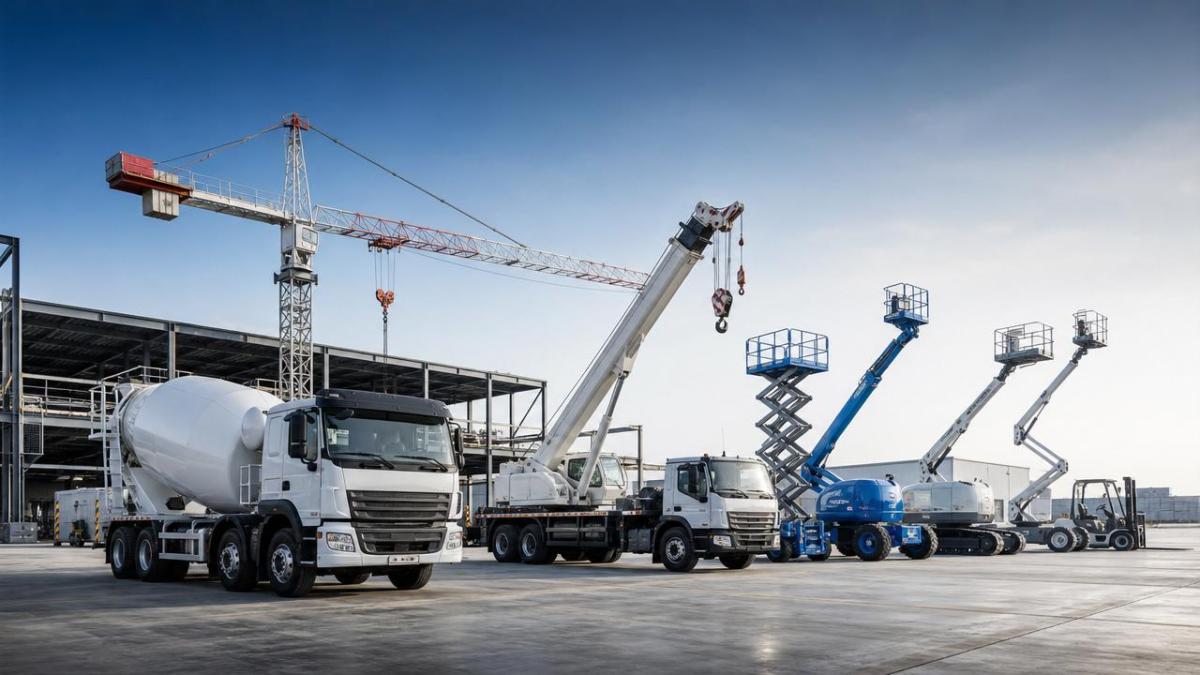
A concrete mixer for urban high-rise work faces very different demands than one used on remote highway expansion.
The same applies to cranes, fire response vehicles, lifting platforms, tunnel service trucks, and site logistics units.
In practical terms, begin with a use-case sheet. Define site terrain, payload range, duty cycles, weather, access limits, and regulatory constraints.
Also note whether the vehicle supports one project phase or multiple phases across the asset life cycle.
This creates a useful filter. It prevents overbuying capacity or selecting a low-cost unit that cannot handle real conditions.
- Map the vehicle to the exact construction workflow.
- Separate must-have functions from optional upgrades.
- Estimate annual operating hours and idle periods.
- Confirm whether the vehicle will move between sites.
Once this baseline is clear, the evaluation of special purpose vehicles for construction becomes far more accurate.
Assess Core Performance Under Real Working Conditions
Published specifications are useful, but they rarely tell the full story.
When reviewing special purpose vehicles for construction, focus on performance under load, during repeated cycles, and in constrained site environments.
For example, a crane may meet lifting targets on paper, yet lose efficiency in tight urban staging zones.
A mixer may hit volume requirements, yet create delays because discharge speed is inconsistent.
A good review should cover both technical output and workflow continuity.
Key Performance Factors
- Payload, reach, pumping, lifting, or mixing capacity.
- Fuel or energy efficiency across normal operating cycles.
- Mobility on uneven, soft, or restricted ground.
- Stability, braking, maneuvering radius, and setup speed.
- Noise, vibration, and emissions performance.
From a decision angle, ask suppliers for field data, not just brochures.
Request performance records from similar projects, especially where terrain, climate, and material handling needs are comparable.
This is often where the strongest signal appears.
Look Closely at Safety, Compliance, and Operator Fit
Safety should never be treated as a checklist item added at the end.
In special purpose vehicles for construction, safety systems directly affect insurance exposure, operator confidence, and project continuity.
Modern units may include stability control, proximity alerts, load monitoring, camera systems, and rollover protection.
Those features are valuable only if they work well in daily operations and do not create confusion for crews.
Operator fit matters more than many teams expect. Poor visibility, awkward controls, and hard-to-read displays can slow down even a high-spec machine.
For that reason, evaluating special purpose vehicles for construction should include the human side of the machine.
- Verify compliance with local transport, emissions, and construction safety rules.
- Check the quality of warning systems and emergency controls.
- Review cabin ergonomics, visibility, and training needs.
- Confirm documentation quality for audits and site inspections.
A vehicle that looks competitive on cost but creates compliance friction is rarely a good purchase.
Evaluate Durability, Serviceability, and Lifecycle Cost
This is where many purchasing decisions become clearer.
The true cost of special purpose vehicles for construction sits in maintenance hours, parts availability, component life, and downtime risk.
A lower upfront quote may hide weak corrosion protection, short service intervals, or limited dealer coverage.
In harsh environments, those gaps become expensive very quickly.
Questions That Reveal Real Value
- What is the expected service life of key components?
- How fast can common wear parts be delivered?
- Can routine maintenance be performed on-site?
- What are the typical failure points in similar deployments?
- Is remote diagnostics or telematics support available?
A lifecycle cost model should include acquisition cost, training, fuel or power use, maintenance, spare parts, downtime, resale value, and disposal.
Using total cost of ownership helps compare special purpose vehicles for construction on a decision basis, not a headline price basis.
Compare Supplier Strength, Support Network, and Data Capability
A vehicle is only as reliable as the support ecosystem behind it.
That is especially true for special purpose vehicles for construction used on time-sensitive sites.
Supplier evaluation should include response time, technician reach, training depth, warranty terms, and digital support tools.
More buyers now also review data capability. Telematics, fault codes, utilization dashboards, and maintenance alerts can improve fleet decisions over time.
This also aligns with the wider shift toward smarter infrastructure management.
A supplier with proven post-sale support can outperform a cheaper vendor with slow response and limited technical depth.
Use a Structured Scoring Model Before Final Selection
When several options appear close, a weighted scorecard is the best way to avoid subjective decisions.
This is one of the most effective methods for comparing special purpose vehicles for construction fairly.
Set scoring weights based on project priorities. Safety and uptime may rank highest for tunnel or high-rise work.
Fuel efficiency and mobility may matter more on long-distance infrastructure projects.
Sample Scoring Categories
- Technical fit for the application.
- Safety and compliance readiness.
- Lifecycle cost and service intervals.
- Supplier support and parts access.
- Delivery lead time and deployment ease.
- Data integration and fleet visibility.
If possible, include site teams, maintenance staff, and safety leads in the scoring review.
That cross-functional view often catches risks that a price-based review will miss.
Final Decision: Choose the Best Operational Fit
The best special purpose vehicles for construction are not always the biggest, newest, or cheapest.
They are the vehicles that match the job, protect crews, stay compliant, and deliver consistent performance over time.
A disciplined evaluation process makes that outcome far more likely.
Start with project conditions. Test real-world performance. Review safety, serviceability, and supplier strength. Then validate the final shortlist with a scoring model.
In a market where construction efficiency and infrastructure reliability matter more every year, better evaluation leads to better asset decisions.
That is the practical path to selecting special purpose vehicles for construction with confidence and long-term value in mind.
Get weekly intelligence in your inbox.
No noise. No sponsored content. Pure intelligence.
News Recommendations
 Sep 19, 2026How an electronics application guide helps prevent component mismatchHow an electronics application guide helps prevent component mismatch
 Sep 18, 2026When a resource allocation platform improves project deliveryWhen a resource allocation platform improves project delivery
 Sep 17, 2026What to compare when evaluating mineral processing equipment manufacturersWhat to compare when evaluating mineral processing equipment manufacturers
 Sep 16, 2026How mineral separation optimization can reduce concentrate lossesHow mineral separation optimization can reduce concentrate losses
 Sep 15, 2026How to assess lifecycle costs in urban tech procurementHow to assess lifecycle costs in urban tech procurement
 Sep 14, 2026Heavy industry technology trends reshaping capital investment prioritiesHeavy industry technology trends reshaping capital investment priorities
 Sep 14, 2026Global Industrial Equipment Procurement: How Top OEMs Qualify Suppliers for Mining & Infrastructure ProjectsGlobal Industrial Equipment Procurement: How Top OEMs Qualify Suppliers for Mining & Infrastructure Projects
 Sep 14, 2026Industrial & Mining Equipment Procurement: Balancing Local Sourcing, Lead Time, and Certification RequirementsIndustrial & Mining Equipment Procurement: Balancing Local Sourcing, Lead Time, and Certification Requirements
 Sep 14, 2026Infrastructure & Equipment Upgrades: What Procurement Teams Must Verify Before Signing Off on New ContractsInfrastructure & Equipment Upgrades: What Procurement Teams Must Verify Before Signing Off on New Contracts
 Sep 14, 2026Why Infrastructure Equipment Buyers Are Shifting from Catalog-Based to Capability-Based Supplier SelectionWhy Infrastructure Equipment Buyers Are Shifting from Catalog-Based to Capability-Based Supplier Selection
 Sep 14, 2026Process Automation Project Execution: How to Align Supplier Capabilities with PLC Integration, Cybersecurity & Commissioning MilestonesProcess Automation Project Execution: How to Align Supplier Capabilities with PLC Integration, Cybersecurity & Commissioning Milestones
 Sep 14, 2026Are intelligent traffic systems worth the investment for small cities?Are intelligent traffic systems worth the investment for small cities?
 Sep 14, 2026How do intelligent traffic systems handle sensor failures?How do intelligent traffic systems handle sensor failures?
 Sep 14, 2026What should I check before accepting a smart building system?What should I check before accepting a smart building system?
 Sep 14, 2026Is a smart building system worth the maintenance cost?Is a smart building system worth the maintenance cost?
 Sep 14, 2026What data is needed for reliable resource allocation planning?What data is needed for reliable resource allocation planning?
 Sep 14, 2026How can resource allocation software reduce equipment idle time?How can resource allocation software reduce equipment idle time?
 Sep 14, 2026How should smart devices be maintained in harsh outdoor conditions?How should smart devices be maintained in harsh outdoor conditions?
 Sep 14, 2026Do smart devices improve worker safety on construction sites?Do smart devices improve worker safety on construction sites?
 Sep 14, 2026What environmental risks must be assessed before deep-sea mining?What environmental risks must be assessed before deep-sea mining?
 Sep 14, 2026Is deep-sea mining equipment commercially viable in 2026?Is deep-sea mining equipment commercially viable in 2026?
 Sep 14, 2026What Inspection Checks Should Procurement Teams Perform Before Ordering Dredging Equipment in 2026?What Inspection Checks Should Procurement Teams Perform Before Ordering Dredging Equipment in 2026?
 Sep 13, 2026How to verify an industrial product information source before specifying equipmentHow to verify an industrial product information source before specifying equipment
 Sep 12, 2026Which intelligent traffic systems hardware fits an urban intersection?Which intelligent traffic systems hardware fits an urban intersection?
 Sep 11, 2026How pump capacity affects response coverage for municipal fire fighting vehiclesHow pump capacity affects response coverage for municipal fire fighting vehicles
 Sep 10, 2026What to verify before choosing a heavy industry equipment supplierWhat to verify before choosing a heavy industry equipment supplier
 Sep 09, 2026When do adaptive urban traffic control systems reduce corridor delays?When do adaptive urban traffic control systems reduce corridor delays?