Can waste collection management systems reduce missed pickups?
A missed pickup rarely stays a small operational problem for long. A customer calls, a dispatcher searches for the right vehicle, and a crew may have to return after the route is complete. For a business managing multiple sites or a municipality overseeing a collection contract, repeated failures can damage confidence as well as increase operating costs.
Waste collection management systems can reduce missed pickups by connecting service schedules, route execution, driver communication, and exception handling. They do not guarantee that every container will be emptied: vehicles break down, streets close, and bins are sometimes inaccessible. Their practical value lies in making those problems visible early enough for someone to act, while creating a more reliable record of what happened.
What actually causes a missed pickup?
“Missed” can describe several different situations. A scheduled stop may be absent from the driver’s route. The vehicle may pass the site without the crew recognizing the correct collection point. A driver may be unable to reach the container because of a parked vehicle, a locked gate, or construction. In other cases, the service occurred, but the customer cannot verify it.
Those distinctions matter. Sending a truck back is the right response to some failures, but it will not fix an incorrect address in the service database or resolve a recurring access restriction. A useful system makes it easier to distinguish between:
- Planning errors: incorrect schedules, omitted stops, outdated service agreements, or unrealistic route workloads.
- Execution failures: stops overlooked during a shift, route changes not communicated, or incomplete handovers between crews.
- Access exceptions: blocked containers, unsafe conditions, closed roads, or customers presenting waste at the wrong location or time.
- Record and communication gaps: completed services without adequate confirmation, or complaints that never reach the person able to resolve them.
Before investing, decision-makers should examine which of these problems generates the most repeat visits and complaints. A routing tool may be valuable, but it cannot compensate for inaccurate customer records or an unclear process for handling access issues.
From scheduled stop to resolved exception
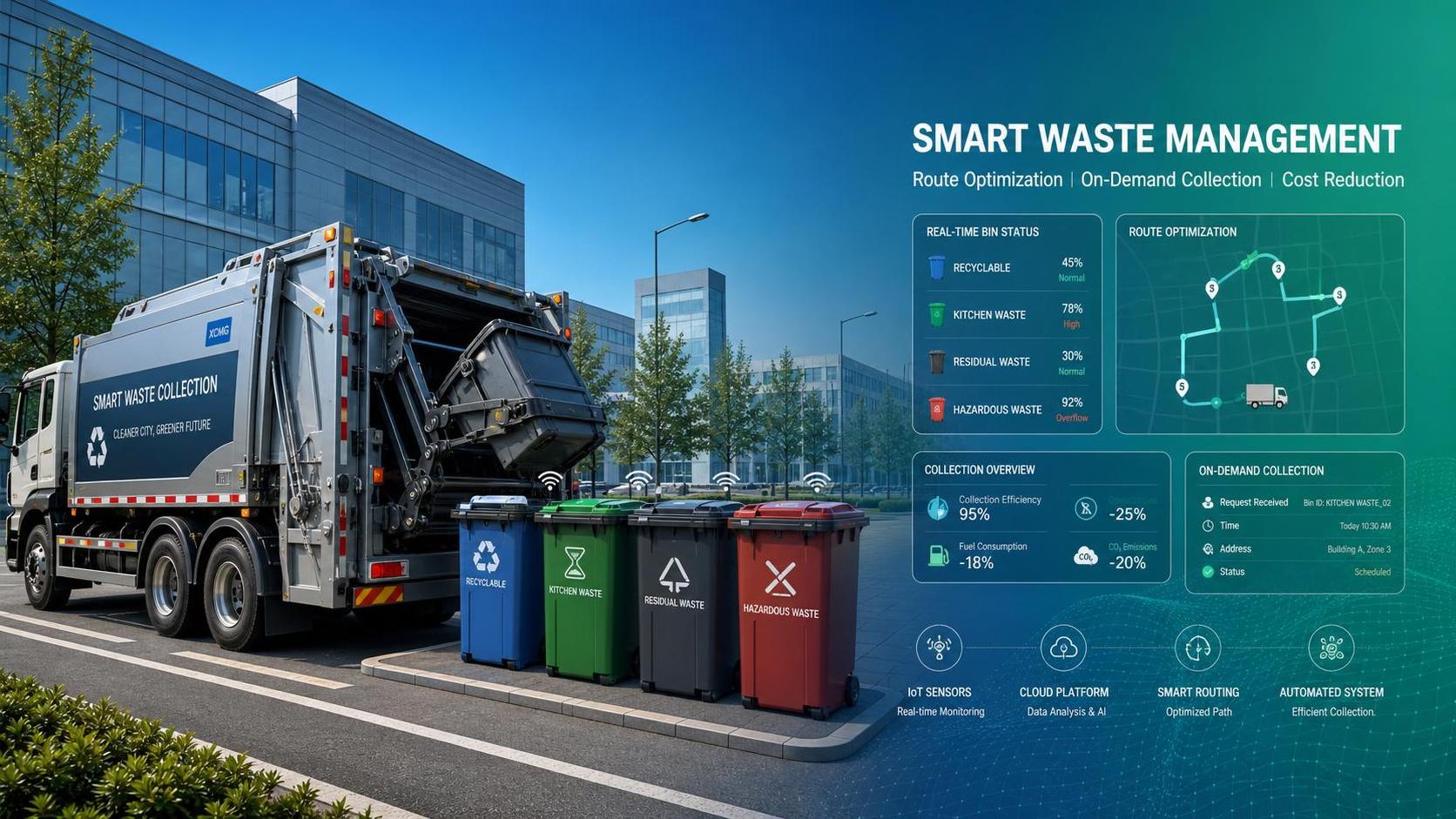
The strongest application is not simply a digital map. It is a connected workflow in which the service agreement becomes an actionable stop, the crew records the outcome, and unresolved issues reach a dispatcher or customer service team.
1. Build routes from dependable service data
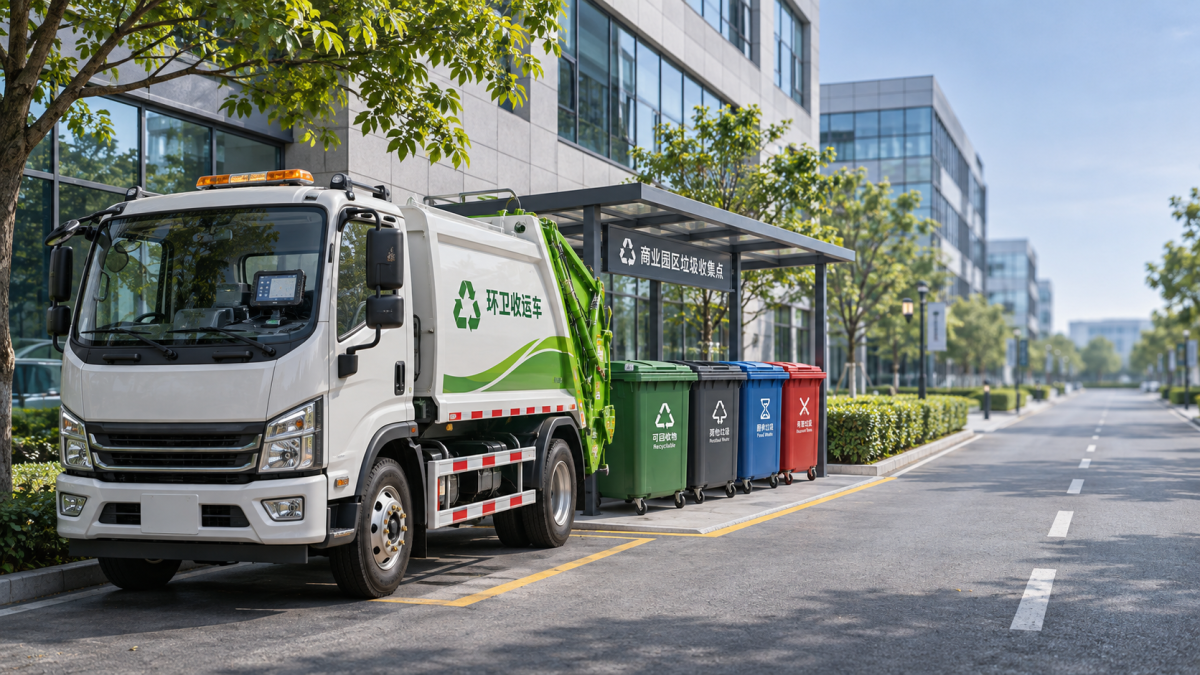
A collection plan typically starts with the customer location, container type, collection frequency, permitted service window, and site instructions. When these details are maintained in one system, planners are less dependent on handwritten notes or knowledge held by a single experienced driver.
Route planning functions can use that information alongside vehicle capacity, working hours, road restrictions, and other operational constraints. Some platforms offer route optimization, but the best route on a screen is not necessarily the best route in practice. Local traffic patterns, safe access, collection-side requirements, and crew experience should all be considered before a plan is issued.
Data quality is decisive. If a gate code is outdated or a container has moved behind a building, the driver may still be unable to complete the stop. Assigning ownership for updates is therefore as important as choosing the software.
2. Give crews a clear view of the day
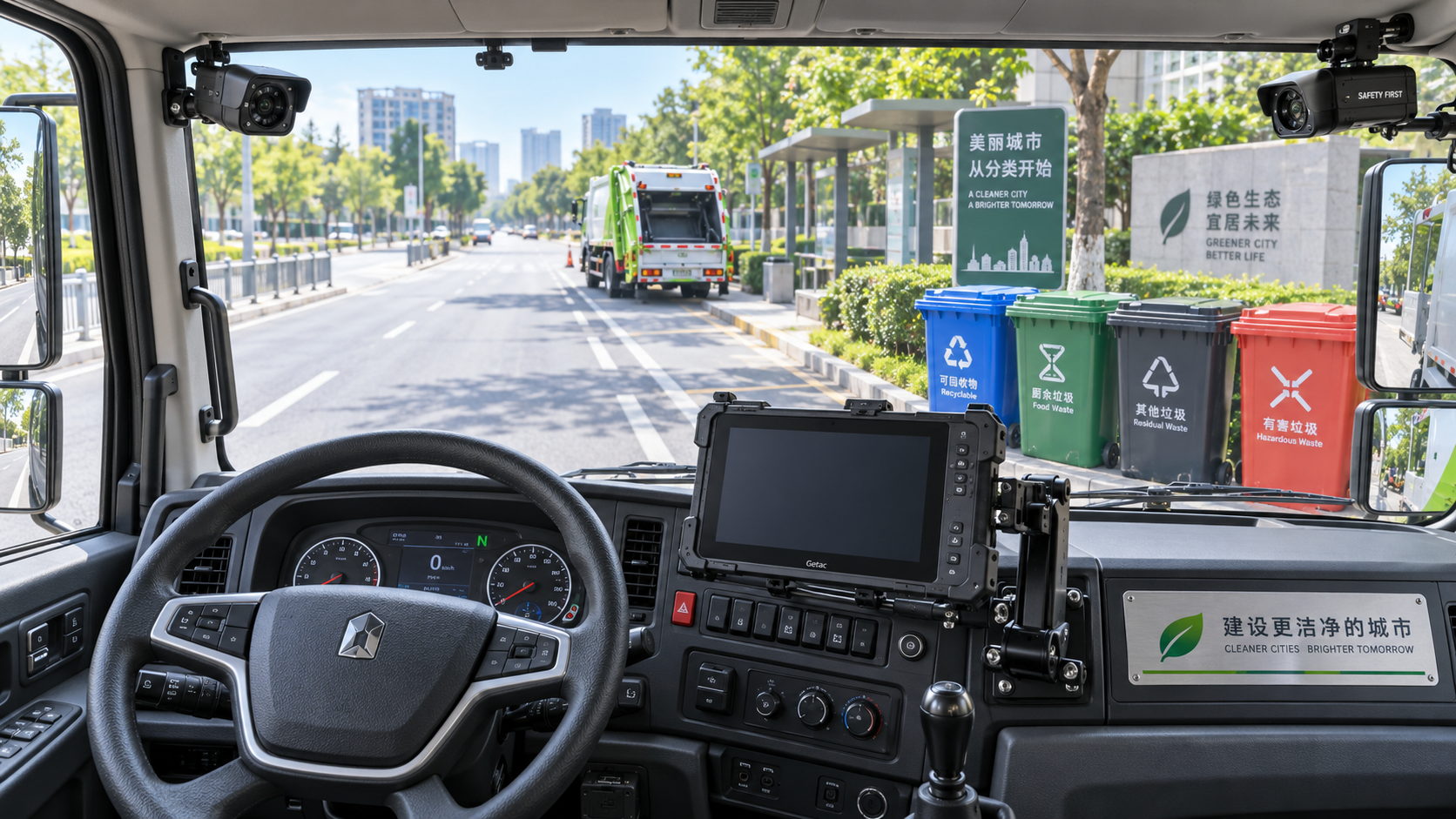
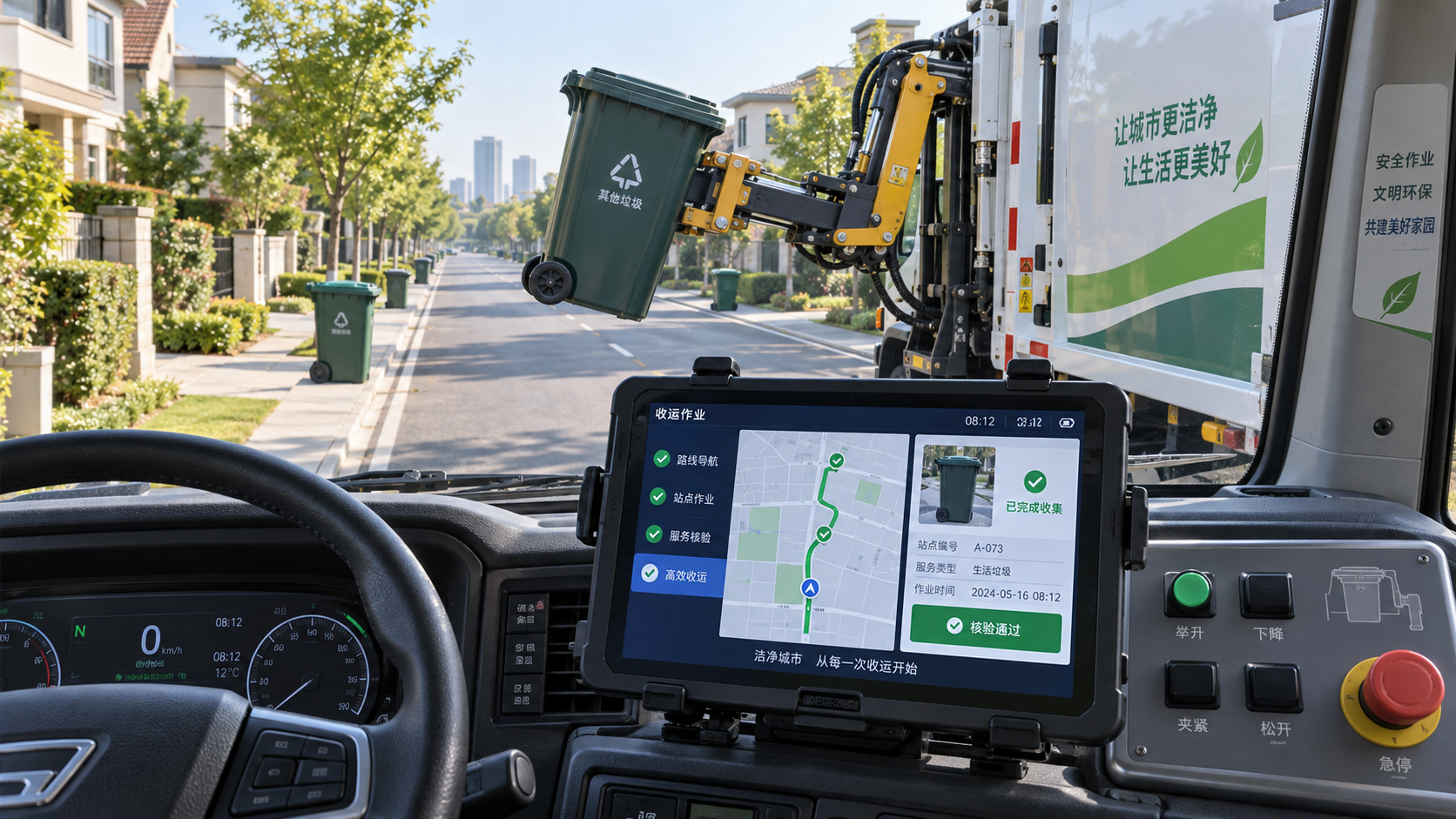
A driver-facing device can show the ordered stop list, navigation details, special instructions, and changes made during the shift. This is particularly helpful for relief drivers, new employees, and contractors covering unfamiliar territory. Instead of relying on memory or a phone call, the crew can see that a site has multiple containers or that collection must occur before a loading area becomes busy.
Good design matters on the street. Instructions need to be readable, status changes should be quick to enter, and the application should support operation when mobile connectivity is unreliable. Ask how the system stores activity offline, when it synchronizes, and how it handles conflicting updates after a connection returns.
3. Turn an obstacle into an actionable exception
When a crew cannot service a stop, the driver can select a reason code and, where appropriate, add a note or photograph. The dispatcher sees an exception rather than discovering the problem through a complaint hours later. Depending on the cause, the next action might be to reroute another vehicle, contact the customer to clear access, or schedule a return visit.
Consider a commercial site where a delivery truck blocks the waste enclosure. If the driver records the obstruction and the dispatcher can reach the site manager, a later pickup may still be possible. If access remains blocked, the record supports a different conversation: how to prevent the same obstruction on the next collection day.
Reason codes should be specific enough to guide action without creating a long, confusing list. “Blocked access” and “container not presented” are more useful than a generic “not completed.” Supervisors should also review how codes are used so they do not become a shortcut for closing unresolved work.
4. Close the loop with evidence and communication
Service records may include a completion status, timestamp, vehicle location, driver note, and, where suitable and permitted, a photograph. These details can help customer service investigate a complaint and show whether a return is needed. Automated messages or portal updates may also keep customers informed about delays and access problems.
There is an important limitation: a GPS point near a property does not prove that every container was emptied. Likewise, a driver-entered completion status depends on accurate reporting. Decision-makers should define what counts as sufficient evidence for different service types and ensure that any images or location data are collected and retained in line with applicable privacy requirements.
Choosing capabilities that match the operation
The right configuration varies. A municipality managing household collections may prioritize coverage across thousands of stops and communication during disruption. A commercial operator may need detailed site instructions, different container types, and contract-specific service windows. A company buying collection services for multiple facilities may care most about consistent reporting and a clear escalation path across providers.
During evaluation, use real operational scenarios rather than relying only on a product demonstration. Ask a vendor or internal implementation team to show how the following would work:
- A new service starts tomorrow. How is the stop approved, added to the correct route, and communicated to the crew?
- A vehicle breaks down midday. Can remaining stops be identified and reassigned without losing their service status?
- A customer disputes a missed collection. Can staff find the schedule, exception history, and available evidence in one place?
- A location has limited connectivity. Can drivers view the route and record outcomes until the device reconnects?
- A contract changes. Can service frequency, container details, and billing-related records be updated consistently across connected systems?
Integration deserves particular attention. If dispatch, customer service, billing, and contractor records each contain a different version of the service schedule, staff may spend their time reconciling data rather than preventing failures. Determine which system is the authoritative source for each field, how updates are shared, and who resolves discrepancies.
Measure reliability without hiding the difficult cases
A lower complaint count can be encouraging, but it is not enough to demonstrate better service. Some customers never report a missed pickup; others may report an access problem as a missed service. Use a small set of measures that separates service performance from reporting behavior.
- Missed pickups per scheduled stops: define whether the count includes only confirmed operator failures or also customer-access exceptions, and report those categories separately.
- Unresolved exceptions: track how many remain open and how long they have been waiting for action.
- Return-visit rate and time to recovery: monitor how often a vehicle returns and how quickly confirmed misses are resolved.
- Repeat issues by location or route: identify sites with recurring obstructions, inaccurate instructions, or service windows that do not match operations.
- Data completeness: check whether scheduled stops have usable addresses, current instructions, and a recorded outcome.
Establish a baseline before rollout and compare results over a meaningful period. Seasonal changes, holidays, contract changes, and shifts in reporting practices can affect the numbers. If exception reporting improves, recorded misses may initially rise because previously invisible problems are now being captured. That is a reason to investigate, not automatically a sign that service has worsened.
Implementation is an operational change, not just a software launch
Start with a defined area, customer segment, or depot where the team can test the full workflow. Include dispatchers, drivers, customer service staff, and the people responsible for contract performance. Their perspectives differ: a feature that looks simple to a manager may add too many taps for a crew working under time pressure.
Clean the service data before the pilot, but plan for continued maintenance after it. Agree on who can create or amend a stop, who validates site instructions, and how quickly a reported error must be corrected. Train crews on both the device and the reason behind exception reporting; a record is useful only when it reflects what actually happened.
Also set clear responsibilities for alerts. A notification that nobody owns is merely another message. Decide which exceptions require immediate dispatch action, which go to customer service, and when an unresolved issue should be escalated. Review pilot results with frontline staff before expanding to other routes.
For public agencies and private operators alike, waste collection management systems are most effective when technology supports a disciplined service process. Better route visibility can prevent omissions, timely exception handling can shorten recovery, and dependable records can make disputes easier to resolve. The investment is worth assessing against those practical outcomes—not against the assumption that digitization alone will make missed pickups disappear.
Questions about this sector or your project? Contact Sector Deep Dive for expert insights.
We respect your privacy. Your information is strictly confidential.
Get weekly intelligence in your inbox.
No noise. No sponsored content. Pure intelligence.
News Recommendations
 Nov 13, 2026Can waste collection management systems reduce missed pickups?Can waste collection management systems reduce missed pickups?
 Oct 08, 2026What to Evaluate in In-Cab Systems Before Digitizing a Waste FleetWhat to Evaluate in In-Cab Systems Before Digitizing a Waste Fleet
 Oct 08, 2026How In-Cab Technology Helps Waste Collection Crews Cut Missed PickupsHow In-Cab Technology Helps Waste Collection Crews Cut Missed Pickups
 Oct 08, 2026How waste management in buildings cuts contamination at sourceHow waste management in buildings cuts contamination at source
 Sep 04, 2026How to choose waste management systems for buildings by site layoutHow to choose waste management systems for buildings by site layout
 Jul 09, 2026How Automated Waste Management Cuts Collection CostsHow Automated Waste Management Cuts Collection Costs
 Jul 06, 2026How Automated Waste Systems Improve Hospital Safety and WorkflowHow Automated Waste Systems Improve Hospital Safety and Workflow
 Jun 25, 2026Automated Waste Management Systems: Cost, Space, and Performance Trade-OffsAutomated Waste Management Systems: Cost, Space, and Performance Trade-Offs
 Jun 13, 2026Automated Waste Systems: Cost Factors and PaybackAutomated Waste Systems: Cost Factors and Payback