
How waste management in buildings cuts contamination at source
How Waste Management in Buildings Cuts Contamination at Source
Effective waste management in buildings prevents contamination before materials reach bins, compactors, loading docks, recycling facilities, or disposal vehicles.
For quality control and safety managers, the central lesson is straightforward: contamination is rarely a downstream problem alone.
It usually begins where people discard materials, where waste streams intersect, and where building procedures leave room for uncertainty.
Source-level controls protect recycling quality, reduce worker exposure, improve regulatory compliance, and make waste performance easier to measure and manage.
Buildings generate mixed material flows every day, including packaging, food waste, paper, plastics, batteries, chemicals, healthcare-related materials, and maintenance debris.
When these materials enter the wrong stream, the result can be rejected recycling loads, hazardous exposure, fire risks, pest activity, odors, and higher disposal costs.
Well-designed waste management buildings systems therefore treat waste segregation as an operational control, not simply a sustainability initiative.
They combine infrastructure, signage, routines, training, supervision, and data so correct disposal becomes the easiest option for occupants and service teams.
Why Contamination Begins Inside the Building
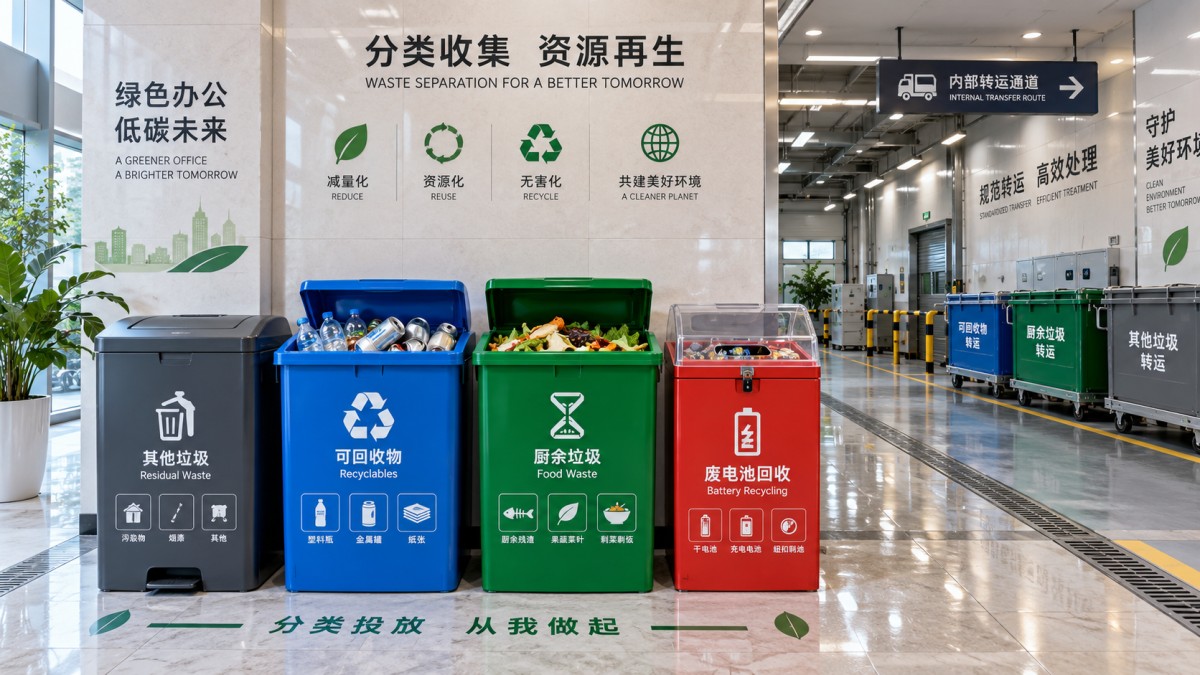
Contamination occurs when unwanted materials enter a collection stream and reduce its safety, usability, value, or compliance status.
In a commercial building, a recyclable container may be contaminated by food residue, liquids, plastic film, confidential documents, or non-recyclable packaging.
In industrial facilities, contamination may involve oils, solvents, metal fragments, cleaning agents, sharps, or process residues entering general waste.
The consequences depend on the material, but even small errors can disrupt handling procedures and create wider operational risks.
For example, one lithium-ion battery placed in mixed waste can create a fire hazard during compaction, storage, transport, or material sorting.
Similarly, food-soiled paper or liquids can lower the quality of dry recyclables and cause an entire collection load to be rejected.
Quality and safety managers should view these failures as process deviations with identifiable causes, controls, and corrective actions.
The goal is not perfect behavior from every individual. The goal is a building system that reduces opportunities for predictable mistakes.
Start With Waste Stream Mapping, Not More Bins
Adding bins without understanding actual waste generation often creates confusion rather than improving recycling or safety performance.
A useful waste management buildings program begins with a practical map of materials, locations, volumes, timings, and responsible parties.
Managers should identify what waste is produced, where it originates, who handles it, and where it can mix unintentionally.
This assessment should include tenant areas, kitchens, maintenance rooms, loading bays, washrooms, storage spaces, laboratories, and temporary project zones.
Different areas require different controls because their materials, risks, and users are not the same.
Office floors may mainly need controls for paper, packaging, food containers, and confidential records.
Building maintenance areas may require separate routes for lamps, batteries, electronic equipment, chemicals, oils, aerosols, and contaminated absorbents.
Construction or refurbishment work introduces another layer of risk through timber, gypsum board, insulation, paint containers, adhesives, metals, and demolition debris.
Mapping should also examine peak periods, such as lunch hours, tenant move-outs, cleaning shifts, maintenance shutdowns, and renovation deliveries.
These are often the points where standard collection capacity fails and cross-contamination becomes more likely.
A short site audit can reveal whether contamination is caused by poor placement, unclear ownership, inadequate capacity, unsuitable container design, or inconsistent service schedules.
This evidence helps managers invest in controls that address the real failure points instead of relying on generic recycling campaigns.
Design Disposal Points Around Human Behavior
People generally dispose of waste quickly, often while carrying other items or concentrating on a different task.
Collection points must therefore make the correct choice obvious within seconds, especially for visitors, contractors, and temporary occupants.
Convenience matters because users will choose the nearest available container when the intended bin is distant, full, locked, or difficult to identify.
Place paired or grouped bins where materials are actually discarded, rather than placing recycling stations only in low-traffic sustainability areas.
For example, food waste, recyclable containers, and general waste should be available together near cafeterias and break rooms.
Separated systems work poorly when users must walk across a floor to find the appropriate stream.
Container openings can also influence behavior. A narrow slot can discourage bulky contamination in paper bins, while a bottle-shaped opening can guide container disposal.
However, physical restrictions should support clear instructions, not replace them, because many waste items have ambiguous forms or mixed materials.
Labels should show real examples from the building rather than generic symbols alone.
Photographs or simple illustrations of commonly accepted and prohibited items help users make faster, more accurate decisions.
Instructions should be visible at eye level, positioned directly above or on each opening, and written in languages appropriate to the workforce.
Color coding can help, but it should never be the only signal because color conventions vary across regions, contractors, and user groups.
Separate High-Risk Materials Before They Enter General Waste
The most important contamination controls focus on materials that can injure workers, ignite fires, pollute other streams, or trigger regulatory breaches.
These materials should have dedicated containers, defined storage conditions, trained handlers, and documented collection arrangements.
Batteries, electronic waste, fluorescent lamps, chemicals, aerosol cans, sharps, medical waste, and oily rags should never depend on informal disposal decisions.
Each category needs a clear route from generation point to secure interim storage and approved final treatment.
Battery management deserves particular attention because damaged or loose batteries can be crushed, punctured, overheated, or short-circuited in mixed waste systems.
Small battery collection points should be accessible but designed to prevent access by unauthorized persons or accidental disposal into other streams.
Facilities should also define procedures for swollen, leaking, damaged, or unidentified batteries, which may require specialist handling.
Chemical waste controls should distinguish between compatible and incompatible substances, even when material volumes appear small.
Mixing cleaning chemicals, paints, solvents, fuels, or laboratory residues can create fumes, reactions, leaks, and worker exposure.
Safety data sheets, container labels, and waste contractor requirements should inform segregation rules for these materials.
For quality managers, the key control is traceability: staff should know what the material is, where it came from, and who is authorized to handle it.
Unidentified waste is not merely an administrative problem. It can delay collections, increase disposal costs, and expose workers to avoidable hazards.
Build Controlled Waste Routes From Floor to Loading Dock
Correct segregation at a desk, workstation, or kitchen can still fail when internal collection procedures remix materials later.
Waste management in buildings must therefore control the full chain, including cleaning rounds, temporary storage, transport, consolidation, and collection handover.
Cleaning teams need separate bags, carts, compartments, and instructions for each stream they collect.
Using one open cart for all waste types may save time initially, but it can undo segregation efforts across an entire floor.
Internal storage rooms should have marked zones, adequate lighting, ventilation where necessary, pest controls, spill supplies, and enough capacity for expected volumes.
Containers should remain closed when not in use to limit odors, leaks, access by pests, and accidental insertion of unsuitable materials.
Access should be controlled for hazardous or confidential waste, particularly in shared buildings with multiple tenants and contractors.
At loading docks, collection routes should minimize conflict with pedestrian traffic, deliveries, emergency exits, and sensitive building operations.
Managers should confirm that waste containers do not obstruct fire equipment, evacuation paths, electrical rooms, or vehicle maneuvering areas.
Collection contractors must also understand site-specific segregation requirements rather than treating all building waste as a single commercial stream.
Contract specifications should define accepted materials, contamination thresholds, rejected-load processes, evidence requirements, and responsibility for corrective action.
This makes it possible to distinguish occupant errors from collection, transport, or contractor handling failures.
Use Monitoring to Turn Contamination Into Measurable Data
Visual checks and waste data give managers the evidence needed to determine whether controls are working or merely appearing adequate.
Routine inspections should focus on the most important locations, such as kitchens, tenant recycling stations, maintenance rooms, and central waste stores.
A simple inspection checklist can record contamination type, severity, location, likely cause, immediate correction, and responsible owner.
Over time, these records reveal patterns that are difficult to see through isolated complaints or occasional bin audits.
For instance, repeated food contamination in recycling bins may indicate poor bin placement, not a lack of environmental awareness.
Repeated hazardous items in general waste may indicate that maintenance contractors lack a convenient approved disposal route.
Useful performance indicators include contamination rate, rejected collection loads, recycling capture rate, hazardous waste incidents, waste-related near misses, and disposal cost per occupant.
Managers should avoid relying only on diversion rates because a high recycling volume can mask poor material quality.
A smaller volume of clean, accepted recyclables may deliver more environmental and financial value than a larger contaminated stream.
Photographic evidence can support audits when used carefully and in accordance with privacy and site security requirements.
Digital waste tracking platforms, smart bin sensors, and collection records can improve visibility, especially in large campuses or multi-building portfolios.
Technology is useful when it supports decisions, but it cannot compensate for unclear procedures, poor bin design, or weak accountability.
Train the People Who Control the Highest-Risk Decisions
General awareness messages are useful, but targeted training is more effective for workers who regularly influence waste quality and safety.
Cleaning personnel, maintenance teams, food service workers, security staff, loading dock operators, and contractors need role-specific instructions.
Training should explain what belongs in each stream, which items create hazards, how to identify contaminated loads, and when to escalate concerns.
It should also address practical situations, such as overflowing bins, leaking bags, broken lamps, unknown containers, damaged batteries, and waste found outside designated areas.
Short, repeated sessions often work better than one lengthy annual presentation because waste procedures are applied during fast daily routines.
New starters, temporary staff, and contractors should receive instructions before working independently in waste handling areas.
Supervisors should reinforce expectations through shift briefings, visible procedures, and immediate feedback when they observe incorrect handling.
Blame-focused responses can discourage reporting, particularly when employees discover hazardous or unknown waste after disposal has occurred.
A stronger approach treats reporting as a safety control and investigates the process conditions that allowed the error.
Where occupants are tenants rather than direct employees, building management should provide clear guidance through lease documents, onboarding packs, posters, and service communications.
Tenant engagement should focus on operational outcomes, such as avoiding rejected loads, controlling costs, and maintaining safe common areas.
This approach is more credible than broad messaging that asks users to recycle without explaining how the building system supports them.
Make Accountability Visible Across Building Operations
Contamination reduction succeeds when responsibilities are defined across facility management, tenants, cleaners, contractors, security teams, and waste providers.
Without ownership, recurring problems are often passed between departments, while contaminated material continues moving through the building system.
A responsibility matrix should identify who supplies bins, approves signage, conducts inspections, trains staff, manages incidents, and reviews contractor performance.
Quality and safety managers should establish escalation thresholds for serious issues, including hazardous waste discoveries, repeated contamination, leaks, fires, and rejected collections.
Corrective actions should have due dates, assigned owners, and follow-up checks rather than remaining informal recommendations.
Management reviews can connect waste performance with broader objectives including workplace safety, environmental compliance, tenant satisfaction, carbon reporting, and operating cost control.
This connection is important because waste is often managed in isolation despite affecting multiple building performance outcomes.
Procurement decisions also matter. Purchasing teams can reduce future contamination by selecting reusable, recyclable, refillable, or clearly separable products and packaging.
For example, a food service supplier may offer packaging that looks recyclable but is unacceptable in the local recycling system.
Checking local processing requirements before purchasing can prevent confusion at the point of disposal.
Construction managers should apply the same discipline to temporary works, packaging, material deliveries, and renovation waste generated within occupied buildings.
Source controls are most effective when waste requirements are considered before materials arrive on site.
Conclusion: Clean Streams Are a Building Control Outcome
Effective waste management in buildings cuts contamination at source by designing errors out of everyday disposal and handling activities.
The strongest systems begin with waste stream mapping, then combine practical bin placement, high-risk segregation, controlled collection routes, monitoring, and role-specific training.
For quality control and safety managers, the priority is not simply increasing recycling participation.
It is ensuring that every waste stream remains safe, traceable, acceptable to downstream processors, and manageable under normal operating conditions.
When contamination is measured and treated as a process failure, building teams can identify causes, assign accountability, and improve performance systematically.
That creates cleaner recycling outputs, safer work environments, fewer rejected loads, lower operational uncertainty, and more resilient urban waste infrastructure.
Questions about this sector or your project? Contact Sector Deep Dive for expert insights.
We respect your privacy. Your information is strictly confidential.
Get weekly intelligence in your inbox.
No noise. No sponsored content. Pure intelligence.
News Recommendations
 Oct 08, 2026What to Evaluate in In-Cab Systems Before Digitizing a Waste FleetWhat to Evaluate in In-Cab Systems Before Digitizing a Waste Fleet
 Oct 08, 2026How In-Cab Technology Helps Waste Collection Crews Cut Missed PickupsHow In-Cab Technology Helps Waste Collection Crews Cut Missed Pickups
 Oct 08, 2026How waste management in buildings cuts contamination at sourceHow waste management in buildings cuts contamination at source
 Sep 04, 2026How to choose waste management systems for buildings by site layoutHow to choose waste management systems for buildings by site layout
 Jul 09, 2026How Automated Waste Management Cuts Collection CostsHow Automated Waste Management Cuts Collection Costs
 Jul 06, 2026How Automated Waste Systems Improve Hospital Safety and WorkflowHow Automated Waste Systems Improve Hospital Safety and Workflow
 Jun 25, 2026Automated Waste Management Systems: Cost, Space, and Performance Trade-OffsAutomated Waste Management Systems: Cost, Space, and Performance Trade-Offs
 Jun 13, 2026Automated Waste Systems: Cost Factors and PaybackAutomated Waste Systems: Cost Factors and Payback


