How to Evaluate a Special Purpose Vehicles Manufacturer
Choosing a special purpose vehicles manufacturer is rarely a simple price comparison. The decision shapes lifecycle cost, uptime, regulatory exposure, and field performance across construction, municipal service, emergency response, logistics, and resource operations.
That matters even more now, as fleets are expected to do more than move. They must integrate safety systems, digital controls, emissions compliance, and application-specific engineering without slowing work on the ground.
From GIUT’s industry lens, special vehicles sit at the intersection of infrastructure delivery, urban resilience, and intelligent equipment. Evaluating the right manufacturing partner therefore means judging both hardware capability and long-term operational fit.
Why manufacturer evaluation has become more strategic
A special purpose vehicles manufacturer does not just assemble trucks with add-on bodies. In many cases, it engineers a mission platform that must match local roads, duty cycles, payload limits, operator habits, and compliance rules.
A poor match creates hidden costs. Fuel use rises, maintenance becomes frequent, operators improvise around design flaws, and spare parts become difficult to source when failures begin appearing under full load.
In sectors such as smart construction, mining support, railway maintenance, and city operations, downtime often affects wider systems. One weak vehicle can disrupt a schedule, a service corridor, or a safety response chain.
That is why the best evaluation process looks beyond brochures. It tests whether a manufacturer can support the real operating environment over several years, not only the initial delivery milestone.
Start with operational fit, not only product category
Many buyers begin with vehicle type: fire truck, concrete mixer, crane truck, vacuum tanker, road sweeper, aerial platform, or maintenance unit. That is necessary, but not enough.
A stronger first step is to define the operating profile. This includes route conditions, expected annual mileage, climate, shift duration, payload pattern, idle time, and the skills of the people using and servicing the vehicle.
A capable special purpose vehicles manufacturer should ask detailed questions before offering a specification. If the conversation stays generic, the solution often will too.
- Urban service fleets may need compact turning radius, low noise, and digital route integration.
- Heavy infrastructure fleets may prioritize stability, chassis strength, and easy maintenance access.
- Remote mining or industrial sites may value ruggedness, parts commonality, and field repairability.
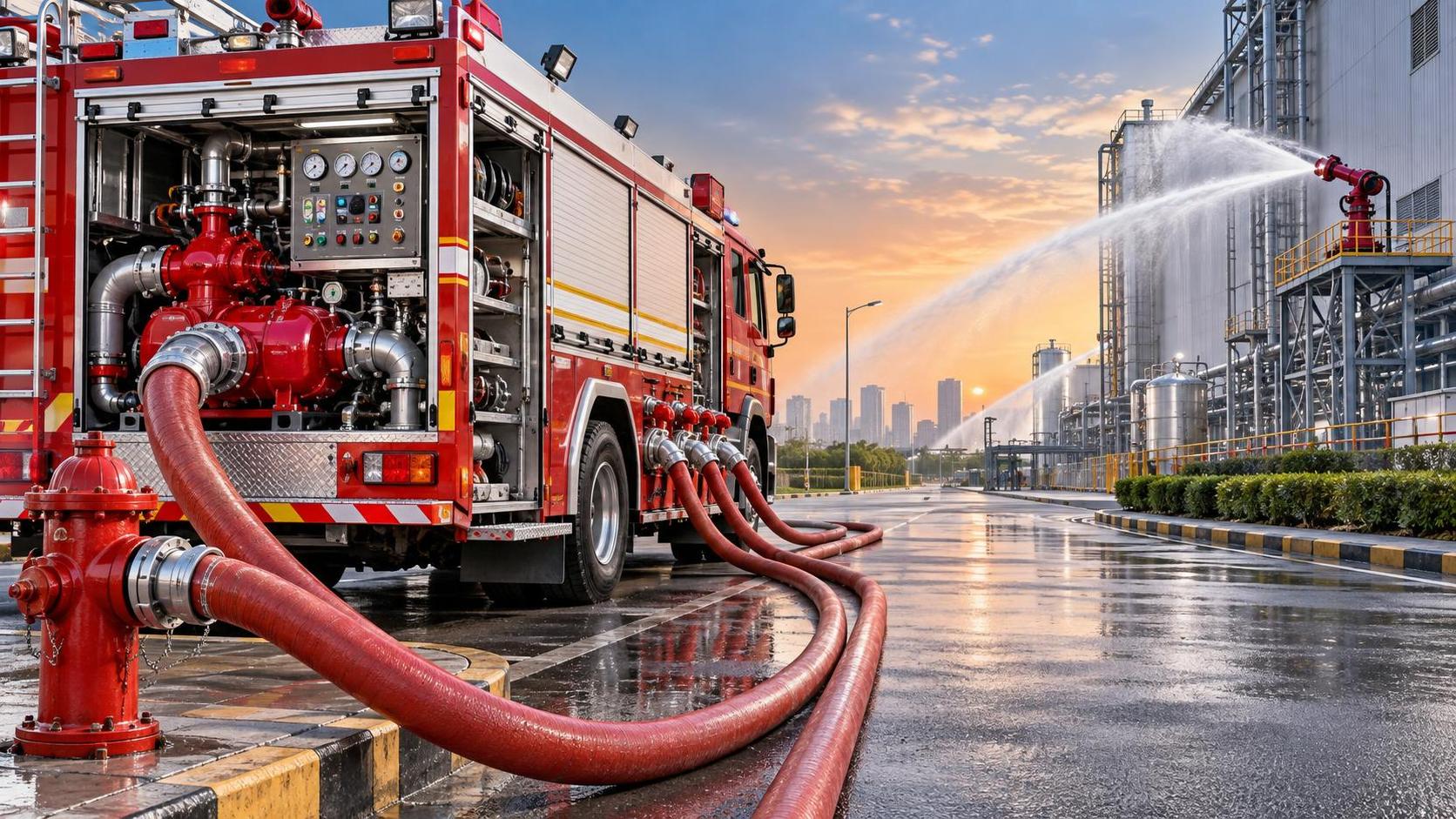
- Emergency applications usually demand fast deployment, reliability under stress, and certified safety systems.
When operational fit drives the discussion, it becomes easier to compare manufacturers on meaningful performance rather than marketing language.
Production capability reveals whether promises can be delivered
Not every special purpose vehicles manufacturer has the same depth of production control. Some rely heavily on outsourced fabrication. Others manage chassis integration, body engineering, electrical architecture, and testing in-house.
The difference shows up in consistency. In-house capability usually improves traceability, dimensional accuracy, lead-time control, and response speed when a specification changes during procurement.
What to examine in the factory profile
- Annual output by vehicle category, not only total units.
- Core fabrication assets such as welding, painting, machining, and hydraulic assembly.
- Engineering staff involved in design validation and system integration.
- Testing facilities for braking, load handling, sealing, electrical reliability, and road performance.
- Supplier management for axles, pumps, booms, tanks, control systems, and safety devices.
A mature manufacturer should be able to explain where key risks sit in production and how they are controlled before delivery.
Customization strength matters more than a long product list
A wide catalog looks impressive, but custom engineering is often the real differentiator. Special vehicles rarely work well when adapted from a standard template without careful redesign.
For example, a water tanker for urban sanitation and a water carrier for mining dust suppression may appear similar. In practice, they differ in axle loading, tank baffling, pump selection, corrosion protection, and service access.
The right special purpose vehicles manufacturer should show how it handles:
- Application-specific body design and weight distribution.
- Integration with preferred chassis brands or regional standards.
- Control interface design for operators and maintenance teams.
- Optional telematics, sensors, camera systems, and remote diagnostics.
- Adaptation for climate, terrain, emissions rules, and local materials.
This is especially relevant in GIUT-covered sectors, where equipment increasingly connects physical assets with intelligent management systems.
Quality control and compliance should be verified, not assumed
A polished specification sheet does not confirm build quality. Evaluation should include the manufacturer’s process discipline, inspection checkpoints, and ability to document compliance across the entire vehicle.
Certifications are part of the picture, but not the whole picture. ISO systems, homologation approvals, emissions conformity, and safety certifications matter only when they align with the target market and actual vehicle configuration.
If documentation feels incomplete during the evaluation phase, support after delivery may be equally uncertain.
After-sales capability often determines the true cost
The purchase order captures only part of the financial outcome. A special purpose vehicles manufacturer should also be judged on service structure, spare parts readiness, technical training, and problem response time.
For fleet operators, the practical questions are usually simple. How long will the vehicle be down? Can wear parts be identified quickly? Are manuals clear? Can remote support solve a fault before a site visit is required?
Signals of stronger support
- Defined warranty scope for both chassis-related and upper-body systems.
- Recommended spare parts package matched to operating intensity.
- Digital manuals, parts catalogs, and fault code guidance.
- Training for operators, workshop staff, and safety supervisors.
- Evidence of service partners or regional support channels.
In smart city and infrastructure programs, support quality also influences asset planning. Reliable service data helps fleets forecast uptime, replacement timing, and whole-life budgeting.
Compare manufacturers through business risk, not unit price alone
Two offers may look similar on paper while carrying very different risk levels. A lower purchase price can become expensive if it brings weak documentation, poor customization, uncertain delivery, or difficult maintenance.
A practical comparison model should include technical fit, compliance confidence, service depth, lead time realism, reference projects, and total cost over the planned asset life.
Reference cases matter here. A credible special purpose vehicles manufacturer should be able to point to delivered projects in similar duty conditions, not only showcase vehicles prepared for exhibitions.
It is also worth checking whether the manufacturer is investing in electrification, digital monitoring, lightweight design, and lower-emission systems. These signals often indicate future readiness rather than short-term sales focus.
A practical way to move from shortlist to decision
A disciplined evaluation process usually produces better outcomes than a fast negotiation round. Begin with the operating requirement, convert that into a technical checklist, and then test each manufacturer against evidence.
- Define mission profile, duty cycle, and compliance needs.
- Request configuration details, testing records, and certification documents.
- Review production capability and key supplier structure.
- Assess customization depth through drawings, case studies, or sample units.
- Score after-sales support, spare parts planning, and training coverage.
- Compare total ownership risk before commercial finalization.
That approach keeps the focus where it belongs: vehicle suitability, compliance confidence, and long-term operating value.
For organizations working across infrastructure, urban services, industrial logistics, or heavy equipment fleets, the best next step is to turn broad interest into a structured evaluation matrix. Once the criteria are clear, the right special purpose vehicles manufacturer becomes easier to identify, defend internally, and support over the full service life.
Get weekly intelligence in your inbox.
No noise. No sponsored content. Pure intelligence.
News Recommendations
 Sep 19, 2026How an electronics application guide helps prevent component mismatchHow an electronics application guide helps prevent component mismatch
 Sep 18, 2026When a resource allocation platform improves project deliveryWhen a resource allocation platform improves project delivery
 Sep 17, 2026What to compare when evaluating mineral processing equipment manufacturersWhat to compare when evaluating mineral processing equipment manufacturers
 Sep 16, 2026How mineral separation optimization can reduce concentrate lossesHow mineral separation optimization can reduce concentrate losses
 Sep 15, 2026How to assess lifecycle costs in urban tech procurementHow to assess lifecycle costs in urban tech procurement
 Sep 14, 2026Heavy industry technology trends reshaping capital investment prioritiesHeavy industry technology trends reshaping capital investment priorities
 Sep 14, 2026Global Industrial Equipment Procurement: How Top OEMs Qualify Suppliers for Mining & Infrastructure ProjectsGlobal Industrial Equipment Procurement: How Top OEMs Qualify Suppliers for Mining & Infrastructure Projects
 Sep 14, 2026Industrial & Mining Equipment Procurement: Balancing Local Sourcing, Lead Time, and Certification RequirementsIndustrial & Mining Equipment Procurement: Balancing Local Sourcing, Lead Time, and Certification Requirements
 Sep 14, 2026Infrastructure & Equipment Upgrades: What Procurement Teams Must Verify Before Signing Off on New ContractsInfrastructure & Equipment Upgrades: What Procurement Teams Must Verify Before Signing Off on New Contracts
 Sep 14, 2026Why Infrastructure Equipment Buyers Are Shifting from Catalog-Based to Capability-Based Supplier SelectionWhy Infrastructure Equipment Buyers Are Shifting from Catalog-Based to Capability-Based Supplier Selection
 Sep 14, 2026Process Automation Project Execution: How to Align Supplier Capabilities with PLC Integration, Cybersecurity & Commissioning MilestonesProcess Automation Project Execution: How to Align Supplier Capabilities with PLC Integration, Cybersecurity & Commissioning Milestones
 Sep 14, 2026Are intelligent traffic systems worth the investment for small cities?Are intelligent traffic systems worth the investment for small cities?
 Sep 14, 2026How do intelligent traffic systems handle sensor failures?How do intelligent traffic systems handle sensor failures?
 Sep 14, 2026What should I check before accepting a smart building system?What should I check before accepting a smart building system?
 Sep 14, 2026Is a smart building system worth the maintenance cost?Is a smart building system worth the maintenance cost?
 Sep 14, 2026What data is needed for reliable resource allocation planning?What data is needed for reliable resource allocation planning?
 Sep 14, 2026How can resource allocation software reduce equipment idle time?How can resource allocation software reduce equipment idle time?
 Sep 14, 2026How should smart devices be maintained in harsh outdoor conditions?How should smart devices be maintained in harsh outdoor conditions?
 Sep 14, 2026Do smart devices improve worker safety on construction sites?Do smart devices improve worker safety on construction sites?
 Sep 14, 2026What environmental risks must be assessed before deep-sea mining?What environmental risks must be assessed before deep-sea mining?
 Sep 14, 2026Is deep-sea mining equipment commercially viable in 2026?Is deep-sea mining equipment commercially viable in 2026?
 Sep 14, 2026What Inspection Checks Should Procurement Teams Perform Before Ordering Dredging Equipment in 2026?What Inspection Checks Should Procurement Teams Perform Before Ordering Dredging Equipment in 2026?
 Sep 13, 2026How to verify an industrial product information source before specifying equipmentHow to verify an industrial product information source before specifying equipment
 Sep 12, 2026Which intelligent traffic systems hardware fits an urban intersection?Which intelligent traffic systems hardware fits an urban intersection?
 Sep 11, 2026How pump capacity affects response coverage for municipal fire fighting vehiclesHow pump capacity affects response coverage for municipal fire fighting vehicles
 Sep 10, 2026What to verify before choosing a heavy industry equipment supplierWhat to verify before choosing a heavy industry equipment supplier
 Sep 09, 2026When do adaptive urban traffic control systems reduce corridor delays?When do adaptive urban traffic control systems reduce corridor delays?