Concrete Mixers: Common Buying Mistakes That Raise Maintenance Costs
Why do cheap concrete mixers often become expensive assets?
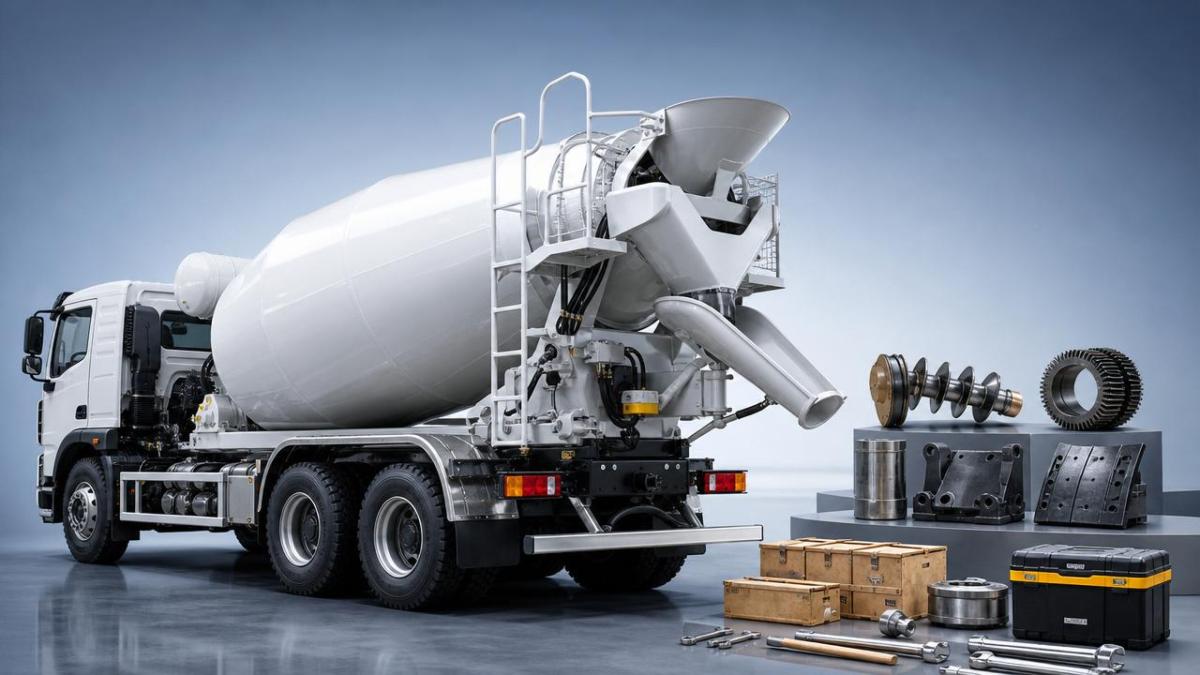
A low sticker price can look sensible at first glance. The problem appears later, when service calls, wear parts, and idle hours start accumulating.
In heavy equipment planning, the bigger question is not only purchase price. It is how reliably concrete mixers perform across their full operating life.
This matters across construction, logistics, urban infrastructure, and specialized fleet operations. A mixer that stops unexpectedly can delay labor, transport, and downstream scheduling.
At GIUT, equipment decisions are usually viewed through a wider systems lens. Machines support physical infrastructure, but maintenance behavior also shapes budgets, resilience, and sustainability targets.
So what goes wrong most often? In many cases, buyers focus on visible cost and miss the maintenance profile hidden in design, support, and operating fit.
Which buying mistakes raise maintenance costs the fastest?
The most expensive mistakes are rarely dramatic. They are usually small evaluation gaps that compound over months of use.
One common error is choosing concrete mixers with the wrong drum capacity for actual cycle demand. Oversized units may idle inefficiently, while undersized units run harder and wear faster.
Another mistake is ignoring drive system quality. Transmission components, hydraulic systems, bearings, and drum rollers determine maintenance frequency far more than paint, cabin styling, or brochure claims.
Many buyers also overlook material quality in wear zones. Blade liners, chutes, seals, and discharge components face constant abrasion. Lower-grade materials shorten service intervals quickly.
Support access matters too. Concrete mixers can be technically acceptable yet still costly if spare parts lead times are long or service coverage is weak in the region.
A final mistake is treating all operating conditions as similar. Urban batching routes, mining roads, rail-linked projects, and remote infrastructure sites create very different stress patterns.
This table is useful because it shifts the discussion from headline price to ownership behavior. That is usually where maintenance cost starts to become visible.
How can you tell whether a mixer matches the job before buying?
The better approach is to start from operating reality, not product category alone. Concrete mixers should be judged against route conditions, load consistency, cleaning practice, and service access.
For example, short-haul urban work often requires maneuverability, repeatable drum performance, and easy washout access. Remote projects may prioritize rugged chassis integration and parts resilience.
More practical evaluations usually include these checkpoints:
- Confirm average payload, not just peak demand.
- Review road quality, slope, stop frequency, and queue time.
- Check access to wash stations and routine cleaning controls.
- Compare parts availability for wear items and hydraulic components.
- Ask for documented maintenance intervals under similar use cases.
In actual applications, the most reliable concrete mixers are not always the biggest or most promoted. They are the ones aligned with actual duty cycles and local support conditions.
That alignment becomes more important as infrastructure fleets become more data-driven. A machine that integrates cleanly into predictable maintenance planning usually protects value better over time.
Are all maintenance risks visible in the specification sheet?
Not really. Specification sheets show important data, but they do not always reveal service complexity, inspection accessibility, or real-world wear rates.
That is why two concrete mixers with similar capacity can behave very differently in ownership cost. Layout, hose routing, seal protection, and drum cleaning access all influence maintenance labor.
A useful question is whether routine service can be completed quickly without removing multiple assemblies. If access is poor, even simple maintenance becomes expensive.
Another hidden issue is corrosion resistance. Water exposure, cement residue, and inconsistent cleaning accelerate damage in joints, brackets, and discharge areas.
When comparing concrete mixers, look beyond rated output and engine power. Ask for component brands, service manuals, recommended parts stock, and field performance references.
This is where cross-sector knowledge helps. Practices from mining equipment, railway maintenance discipline, and smart fleet monitoring increasingly influence how special purpose vehicles are evaluated.
What ownership-cost signals deserve more attention than purchase price?
A better buying discussion usually tracks several cost signals at the same time. Purchase price remains important, but it should not dominate the decision alone.
The most useful signals often include service interval length, replacement frequency for wear parts, expected fuel behavior under normal loads, and downtime recovery speed.
It also helps to compare whether a supplier can provide maintenance data from similar projects. Documented evidence is more reliable than general promises.
The checklist below can support a more disciplined comparison.
Needless to say, ownership-cost visibility improves decision quality. It also supports more credible budgeting in infrastructure programs with long project horizons.
What questions should be answered before approving a final choice?
Before settling on specific concrete mixers, it helps to pressure-test the decision with a few grounded questions rather than one broad comparison.
Can the unit handle the real route mix without operating near its limits every day? Are wear parts standard, regionally available, and reasonably priced?
Has the model shown stable reliability in conditions that resemble the intended jobsite pattern? Are maintenance intervals practical for the expected operating calendar?
It is also worth checking whether telematics, inspection logging, or digital service records are available. Smarter visibility can reduce avoidable failures later.
That point fits a broader industry shift. Heavy equipment is no longer judged only as hardware. It is part of a connected infrastructure system where uptime and data quality reinforce each other.
For that reason, the best concrete mixers are usually those selected with both engineering discipline and lifecycle accountability in mind.
A practical way to reduce maintenance surprises
Most maintenance problems begin long before the first repair. They begin when buying decisions ignore duty-cycle fit, serviceability, wear materials, and support depth.
A stronger process is straightforward. Define the operating profile, compare concrete mixers against lifecycle evidence, and verify service assumptions with real field data.
If the next step is evaluation, build a short review sheet around capacity fit, wear zones, parts access, regional support, and downtime sensitivity.
That kind of disciplined review does more than control maintenance costs. It helps protect asset life, improve planning stability, and support smarter infrastructure investment over time.
Get weekly intelligence in your inbox.
No noise. No sponsored content. Pure intelligence.
News Recommendations
 Sep 19, 2026How an electronics application guide helps prevent component mismatchHow an electronics application guide helps prevent component mismatch
 Sep 18, 2026When a resource allocation platform improves project deliveryWhen a resource allocation platform improves project delivery
 Sep 17, 2026What to compare when evaluating mineral processing equipment manufacturersWhat to compare when evaluating mineral processing equipment manufacturers
 Sep 16, 2026How mineral separation optimization can reduce concentrate lossesHow mineral separation optimization can reduce concentrate losses
 Sep 15, 2026How to assess lifecycle costs in urban tech procurementHow to assess lifecycle costs in urban tech procurement
 Sep 14, 2026Heavy industry technology trends reshaping capital investment prioritiesHeavy industry technology trends reshaping capital investment priorities
 Sep 14, 2026Why Infrastructure Equipment Buyers Are Shifting from Catalog-Based to Capability-Based Supplier SelectionWhy Infrastructure Equipment Buyers Are Shifting from Catalog-Based to Capability-Based Supplier Selection
 Sep 14, 2026Process Automation Project Execution: How to Align Supplier Capabilities with PLC Integration, Cybersecurity & Commissioning MilestonesProcess Automation Project Execution: How to Align Supplier Capabilities with PLC Integration, Cybersecurity & Commissioning Milestones
 Sep 14, 2026Are intelligent traffic systems worth the investment for small cities?Are intelligent traffic systems worth the investment for small cities?
 Sep 14, 2026How do intelligent traffic systems handle sensor failures?How do intelligent traffic systems handle sensor failures?
 Sep 14, 2026What should I check before accepting a smart building system?What should I check before accepting a smart building system?
 Sep 14, 2026Is a smart building system worth the maintenance cost?Is a smart building system worth the maintenance cost?
 Sep 14, 2026What data is needed for reliable resource allocation planning?What data is needed for reliable resource allocation planning?
 Sep 14, 2026How can resource allocation software reduce equipment idle time?How can resource allocation software reduce equipment idle time?
 Sep 14, 2026How should smart devices be maintained in harsh outdoor conditions?How should smart devices be maintained in harsh outdoor conditions?
 Sep 14, 2026Do smart devices improve worker safety on construction sites?Do smart devices improve worker safety on construction sites?
 Sep 14, 2026What environmental risks must be assessed before deep-sea mining?What environmental risks must be assessed before deep-sea mining?
 Sep 14, 2026Is deep-sea mining equipment commercially viable in 2026?Is deep-sea mining equipment commercially viable in 2026?
 Sep 14, 2026What Inspection Checks Should Procurement Teams Perform Before Ordering Dredging Equipment in 2026?What Inspection Checks Should Procurement Teams Perform Before Ordering Dredging Equipment in 2026?
 Sep 13, 2026How to verify an industrial product information source before specifying equipmentHow to verify an industrial product information source before specifying equipment
 Sep 12, 2026Which intelligent traffic systems hardware fits an urban intersection?Which intelligent traffic systems hardware fits an urban intersection?
 Sep 11, 2026How pump capacity affects response coverage for municipal fire fighting vehiclesHow pump capacity affects response coverage for municipal fire fighting vehicles
 Sep 10, 2026What to verify before choosing a heavy industry equipment supplierWhat to verify before choosing a heavy industry equipment supplier
 Sep 09, 2026When do adaptive urban traffic control systems reduce corridor delays?When do adaptive urban traffic control systems reduce corridor delays?
 Sep 08, 2026When logistics technology solutions in North America reduce delivery delaysWhen logistics technology solutions in North America reduce delivery delays
 Sep 07, 2026How reliable are wireless mining safety systems in underground mines?How reliable are wireless mining safety systems in underground mines?
 Sep 07, 2026How to assess a smart lighting technology platform for interoperabilityHow to assess a smart lighting technology platform for interoperability