Smart Jobsites: 7 Practical Gains From Connected Site Operations
Smart Jobsites: 7 Practical Gains From Connected Site Operations
Smart jobsites are no longer a future concept. They are quickly becoming the operating baseline for projects that face tighter schedules, thinner margins, and rising compliance pressure.
For construction, infrastructure, and urban development teams, connected site operations change how daily decisions get made. Data moves faster, issues surface earlier, and coordination becomes less dependent on guesswork.
That matters because site complexity is growing. More subcontractors, stricter safety expectations, and heavier equipment usage all increase the cost of poor visibility.
In practical terms, smart jobsites connect people, machines, materials, and workflows through digital tools. The goal is simple: reduce friction on the ground and improve project outcomes.
From recent market changes, the stronger signal is clear. The best-performing projects are not always the biggest or most funded. They are often the ones with better operational visibility.
Below are seven practical gains from smart jobsites that can directly improve delivery, safety, cost control, and execution quality.
1. Real-Time Visibility Improves Daily Decision Speed
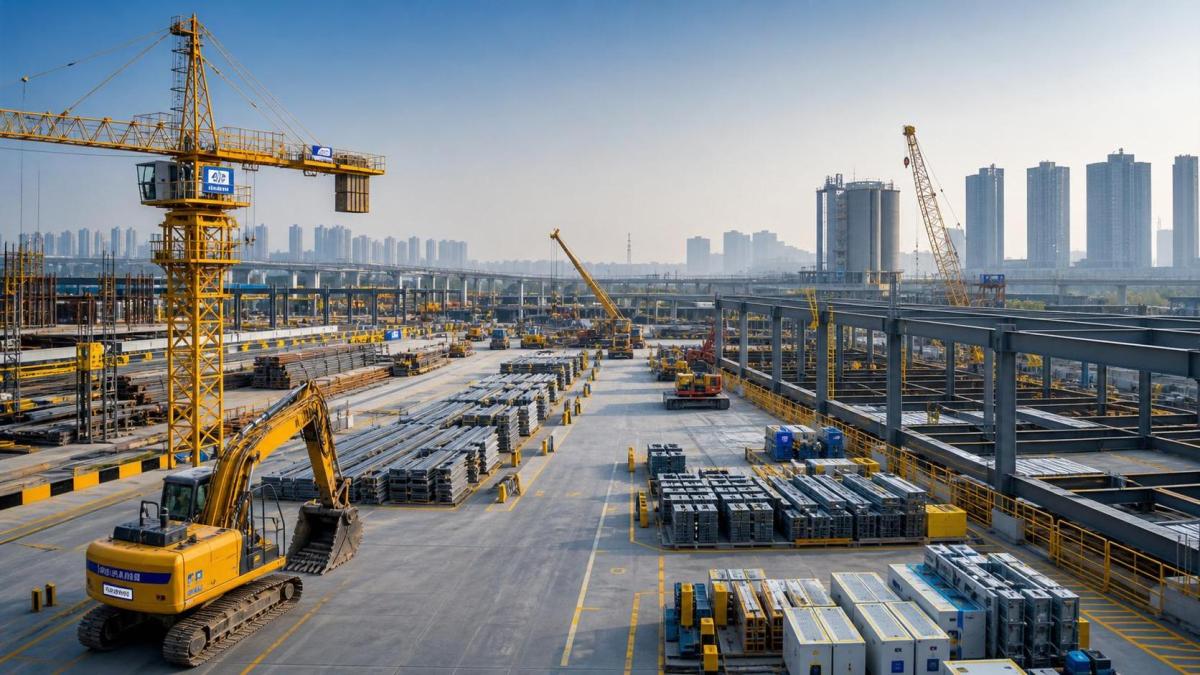
One of the biggest gains in smart jobsites is faster decision-making. Site leaders no longer wait until end-of-day reports to understand what is happening.
Connected dashboards can show labor attendance, equipment movement, material delivery status, and task completion in near real time. That shortens the gap between issue detection and response.
This also means fewer reactive meetings. Instead of debating what happened yesterday, teams can solve bottlenecks while the workday is still active.
- Track crew attendance against planned manpower.
- Monitor delays in deliveries before they affect installation.
- Spot idle equipment and reassign assets faster.
- Escalate safety or quality issues without waiting for paperwork.
In actual operations, this is where smart jobsites start paying back quickly. Better visibility creates better timing, and better timing protects schedules.
2. Equipment Use Becomes More Efficient
Heavy equipment is expensive to own, rent, fuel, and maintain. Yet many sites still rely on manual updates to understand machine usage.
Smart jobsites reduce this blind spot. Connected telematics, geofencing, and usage analytics help teams see where assets are, how often they are used, and whether they are underperforming.
That creates direct savings. Fewer duplicate rentals, less idle time, and more accurate maintenance scheduling all improve cost control.
More importantly, it improves planning discipline. When crane hours, concrete mixer rotation, or lifting schedules are visible, daily coordination gets tighter.
For projects with multiple contractors, smart jobsites also reduce disputes around equipment availability. Everyone works from the same operational picture.
3. Workforce Accountability Gets Stronger Without Adding Friction
Labor productivity is still one of the hardest areas to manage consistently. Paper logs and fragmented messaging often hide small execution gaps that later become major delays.
Smart jobsites make accountability more practical, not more bureaucratic. Digital check-ins, mobile task records, and role-based updates create a cleaner trail of who did what and when.
This helps site leaders compare planned work with actual output. It also improves subcontractor coordination, especially when several trades share constrained work zones.
The important point is balance. Connected site operations should support crews, not burden them with extra reporting. The most effective systems capture data during normal work steps.
- Use mobile forms that take less than two minutes.
- Link attendance to work zones and assigned tasks.
- Review output by crew, shift, and activity type.
- Flag repeated delays early, before they spread.
Done well, smart jobsites create a culture of execution clarity. That improves performance without turning the site into an admin-heavy environment.
4. Safety Management Moves From Reactive to Preventive
Safety is often where smart jobsites show their strongest value. Traditional reporting usually captures incidents after the risk has already materialized.
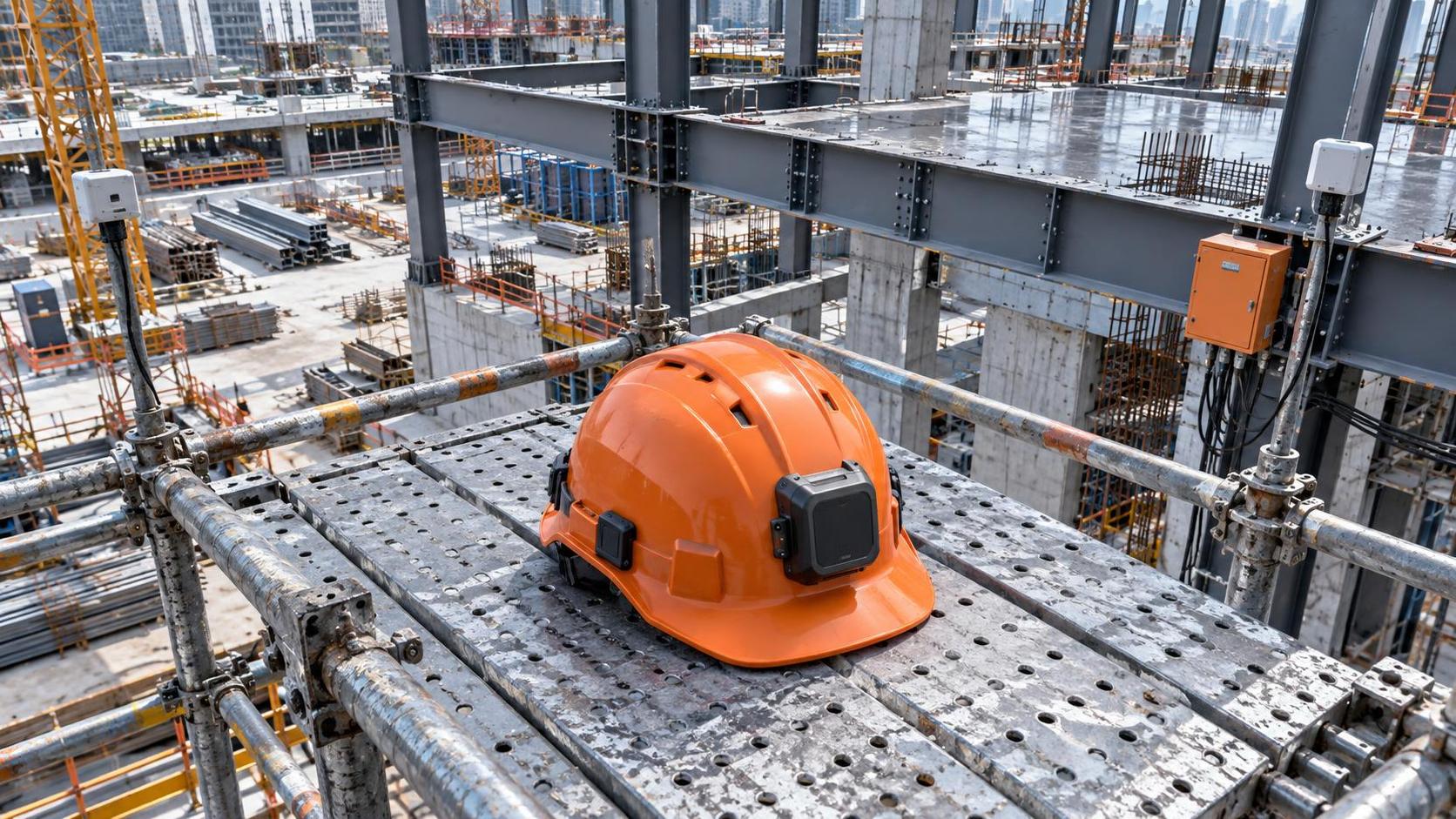
Connected site operations make prevention more realistic. Wearables, access control systems, machine alerts, and digital permit workflows can all surface risk much earlier.
For example, restricted-area entry can trigger immediate alerts. Equipment condition warnings can stop unsafe use before a critical task begins.
This does not replace frontline judgment. It strengthens it by giving supervisors better signals and faster evidence.
A practical approach is to focus on high-risk workflows first. Excavation, lifting, confined space work, and high-traffic movement zones usually offer the clearest early wins.
As a result, smart jobsites help reduce not only incidents, but also the hidden delays that follow safety breakdowns, investigations, and work stoppages.
5. Quality Control Becomes Easier to Standardize
Quality problems rarely appear all at once. They usually begin as small misses in inspection timing, documentation, or handoff discipline.
Smart jobsites help teams standardize these control points. Digital inspection checklists, photo verification, and timestamped approvals reduce ambiguity during execution.
This matters even more on complex infrastructure programs. When multiple packages move in parallel, consistent records protect both quality and accountability.
The practical gain is fewer rework loops. Teams catch defects earlier, verify corrections faster, and avoid repeated miscommunication between field and office.
Over time, smart jobsites also build a reusable knowledge base. Recurring issues become visible across projects, which supports better standards and stronger delivery discipline.
6. Cost Control Gets More Accurate at the Activity Level
Many projects discover cost drift too late. By the time reports confirm the problem, the recovery options are already limited.
Smart jobsites improve this by linking operational data to cost behavior. Labor hours, equipment utilization, delivery timing, and production output can be viewed against plan in one workflow.
That creates sharper cost visibility at the activity level, not just at the package level. Teams can see which tasks are consuming margin and why.
In day-to-day business, this supports better intervention. It may show that a delay is labor-related, caused by equipment waiting time, or linked to poor sequence planning.
This is one reason smart jobsites matter for executive reporting as well. Better field data leads to more credible cost forecasts.
7. Project Handoffs and Stakeholder Reporting Become Smoother
Connected site operations do not only improve field execution. They also make reporting and handover processes less fragmented.
When progress records, inspection evidence, equipment history, and issue logs sit in one connected system, reporting becomes faster and more reliable.
That helps with client communication, internal reviews, compliance checks, and final turnover documentation. It also reduces the last-minute scramble that often happens near completion.
More importantly, smart jobsites support continuity. Lessons from one project can feed directly into planning for the next one.
This is especially valuable across infrastructure portfolios, where standardization and repeatability can create major long-term gains.
In other words, smart jobsites are not just about today’s site performance. They improve the data foundation for future delivery decisions.
How to Apply Smart Jobsites Without Overcomplicating the Rollout
A common mistake is trying to digitize everything at once. That usually creates tool fatigue and weak adoption.
A better path is phased implementation. Start with one or two high-friction areas where visibility is currently poor and the business impact is easy to measure.
- Identify one operational pain point with clear financial impact.
- Choose tools that fit actual site routines.
- Train supervisors first, then expand crew adoption.
- Measure early wins in time, cost, safety, or rework reduction.
- Scale only after the workflow proves useful in the field.
This also means selecting smart jobsites solutions that align with broader infrastructure goals. Interoperability, data quality, and field usability should matter more than feature volume.
For organizations navigating smart building, rail, mining, or urban tech projects, the same principle applies. Connected site operations work best when they solve visible execution problems first.
Smart jobsites are ultimately a management upgrade, not just a technology upgrade. The most effective move is to begin with one practical use case, prove the gain, and build from there.
Get weekly intelligence in your inbox.
No noise. No sponsored content. Pure intelligence.
News Recommendations
 Sep 19, 2026How an electronics application guide helps prevent component mismatchHow an electronics application guide helps prevent component mismatch
 Sep 18, 2026When a resource allocation platform improves project deliveryWhen a resource allocation platform improves project delivery
 Sep 17, 2026What to compare when evaluating mineral processing equipment manufacturersWhat to compare when evaluating mineral processing equipment manufacturers
 Sep 16, 2026How mineral separation optimization can reduce concentrate lossesHow mineral separation optimization can reduce concentrate losses
 Sep 15, 2026How to assess lifecycle costs in urban tech procurementHow to assess lifecycle costs in urban tech procurement
 Sep 14, 2026Heavy industry technology trends reshaping capital investment prioritiesHeavy industry technology trends reshaping capital investment priorities
 Sep 14, 2026Global Industrial Equipment Procurement: How Top OEMs Qualify Suppliers for Mining & Infrastructure ProjectsGlobal Industrial Equipment Procurement: How Top OEMs Qualify Suppliers for Mining & Infrastructure Projects
 Sep 14, 2026Industrial & Mining Equipment Procurement: Balancing Local Sourcing, Lead Time, and Certification RequirementsIndustrial & Mining Equipment Procurement: Balancing Local Sourcing, Lead Time, and Certification Requirements
 Sep 14, 2026Infrastructure & Equipment Upgrades: What Procurement Teams Must Verify Before Signing Off on New ContractsInfrastructure & Equipment Upgrades: What Procurement Teams Must Verify Before Signing Off on New Contracts
 Sep 14, 2026Why Infrastructure Equipment Buyers Are Shifting from Catalog-Based to Capability-Based Supplier SelectionWhy Infrastructure Equipment Buyers Are Shifting from Catalog-Based to Capability-Based Supplier Selection
 Sep 14, 2026Process Automation Project Execution: How to Align Supplier Capabilities with PLC Integration, Cybersecurity & Commissioning MilestonesProcess Automation Project Execution: How to Align Supplier Capabilities with PLC Integration, Cybersecurity & Commissioning Milestones
 Sep 14, 2026Are intelligent traffic systems worth the investment for small cities?Are intelligent traffic systems worth the investment for small cities?
 Sep 14, 2026How do intelligent traffic systems handle sensor failures?How do intelligent traffic systems handle sensor failures?
 Sep 14, 2026What should I check before accepting a smart building system?What should I check before accepting a smart building system?
 Sep 14, 2026Is a smart building system worth the maintenance cost?Is a smart building system worth the maintenance cost?
 Sep 14, 2026What data is needed for reliable resource allocation planning?What data is needed for reliable resource allocation planning?
 Sep 14, 2026How can resource allocation software reduce equipment idle time?How can resource allocation software reduce equipment idle time?
 Sep 14, 2026How should smart devices be maintained in harsh outdoor conditions?How should smart devices be maintained in harsh outdoor conditions?
 Sep 14, 2026Do smart devices improve worker safety on construction sites?Do smart devices improve worker safety on construction sites?
 Sep 14, 2026What environmental risks must be assessed before deep-sea mining?What environmental risks must be assessed before deep-sea mining?
 Sep 14, 2026Is deep-sea mining equipment commercially viable in 2026?Is deep-sea mining equipment commercially viable in 2026?
 Sep 14, 2026What Inspection Checks Should Procurement Teams Perform Before Ordering Dredging Equipment in 2026?What Inspection Checks Should Procurement Teams Perform Before Ordering Dredging Equipment in 2026?
 Sep 13, 2026How to verify an industrial product information source before specifying equipmentHow to verify an industrial product information source before specifying equipment
 Sep 12, 2026Which intelligent traffic systems hardware fits an urban intersection?Which intelligent traffic systems hardware fits an urban intersection?
 Sep 11, 2026How pump capacity affects response coverage for municipal fire fighting vehiclesHow pump capacity affects response coverage for municipal fire fighting vehicles
 Sep 10, 2026What to verify before choosing a heavy industry equipment supplierWhat to verify before choosing a heavy industry equipment supplier
 Sep 09, 2026When do adaptive urban traffic control systems reduce corridor delays?When do adaptive urban traffic control systems reduce corridor delays?