How do railway signaling systems affect freight line capacity?
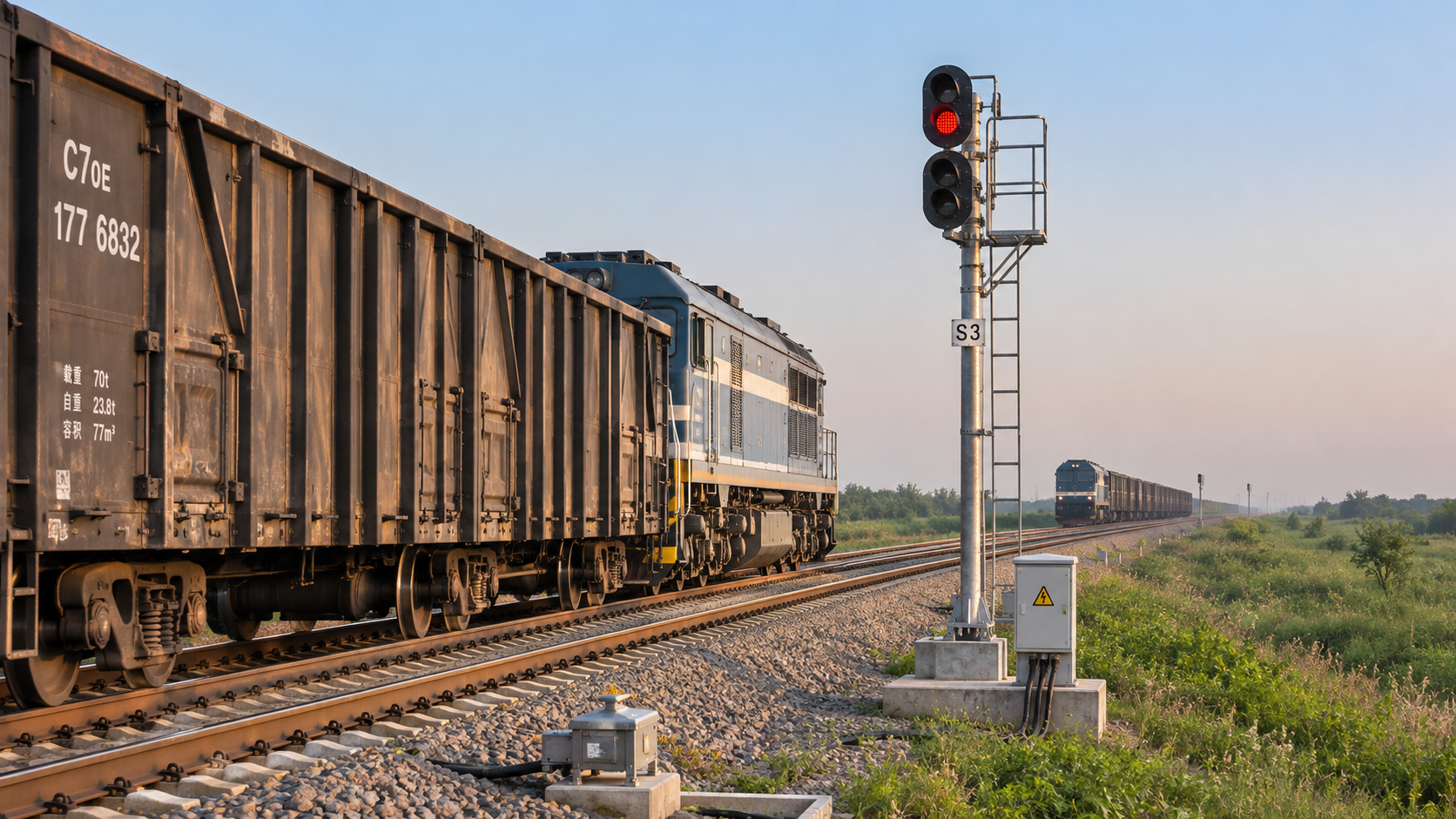
Railway signaling systems for freight affect capacity by controlling how closely trains can follow, when they can enter junctions, and how quickly routes become available for the next movement. Better signaling can create more train paths, but the gain depends on where delays occur and whether trains can use those paths in practice.
A shorter signal section, for example, may let a following train approach sooner. It will do little for throughput if that train must still wait for a long freight service to clear a single-track section or an occupied terminal. A useful capacity assessment therefore starts with the movements that constrain the timetable, then asks how signaling changes those movements.
How signaling determines the space between trains
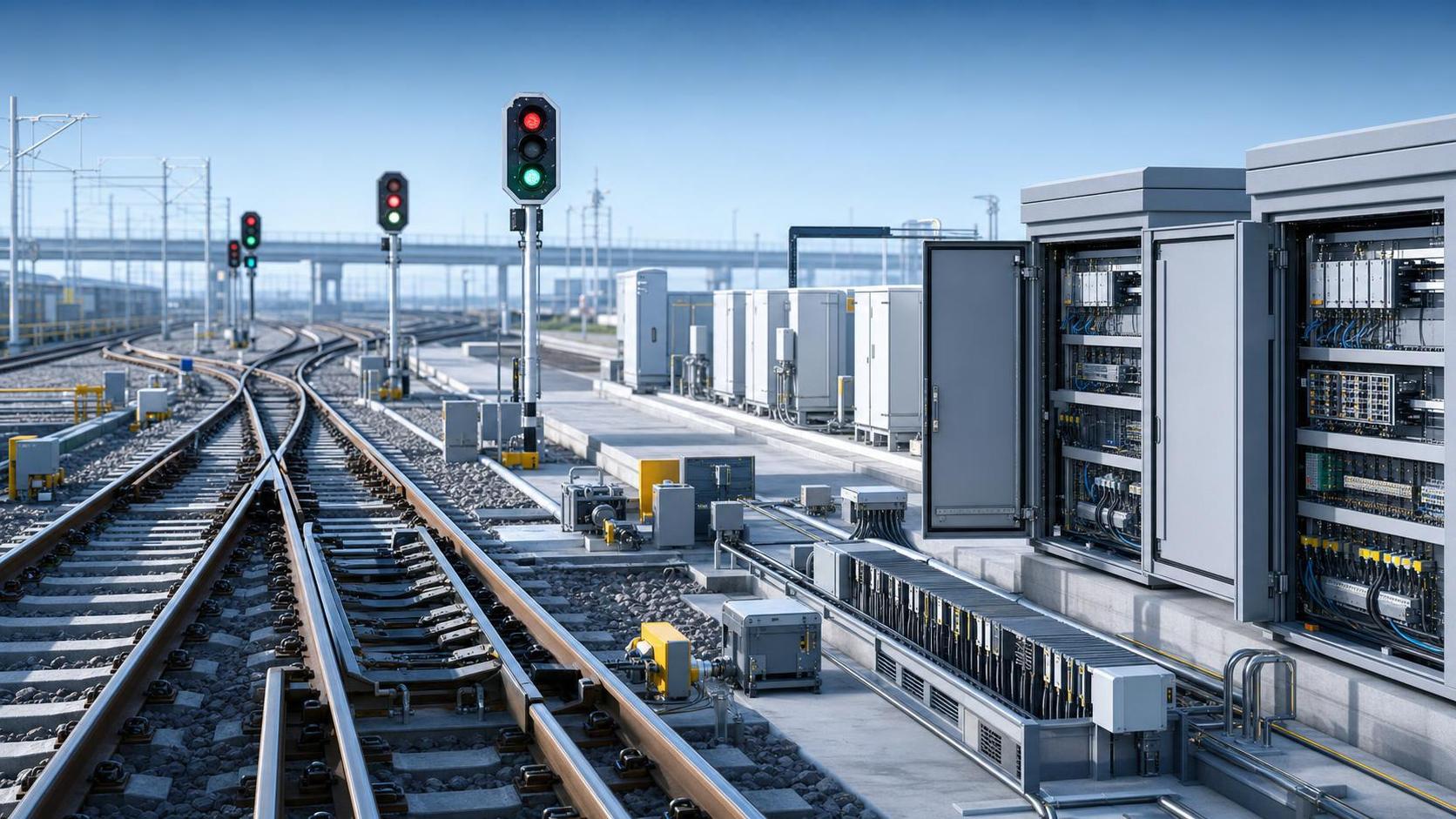
Signaling protects trains by controlling movement authorities: the permissions that define where a train may proceed. In a conventional fixed-block arrangement, the railway is divided into sections, and a following train’s authority depends on the state of the sections ahead and the rules of the signaling system. The distance between trains is influenced by block length, signal spacing, braking requirements and the time needed to detect that a train has cleared the relevant section.
The resulting headway is the time between successive trains passing a reference point. A shorter headway can increase the number of trains that can pass that point in a given period, provided the rest of the route can accommodate them. Headway is not a single figure for an entire freight corridor: it changes with gradient, speed, train performance, junction layout and the sequence of movements.
Long freight trains make clearance particularly relevant. A route or section may remain occupied until the rear of the train has passed the detection point, after which the system can release the protection needed by a following or conflicting movement. The time from the front of the train passing a signal to the rear clearing a critical point can consume a meaningful share of the available timetable.
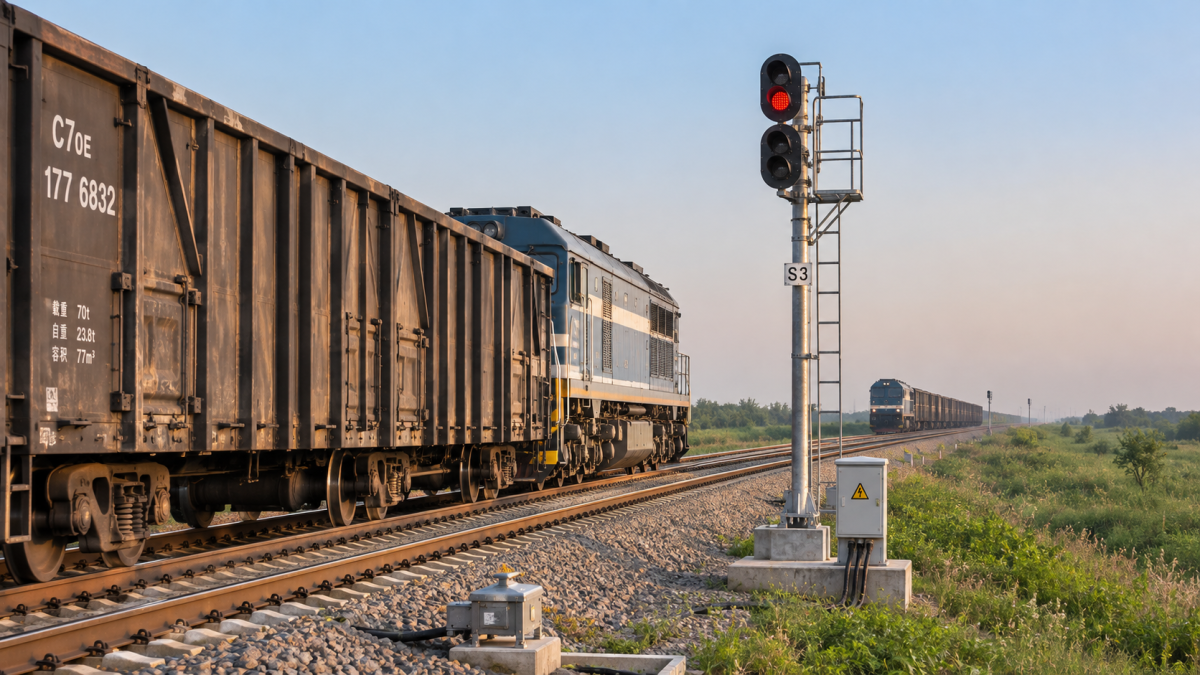
Adding signals or detection sections can reduce the distance a following train must wait behind its predecessor. The benefit depends on the complete control arrangement, however: placing a signal closer does not by itself guarantee that a train can receive a useful movement authority or maintain its intended speed.
Fixed block, shorter blocks and moving block: what changes?
The principal difference between these approaches is how the protected space behind a train is established. Each can support freight operation, but their capacity effects and implementation demands differ.
Moving block does not mean trains can run arbitrarily close together. Safe separation still accounts for braking and other protection margins. Its practical benefit is greatest where fixed-block boundaries leave unused space between trains and where following movements, rather than junctions or terminals, are the binding constraint.
Freight train integrity deserves particular attention. A system needs an appropriate way to establish that a train remains complete before track behind it can be treated as clear. Different architectures achieve this through different combinations of onboard and trackside functions. This can be more complicated to deploy across a diverse freight fleet than across a uniform fleet with consistent onboard equipment.
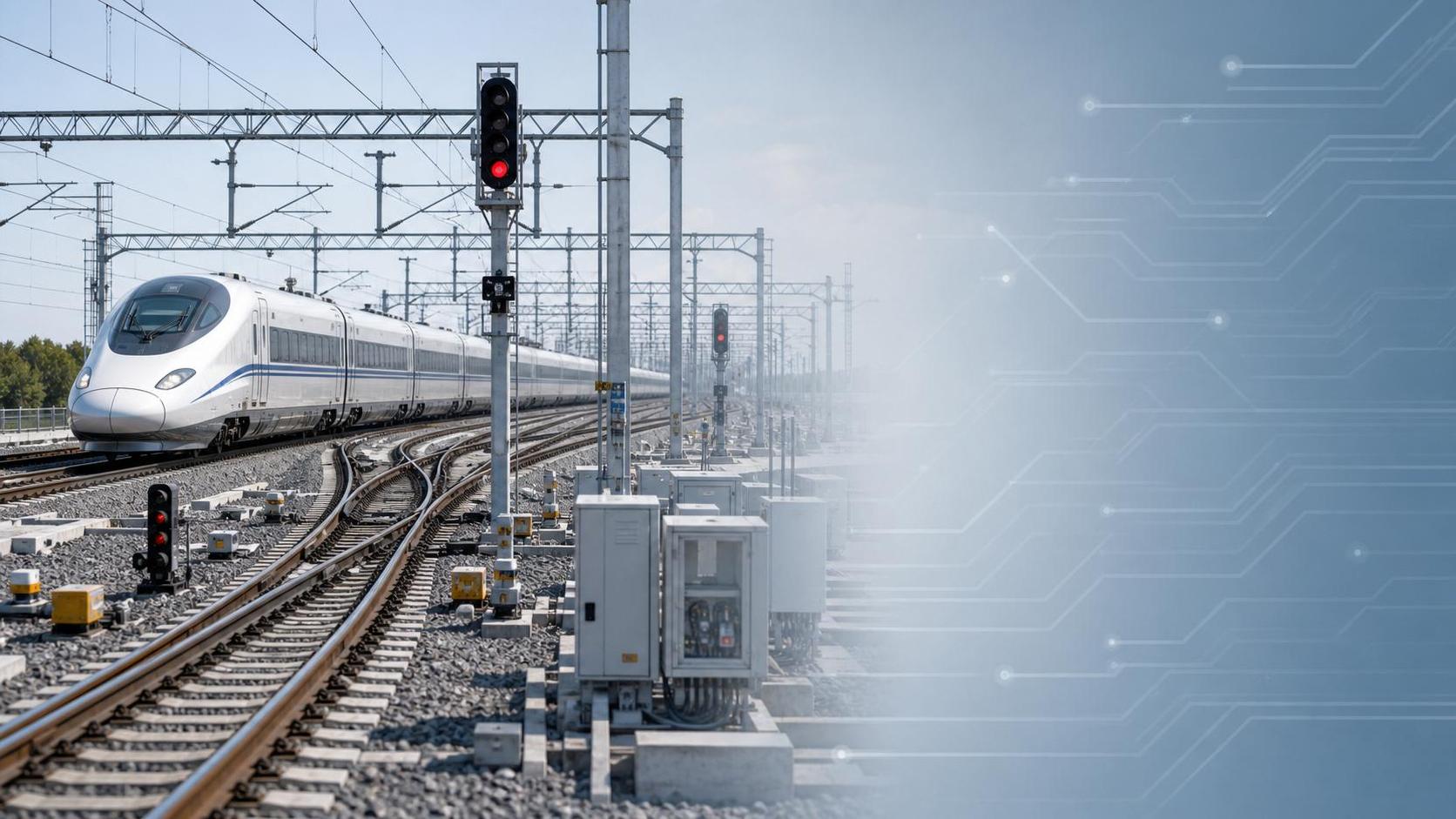
Automatic train protection can supervise movement authorities and speed restrictions, but it should not be treated as a capacity figure in its own right. The outcome depends on the particular system configuration, braking assumptions, operational rules and interaction with existing infrastructure. Likewise, a cab-signaling or radio-based system may improve information and control without necessarily delivering moving-block operation.
Why the busiest junction can matter more than the open line
On open double track, successive trains in the same direction may be limited mainly by following headway. At a junction, capacity often depends on conflicts: a freight train crossing another route can prevent several other movements while its route is set, used and released.
Consider a long freight train turning across a passenger line. Even if the approaches have short blocks, the crossing remains unavailable to conflicting trains until the freight movement has cleared the protected area and the route can be released. A faster route-setting process or better sectional route release may reduce unused waiting time. The physical crossing and the train’s clearance time still determine much of the occupation.
The same distinction applies to single-track lines. Signals govern entry and protect movements, but opposing trains cannot pass without a suitable location. A passing loop must be usable by the trains assigned to it, including their full length and operating needs. More flexible signaling at the loop can help reduce waiting, while an undersized loop can prevent the planned meet from happening altogether.
For an assessment, map each critical movement from the time its route must be secured to the time conflicting movements can receive authority. This exposes whether the limiting factor is signal spacing, route locking, train clearance, turnout layout or a combination of them.
Freight traffic makes nominal headways harder to use
A corridor can have a favourable minimum headway for two similar trains and still accommodate fewer services than that figure suggests. Freight operations introduce variation that consumes gaps and creates knock-on delay.
- Different speeds and braking performance: A faster train following a slower freight service may need a larger timetable gap to avoid catching it, particularly over a long section without an opportunity to pass.
- Train length and weight: Longer trains take more time to clear junctions and detection sections. Heavier trains may accelerate more slowly or require different braking assumptions, depending on the train and route.
- Mixed traffic: Passenger stops, freight speed restrictions and different stopping patterns can create conflicts even when individual trains comply with the same signaling rules.
- Terminals and yards: A train that cannot enter a terminal may occupy the approach, blocking paths that signaling on the main line would otherwise make available.
- Operational variability: Delays from loading, crew changes, incidents or recovery from disruption require timetable margin if the planned service is to remain dependable.
These factors distinguish theoretical throughput from usable capacity. Dividing an hour by a minimum headway gives, at most, an illustrative upper bound for a repeating sequence at one location under the assumed conditions. It does not establish how many freight trains can be scheduled reliably across a corridor with junctions, mixed traffic and variable running times.
Assessing a signaling upgrade against a real timetable
Start with a defined service question: which additional trains, train lengths or departure windows need to fit, and where do current movements lose time? Compare the existing arrangement with proposed options using the same traffic assumptions. A capacity claim has more value when it identifies the controlling locations and the conditions under which additional paths remain usable.
A practical evaluation can follow the movement of a representative mix of trains through the corridor:
- Identify the constraint. Use the timetable, infrastructure layout and operating data to locate recurring queues, route conflicts and sections with restrictive following headways. Include yard and terminal interfaces.
- Define the train mix. Include freight lengths, braking characteristics, permitted speeds, passenger services and the direction and timing of demand. Test any planned changes to the fleet or service pattern.
- Model the signaling and infrastructure together. Represent block or movement-authority limits, train detection, route setting and release, gradients, junctions, loops and operating rules. Compare alternatives against the same baseline.
- Test normal operation and disruption. Examine achievable paths as well as the effect of late trains, temporary restrictions and recovery. A tightly packed timetable may offer more planned paths but less resilience.
- Check implementation and migration. Establish which locomotives and routes need equipment, how mixed equipped and unequipped traffic will operate, and what restrictions apply during transition or degraded operation.
Simulation can make these comparisons clearer, but its results depend on the assumptions supplied. In particular, an optimistic braking model, an unrealistically quick route release or a missing terminal constraint can make a signaling option appear more effective than it will be in service. Review the movements that produce the reported gain, not just the headline number of additional paths.
Interoperability and degraded operation affect usable capacity
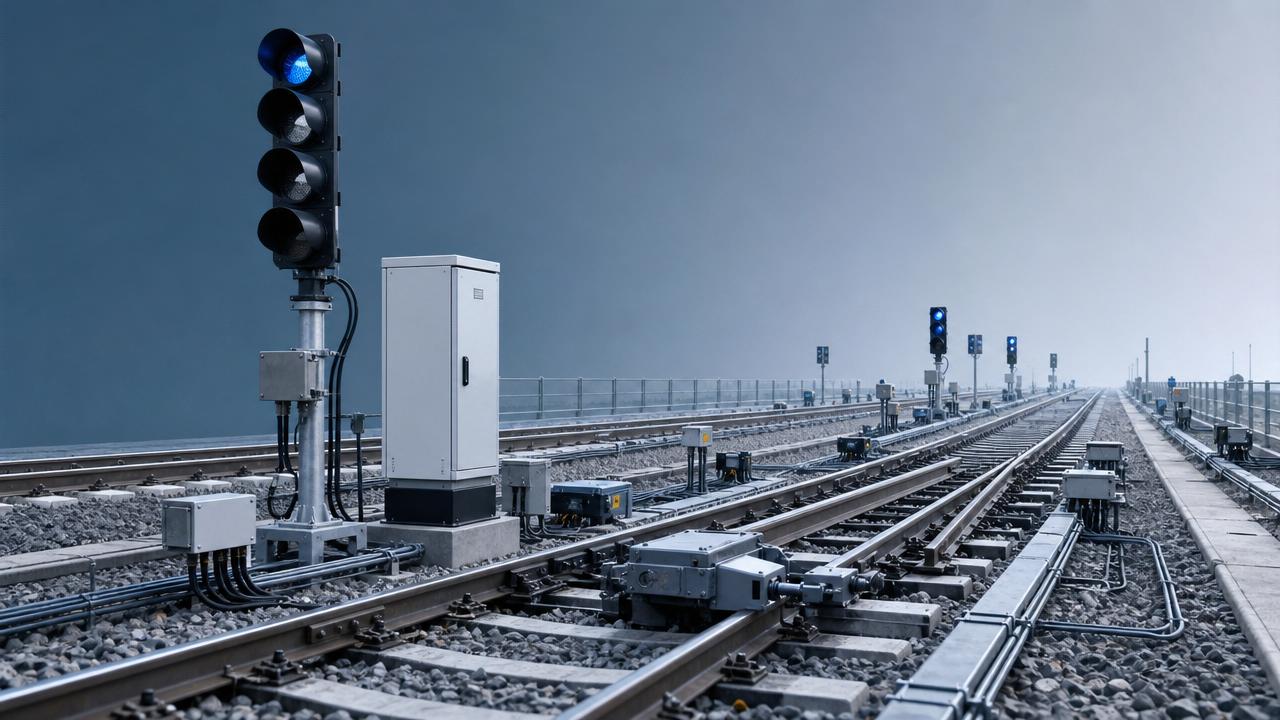
A signaling upgrade must work across the trains and infrastructure that use the route. Freight services may cross network boundaries, use locomotives from different operators or join sections with different control arrangements. Onboard equipment, communications coverage, train detection and operating rules all influence how consistently the intended headway can be achieved.
Interfaces matter during migration as well as after commissioning. If only part of the fleet can use a new control mode, unequipped trains may still require conventional protection and spacing. Their position in the timetable can limit the benefit available to equipped trains. Evaluating a fully equipped future service alone can therefore obscure a lengthy intermediate operating case.
Degraded operation also belongs in the capacity assessment. A communications interruption, detection failure or loss of onboard function can require more restrictive procedures, lower speeds or additional spacing, depending on the system and rules. The relevant question is how quickly traffic can continue and recover under those procedures, especially at locations with few alternative routes.
Before selecting a solution, establish the applicable network requirements for train control, interoperability, safety assurance and operating procedures. Then compare the capacity improvement at the actual constraint with the fleet, infrastructure and operational changes needed to deliver it. If the queue is caused by a crossing, a short passing loop or a blocked terminal, those interfaces need to be addressed alongside any signaling change.
Questions about this sector or your project? Contact Sector Deep Dive for expert insights.
We respect your privacy. Your information is strictly confidential.
Get weekly intelligence in your inbox.
No noise. No sponsored content. Pure intelligence.
News Recommendations
 Nov 19, 2026How do railway signaling systems affect freight line capacity?How do railway signaling systems affect freight line capacity?
 Aug 03, 2026How Interlocking Rail Signaling Technology Improves Route Safety and Failure ResponseHow Interlocking Rail Signaling Technology Improves Route Safety and Failure Response
 Jun 20, 2026How to Evaluate Railway Signaling Systems for Safer Network UpgradesHow to Evaluate Railway Signaling Systems for Safer Network Upgrades
 May 24, 2026Railway Signaling Systems: Key Failure Risks and FixesRailway Signaling Systems: Key Failure Risks and Fixes
 May 16, 2026Railway Signaling Systems: Upgrade Risks and Compatibility ChecksRailway Signaling Systems: Upgrade Risks and Compatibility Checks